
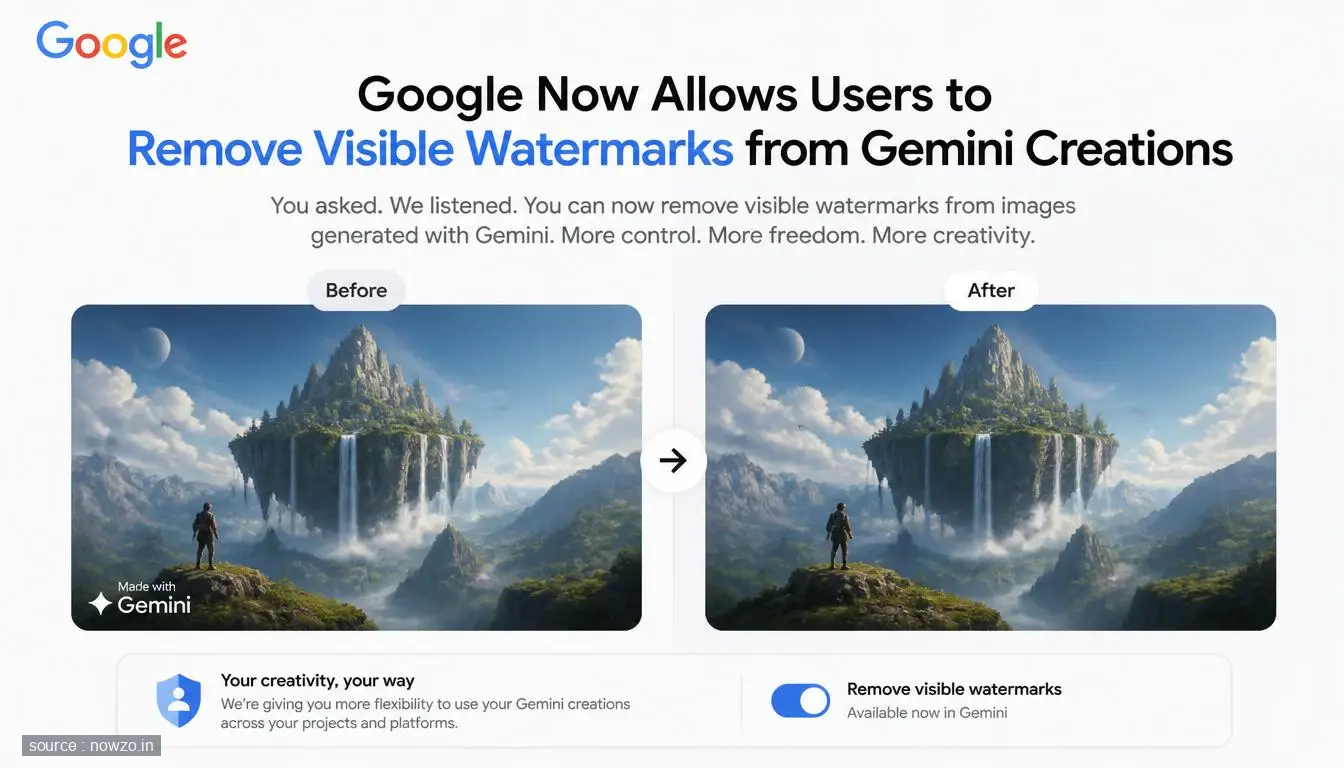
Google has introduced a new capability that allows users to remove visible watermarks from content created using its Gemini artificial intelligence platform. The update marks a notable shift in how the tech giant handles AI-generated content identification, giving users greater flexibility over the final output of their creations.
What the New Feature Offers
The new functionality enables users to strip away the visible watermarks that Google has previously applied to content generated through Gemini. Watermarks have served as a transparency measure, helping to identify content that was produced using artificial intelligence tools.
With this change, users who create content through Gemini will now have the option to present their AI-generated work without the visible markers that previously distinguished it as machine-created. The feature applies to creations made through the Gemini platform, which encompasses a range of AI-powered tools and services offered by Google.
Context Around AI Watermarking
Visible watermarks have been one of several approaches adopted by technology companies to promote transparency in AI-generated content. These markers have traditionally served as a way to distinguish between human-created and machine-generated material, particularly as AI tools have become increasingly sophisticated and widely accessible.
Google's decision to allow watermark removal represents a shift in this approach. The company has been actively developing and expanding its Gemini AI platform, which competes with other major AI offerings in the market. The platform has been positioned as a versatile tool for content creation, analysis, and various other applications.
Implications for Users and Content Creators
The ability to remove visible watermarks could have significant implications for how AI-generated content is used and shared across platforms. Content creators, marketers, and other professionals who rely on Gemini for their work may find the feature useful for producing polished final products without visible AI attribution.
At the same time, the move raises questions about content authenticity and the broader conversation around AI transparency. As AI-generated content becomes more prevalent across digital platforms, the ability to identify such content has been a topic of ongoing discussion among policymakers, technology companies, and the public.
Google has not indicated whether the watermark removal feature comes with any specific guidelines or restrictions regarding the disclosure of AI-generated content. Users of the Gemini platform will now have the choice to include or exclude visible watermarks based on their individual needs and preferences.
Looking Ahead
The introduction of watermark removal capabilities reflects the evolving landscape of AI content creation and the ongoing balance between transparency and usability. As AI tools continue to advance, technology companies like Google are likely to continue refining their approaches to content identification and user control.
The feature is now available to users of the Gemini platform, adding to the growing set of tools and options that Google offers through its AI ecosystem. How this change will influence broader industry practices around AI content watermarking remains to be seen.


Comments