
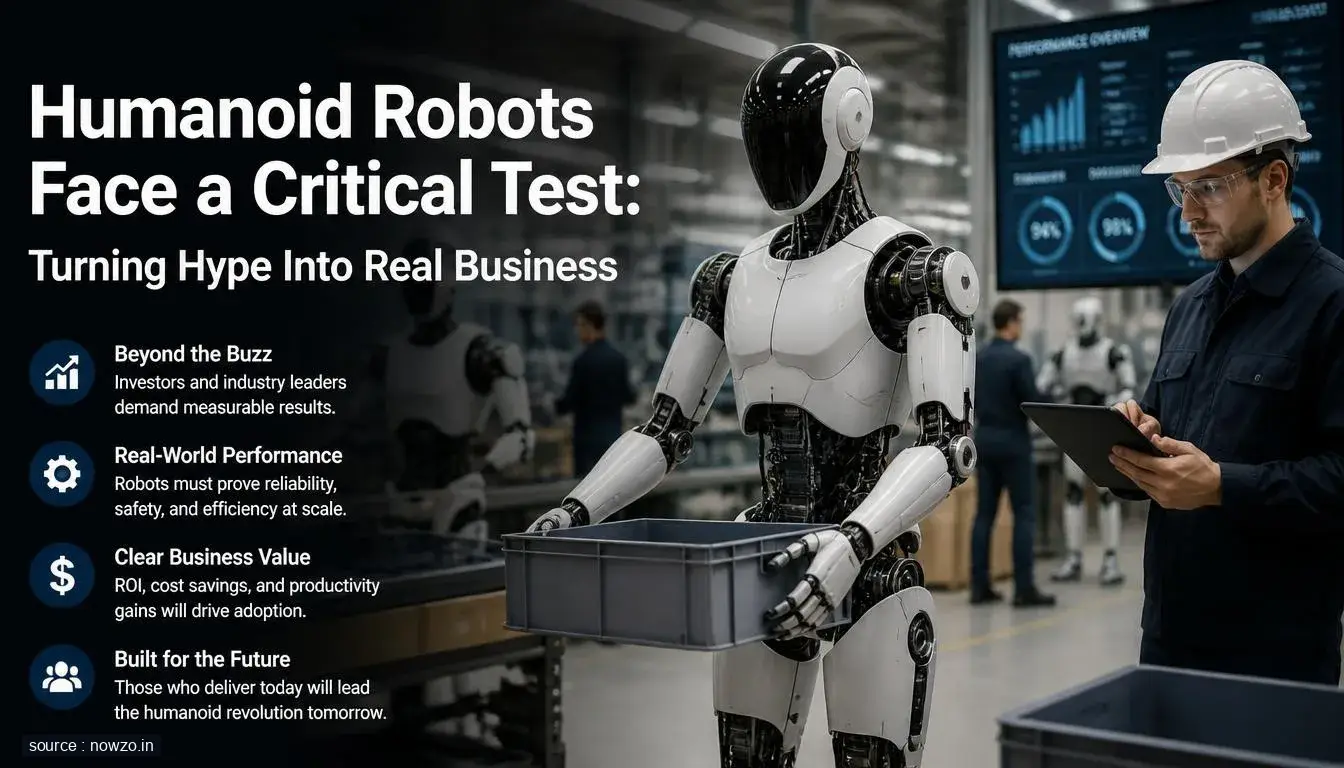
Humanoid robots have rapidly moved from science fiction to the center of the technology world's attention. Now, the industry faces its most important challenge yet: proving that the enormous hype surrounding these machines can be converted into a viable, sustainable business.
Key Facts
- Humanoid robots are attracting significant attention across the technology and investment landscape.
- The central question facing the industry is whether excitement can translate into real commercial success.
- The transition from prototype demonstrations to profitable deployment remains unproven at scale.
From Spectacle to Substance
Public fascination with humanoid robots has grown considerably, fueled by impressive demonstrations and bold promises from developers. However, the gap between eye-catching showcases and dependable, revenue-generating products remains substantial. The industry must now demonstrate that these machines can perform useful work reliably and economically in real-world settings.
The Business Challenge Ahead
For humanoid robots to succeed commercially, companies will need to prove clear value to customers beyond novelty. That means showing the machines can handle practical tasks in environments such as factories, warehouses, and other workplaces at a cost that makes sense for businesses. Investors and industry watchers alike are looking for evidence that demand is genuine and that the technology is ready for widespread adoption.
What Comes Next
The coming period will be decisive for the sector. Companies that can move beyond demonstrations and deliver measurable results for paying customers will set the pace, while those unable to bridge the gap between hype and business reality may struggle. The outcome will help determine whether humanoid robots become a transformative industry or remain an ambitious experiment.


Comments