
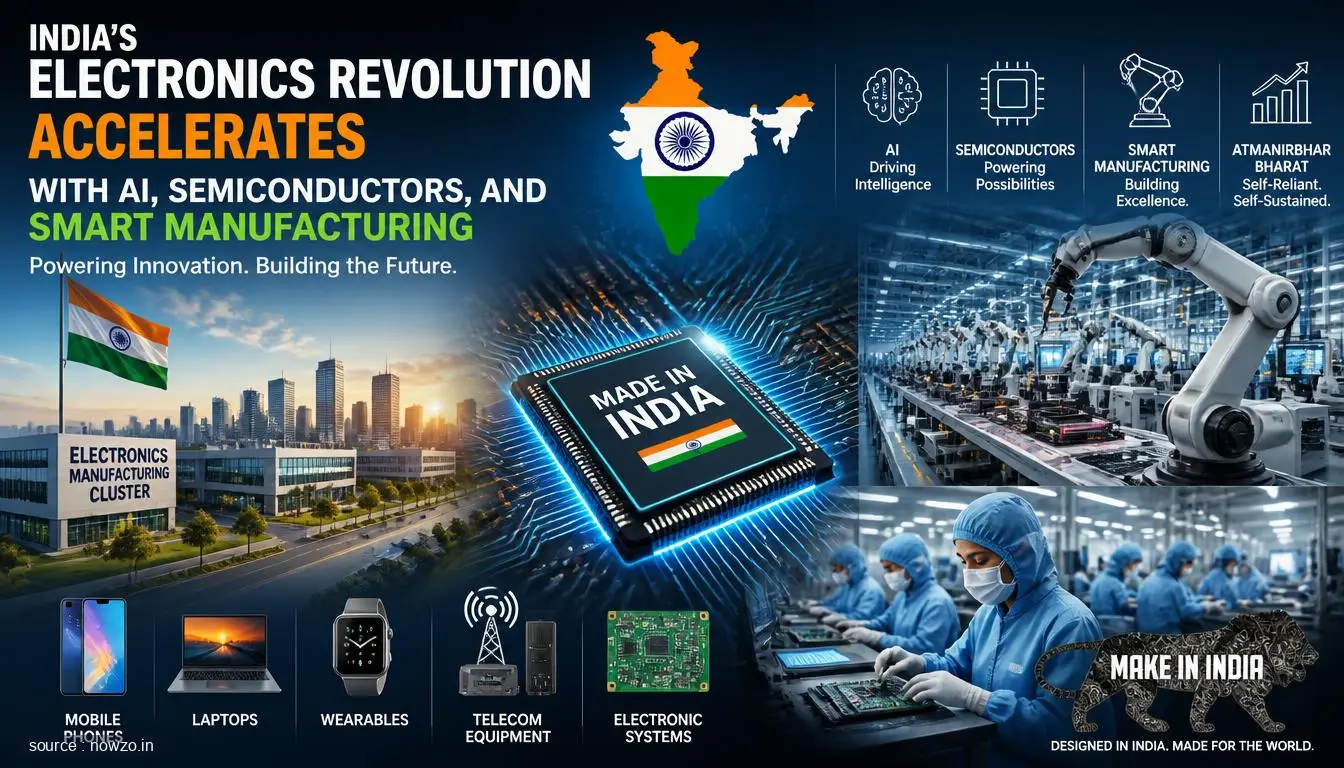
India’s electronics revolution is accelerating, with artificial intelligence, semiconductors, and smart manufacturing emerging as central forces behind the country’s next phase of industrial growth. The latest focus from UST Presents The Smart Manufacturing Shift points to a sector that is rapidly evolving through innovation, intelligent systems, and advanced production capabilities.
The development reflects a broader transformation in India’s electronics landscape, where technology is no longer limited to assembly or scale alone. Instead, the industry is increasingly being shaped by AI-powered innovation, semiconductor momentum, and more connected, efficient manufacturing models.
AI and Semiconductors Drive Momentum
At the heart of this shift is the growing role of AI-powered innovation. Across the electronics ecosystem, intelligent systems are becoming more important in how products are designed, built, and optimized. This signals a move toward smarter operations that can improve speed, precision, and responsiveness across manufacturing environments.
Semiconductors are also a key part of the story. As the foundation of modern electronics, they remain critical to the next stage of growth in the sector. The source material highlights semiconductors alongside AI as one of the major pillars of India’s accelerating electronics revolution, underscoring their importance in the country’s industrial future.
Smart Manufacturing Enters Its Next Era
The next era of smart manufacturing is another major theme. The phrase itself points to a transition from traditional production methods toward more intelligent, technology-enabled systems. In practical terms, that means manufacturing is increasingly being shaped by innovation and intelligent systems rather than by manual processes alone.
UST Presents The Smart Manufacturing Shift brings attention to how technology leaders view this transformation. The emphasis is on the role of innovation and intelligent systems in redefining manufacturing, suggesting that the future of electronics production in India will depend on how effectively companies adopt and integrate these capabilities.
Technology Leaders Highlight the Shift
The source material notes that the initiative features perspectives from technology leaders on how innovation, intelligent systems, and advanced manufacturing are converging. While the excerpt is brief, it clearly positions these voices as part of a larger conversation about where India’s electronics industry is headed.
That conversation matters because India’s electronics sector is increasingly being viewed through the lens of long-term competitiveness. AI, semiconductors, and smart manufacturing are not isolated trends. Together, they represent a broader industrial shift that could influence how the country builds capacity, strengthens supply chains, and moves up the value chain.
What This Means for India’s Electronics Future
The acceleration described in the source suggests that India’s electronics revolution is entering a more advanced stage. The focus is no longer just on expansion, but on smarter growth powered by technology. That includes AI-driven innovation, semiconductor development, and manufacturing systems designed to be more intelligent and adaptive.
As these trends continue, the sector’s direction will likely be shaped by how quickly businesses and industry leaders embrace this transformation. For now, the message from UST Presents The Smart Manufacturing Shift is clear: India’s electronics revolution is gaining speed, and the next era of smart manufacturing is already taking shape.


Comments