
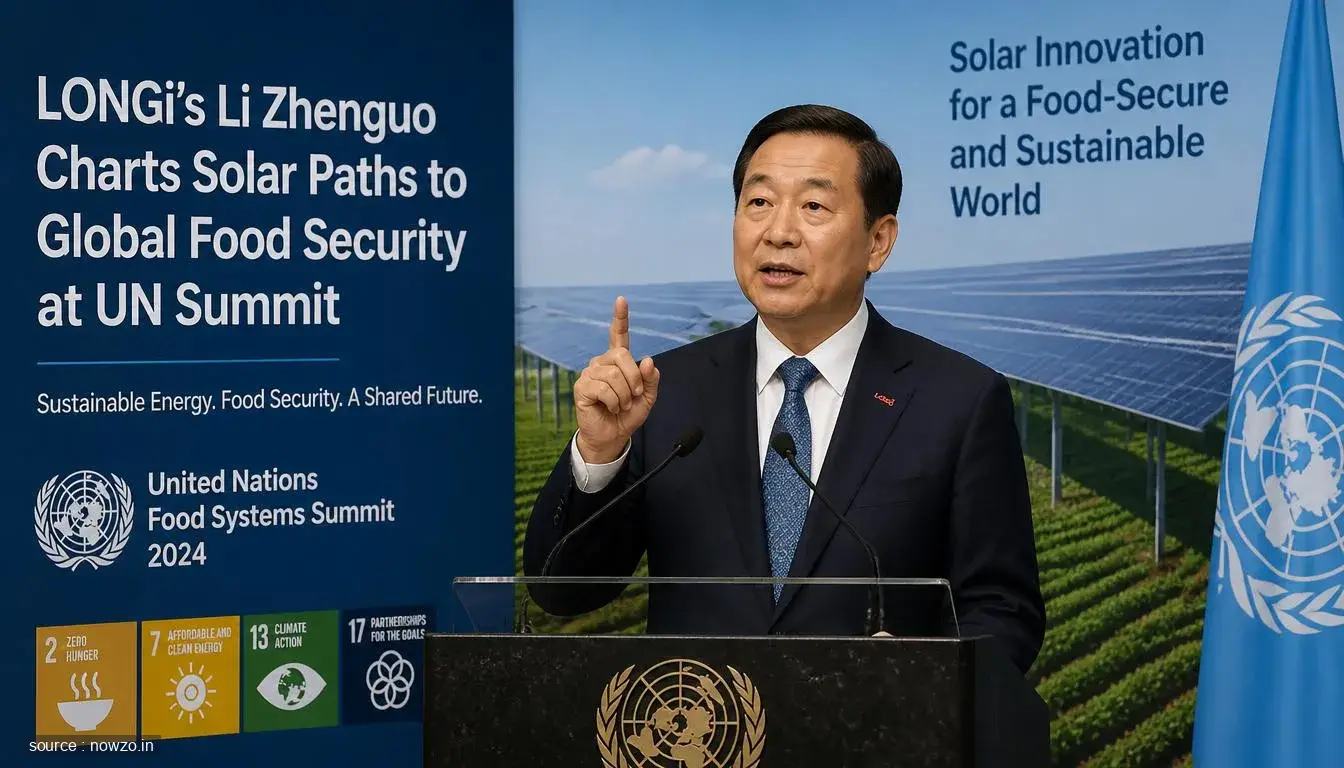
The sun beat down on Ordos, China, but inside the halls of UNCCD COP17, a different kind of energy was brewing. LONGi Green Energy Technology Chairman Li Zhenguo took the stage, not just to talk solar panels, but to sketch a future where photovoltaic technology directly nourishes the world.
Key facts
- LONGi Chairman Li Zhenguo presented at UNCCD COP17 in Ordos, China.
- He outlined two primary technological pathways for PV-powered food security.
- The focus is on combating desertification and enhancing sustainable agriculture.
A Vision Rooted in Reality
Li’s message was clear and grounded: the challenges of desertification and food scarcity demand immediate, scalable solutions. He didn’t speak in abstract terms but presented two concrete technological routes where solar innovation meets agricultural need. The first path leverages PV systems to power greenhouses and irrigation in arid regions, turning sun-scorched land into cultivable space. The second integrates solar arrays with farming practices, allowing food and energy production to share the same terrain without conflict.
More Than Just Electricity
This isn’t about generating kilowatts alone. It’s about creating resilience. In regions where water is scarce and soil is fragile, Li’s proposed pathways offer a dual promise: steady renewable energy and enhanced crop yields. The technology aims to make agriculture possible in places where it has long been abandoned, addressing food security at its most vulnerable points.
Why This Matters Now
With climate pressures intensifying and populations growing, the intersection of energy and food systems can no longer be ignored. Li Zhenguo’s presentation at a major UN conference signals a shift in how global leaders are thinking about interconnected crises—and the role cutting-edge tech must play in solving them.

Comments