
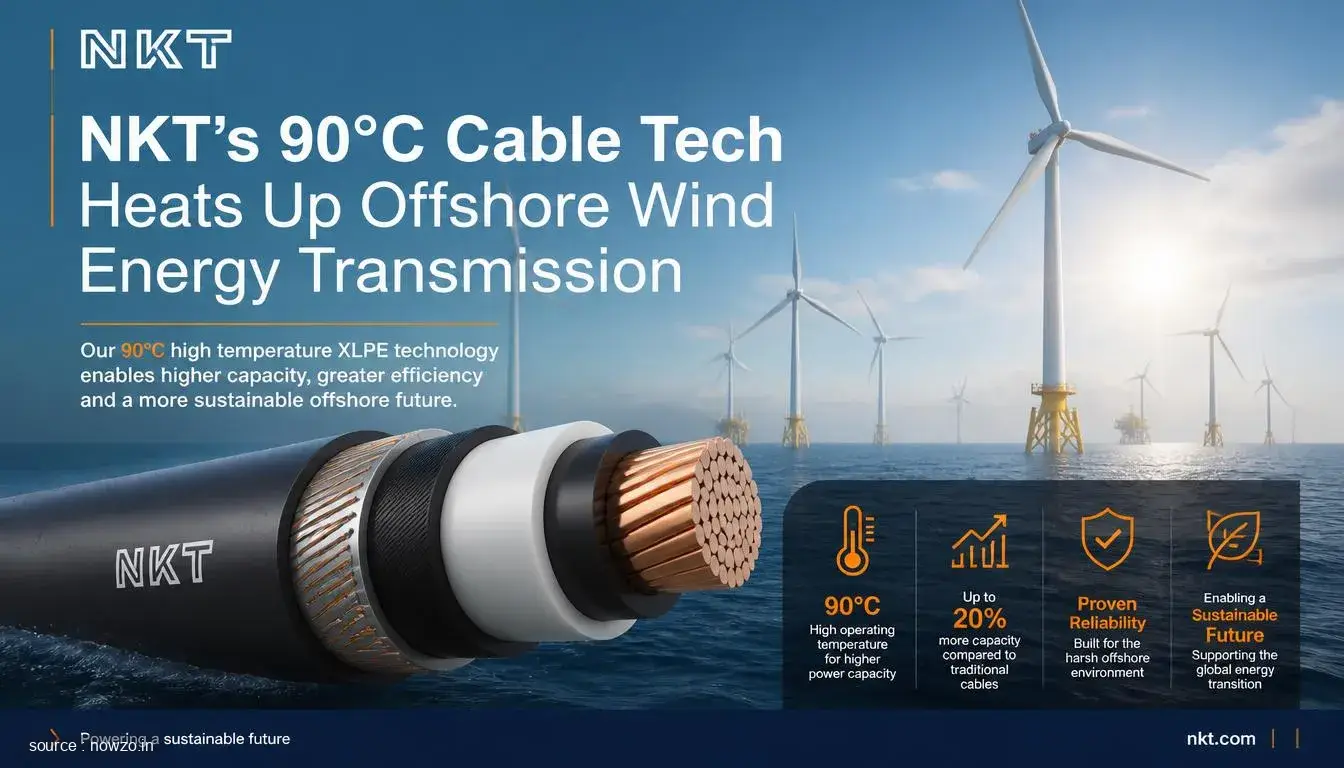
In a move that could reshape how we harness ocean winds, cable giant NKT has unveiled a breakthrough in high-voltage direct current technology. Their new system operates reliably at a scorching 90°C—a temperature that once seemed implausible for subsea power lines.
Key facts
- Operating temperature: 90°C
- Technology type: High-voltage direct current (HVDC)
- Application: Offshore wind energy transmission
Why temperature matters
For years, cable engineers worked within conservative thermal limits. Pushing beyond these boundaries wasn't just about ambition—it was about physics. Higher temperatures mean greater resistance, more degradation risks, and potential failure points. But NKT's engineers cracked the code, developing materials and designs that maintain integrity under extreme heat.
The capacity revolution
This isn't just a technical achievement—it's a practical game changer. Cables that run hotter can carry more power without requiring thicker cables or additional infrastructure. Imagine existing wind farms suddenly able to push 15-20% more electricity through those same underwater pathways. That's the kind of efficiency boost that makes renewable energy projects more viable and accelerates our transition from fossil fuels.
Offshore wind implications
Offshore wind farms face particular challenges: harsh marine environments, difficult maintenance access, and the need to transmit power over long distances to shore. NKT's innovation directly addresses these pain points. More robust cables mean fewer failures. Higher capacity means fewer cables needed for the same output. It's a elegant solution that could reduce both costs and environmental impacts of offshore wind development.
The technology represents a significant step forward in power transmission capabilities
That understatement from NKT's announcement barely captures what this means for renewable energy infrastructure. We're looking at a fundamental upgrade to the circulatory system of our future energy grid.


Comments