
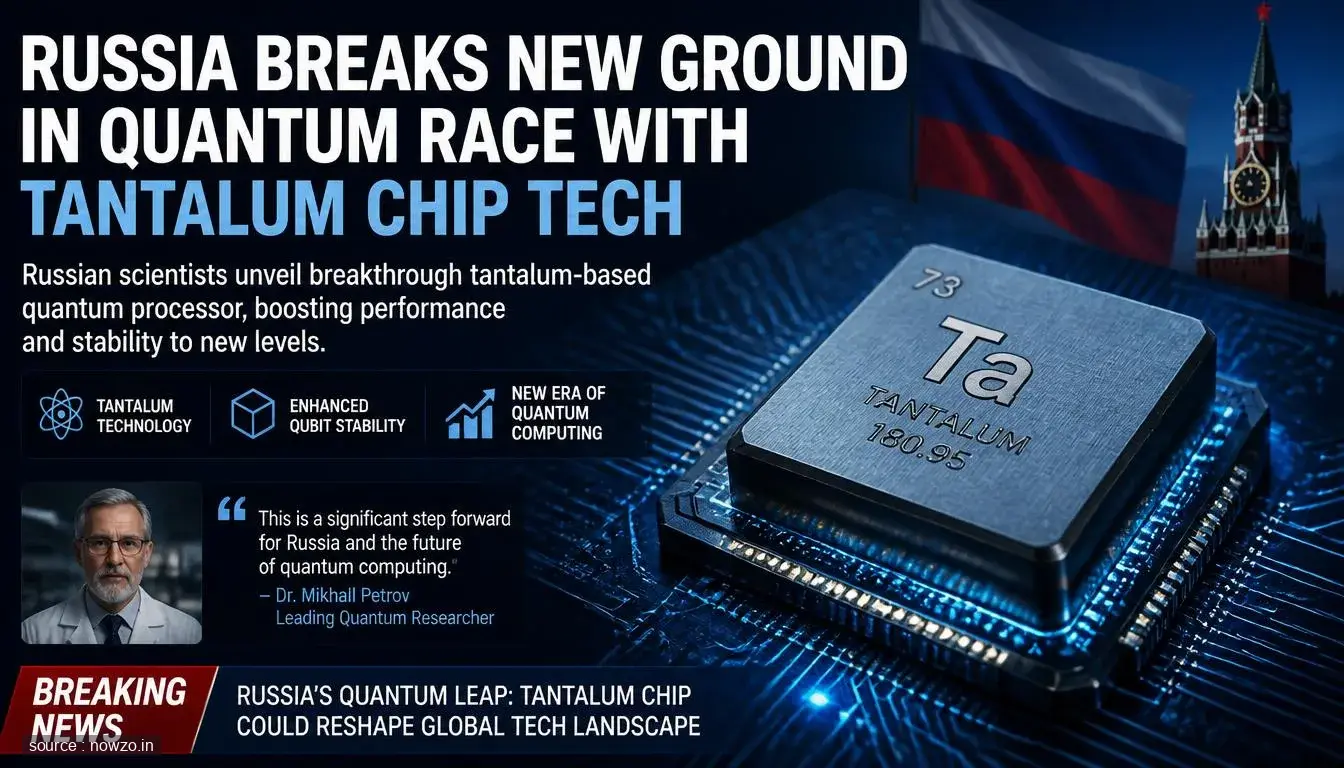
In a move that could redraw the lines of the global quantum race, Russian researchers have unveiled a breakthrough in chip technology—using tantalum to build advanced superconducting quantum processors.
Why Tantalum Matters
Tantalum isn’t just another metal. It’s known for exceptional corrosion resistance and stability at high frequencies—critical for quantum coherence. If Russia has indeed cracked the code to integrate it effectively into quantum systems, it could mean longer-lasting qubits and more stable computations.
This development arrives as nations and tech giants pour billions into quantum research, each hoping to claim the next computing revolution.
A Strategic Play Amid Sanctions
With Western sanctions limiting Russia’s access to cutting-edge foreign technology, this announcement feels like more than scientific progress—it’s a statement of self-reliance. The country is signaling it won’t be left behind in critical tech domains.
Quantum computing, still in its formative years, promises to revolutionize everything from cryptography to drug discovery. Whoever builds the most stable, scalable system first gains immense strategic and economic leverage.
What Comes Next?
While details on scalability and commercial readiness remain sparse, the mere mention of tantalum in quantum contexts will turn heads in labs from Silicon Valley to Shenzhen. If validated, this could accelerate global R&D timelines—and intensify competition.


Comments