
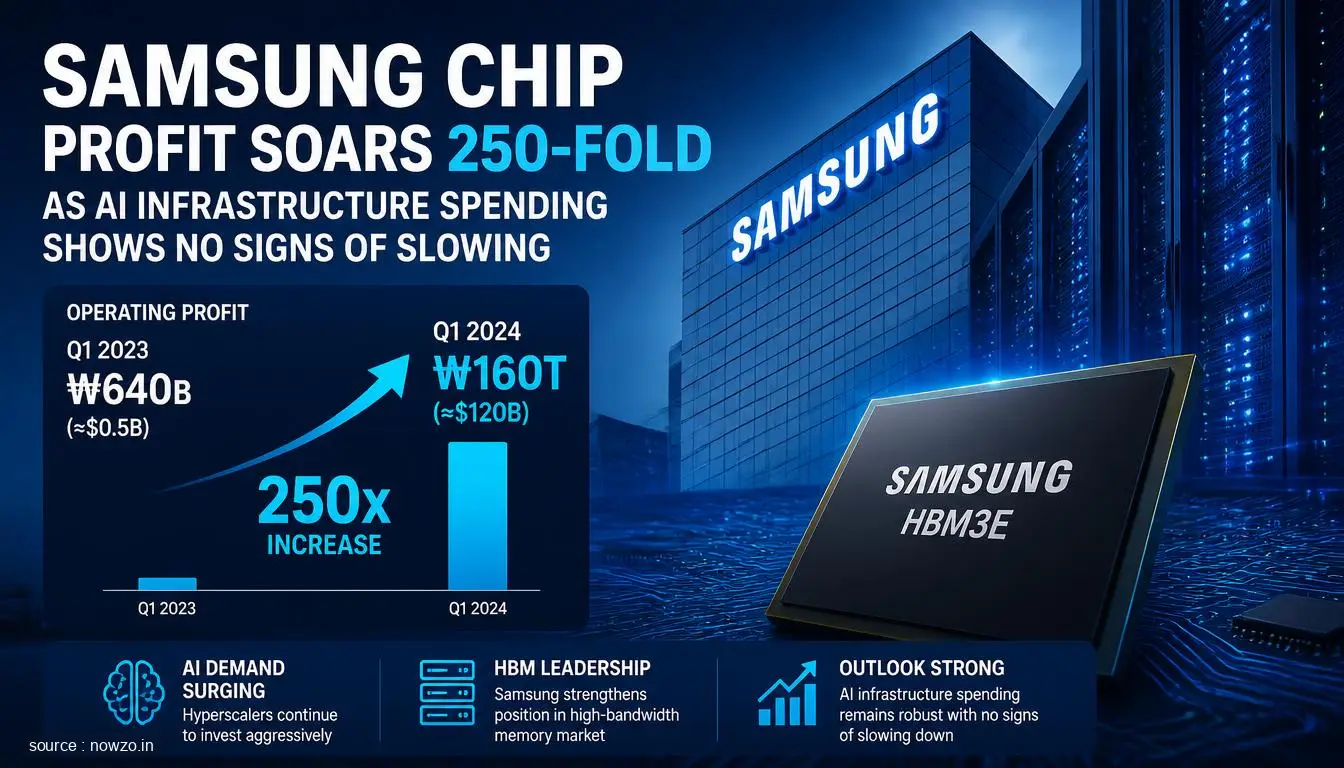
Samsung Electronics has delivered one of the most dramatic earnings turnarounds in recent memory, with its semiconductor division reporting a staggering 250-fold increase in profit this earnings season. The South Korean tech giant's chip business has emerged as a major beneficiary of the global artificial intelligence boom, as companies race to build out the infrastructure needed to power next-generation AI systems.
The extraordinary profit surge underscores the pivotal role that advanced semiconductors play in the ongoing AI revolution. As tech companies, cloud providers, and enterprises pour billions into AI infrastructure, demand for high-performance memory chips and processors has reached unprecedented levels.
AI Infrastructure Spending Drives Record Results
The driving force behind Samsung's remarkable chip profit growth is the relentless wave of investment in AI infrastructure. Companies across the globe are building massive data centers equipped with the latest AI accelerators and high-bandwidth memory chips, creating a windfall for semiconductor manufacturers like Samsung.
Industry observers note that AI infrastructure spending shows no sign of slowing down. Major technology firms continue to announce ambitious plans for expanding their AI capabilities, which translates directly into sustained demand for the advanced chips that Samsung produces.
The 250-fold profit increase represents a dramatic reversal from the challenging conditions Samsung's chip division faced in previous quarters. The semiconductor industry experienced a significant downturn in recent years, with memory chip prices falling sharply amid oversupply and weakening demand. The AI boom has fundamentally reshaped that landscape.
Samsung's Position in the AI Chip Market
Samsung has been working aggressively to strengthen its position in the AI chip market, investing heavily in next-generation memory technologies and advanced manufacturing processes. The company's efforts appear to be paying off, as evidenced by the dramatic improvement in its semiconductor profitability.
The chip division's performance is particularly significant for Samsung's overall financial health. The semiconductor business has historically been one of the company's most important revenue drivers, and its recovery has a substantial impact on Samsung's bottom line.
High-bandwidth memory (HBM) chips, which are essential components in AI training and inference systems, have been a key growth area. Samsung has been competing intensely with rivals to capture a larger share of this lucrative market segment.
Broader Implications for the Semiconductor Industry
Samsung's results reflect a broader trend across the semiconductor industry, where companies with strong positions in AI-related chips are seeing outsized gains. The AI infrastructure buildout has created a rising tide that is lifting the fortunes of chipmakers with the right product portfolios.
The sustained nature of AI infrastructure spending suggests that the current upcycle in the semiconductor industry could have considerable staying power. Unlike previous boom-and-bust cycles driven by consumer electronics demand, the AI buildout represents a structural shift in computing infrastructure that could support elevated chip demand for years to come.
Analysts and industry watchers will be closely monitoring whether Samsung can maintain this momentum in coming quarters. The company faces intense competition from rivals including SK Hynix and Micron in the memory chip space, as well as TSMC in contract chip manufacturing.
Looking Ahead
As AI continues to reshape the technology landscape, Samsung's chip division appears well-positioned to benefit from the ongoing transformation. The 250-fold profit increase serves as a powerful indicator of how dramatically the AI boom has altered the semiconductor industry's trajectory.
With AI infrastructure spending showing no signs of decelerating, Samsung and its competitors are likely to continue investing aggressively in capacity expansion and technology development. The race to supply the chips that power artificial intelligence is far from over, and Samsung's latest results demonstrate that the stakes — and the potential rewards — are enormous.


Comments