
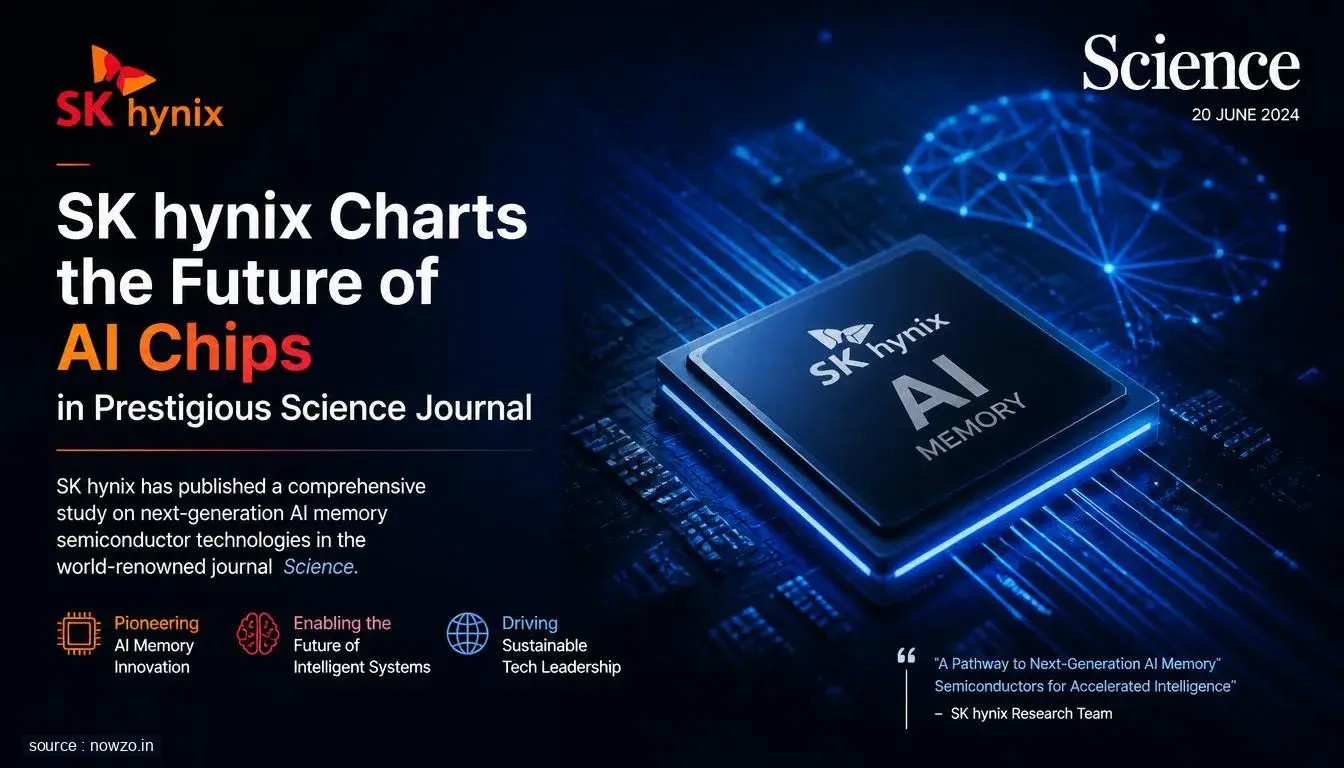
In a move that signals where the semiconductor industry is headed, SK hynix has laid out its ambitious technology roadmap for co-packaged optics—and it’s landed in one of the world’s most respected scientific journals. The feature in Nature Electronics isn’t just a technical deep dive; it’s a statement. This is hardware that could redefine how AI thinks, learns, and processes information.
Key facts
- SK hynix’s co-packaged optics roadmap was published in Nature Electronics.
- The technology integrates optics and electronics into a single package.
- It aims to boost speed and cut power use in AI and data center chips.
Why optics matter now
As artificial intelligence models grow larger and hungrier for data, traditional copper wiring inside chips is hitting a wall. It’s slow. It’s power-intensive. It generates heat. Co-packaged optics—embedding tiny light-based communication systems directly into semiconductor packages—could smash through that barrier. SK hynix’s roadmap suggests we’re closer than ever to making that leap.
A vote of confidence from science
Publication in Nature Electronics is no small feat. The journal is highly selective, known for spotlighting research with real-world impact. For SK hynix, this isn’t just a technical milestone—it’s academic validation. It tells the market that this isn’t speculative lab work. It’s a credible, peer-reviewed vision for the next era of computing.
What comes next
The industry will be watching closely. If SK hynix can deliver on this roadmap, the effects could ripple across AI development, cloud infrastructure, and even consumer electronics. Faster, cooler, more efficient chips could accelerate everything from drug discovery to autonomous driving. For now, the blueprint is public—and the race is on.


Comments