
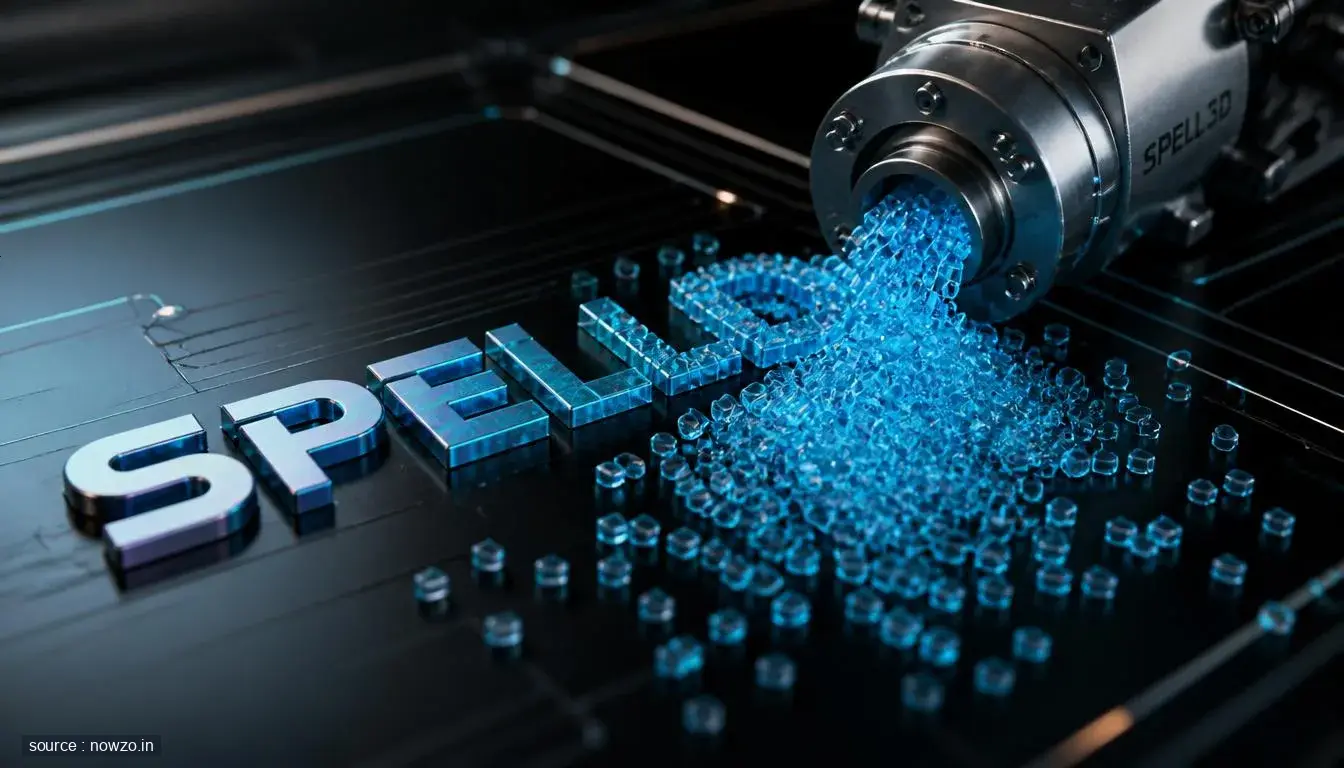
In a bold move that could reshape the landscape of additive manufacturing, SPELL3D is championing pellet extrusion technology as the next evolutionary step in 3D printing. This approach swaps out conventional filament spools for raw plastic pellets, unlocking new potential for speed, scale, and sustainability.
Key facts
- SPELL3D utilizes pellet extrusion instead of traditional filament.
- The technology supports a wider range of materials, including recycled plastics.
- It enables larger-scale prints and faster production times.
Why pellets could be a game-changer
For years, 3D printing has relied heavily on filament—a format that limits material choices and often comes with a higher price tag. Pellet extrusion changes that. By feeding raw plastic granules directly into the printer, SPELL3D’s system cuts costs, reduces waste, and opens the door to materials that were previously impractical or too expensive to produce as filament.
Broader implications for industry
This isn’t just a technical upgrade—it’s a shift with real-world impact. Industries from automotive to construction could benefit from the ability to print larger, stronger parts more efficiently. There’s also an exciting sustainability angle: pellet systems can more easily incorporate recycled plastics, supporting circular economy goals.
What comes next
While still emerging, pellet extrusion is gaining traction among manufacturers looking for scalable additive solutions. SPELL3D’s work places it at the forefront of this movement, hinting at a future where 3D printing moves further into mass production—and perhaps even into our daily lives in bigger ways.


Comments