
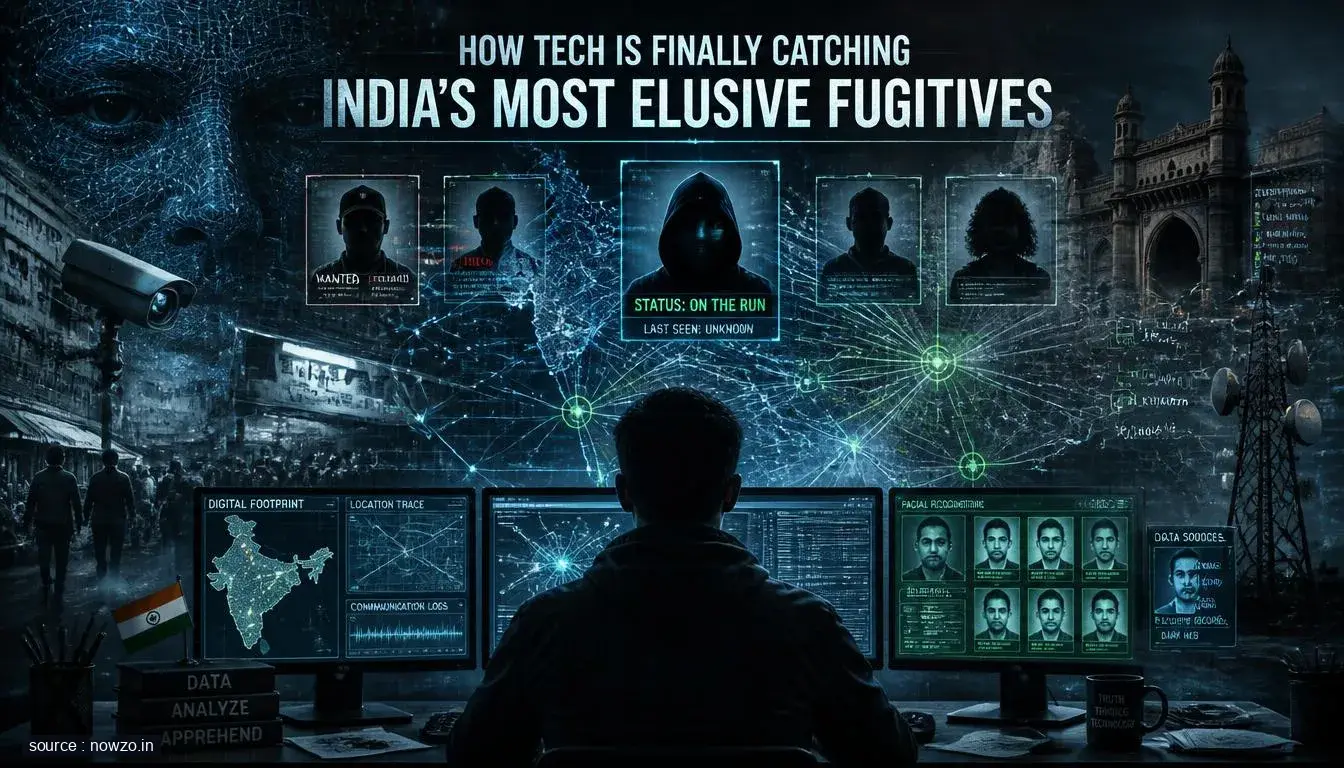
For years, they've slipped through borders, changed identities, and vanished into shadows—but India's most wanted fugitives are discovering that technology is shrinking their world. Law enforcement agencies are deploying an arsenal of digital tools that are turning the tide in manhunts that once seemed hopeless.
Key facts
- Advanced facial recognition systems scanning crowds and CCTV feeds
- Digital footprint analysis tracking financial transactions and communications
- International database cooperation sharing real-time intelligence
- Mobile surveillance technology monitoring movement patterns
The digital dragnet tightens
What changed? The answer lies in the convergence of technologies that create a web almost impossible to escape. Facial recognition algorithms can now pick a single face from thousands in a crowded market. Financial surveillance tracks digital payments that once left no trail. Even old-fashioned hideouts become vulnerable when every smartphone becomes a potential beacon.
From chase to chess match
The dynamics of pursuit have fundamentally shifted. It's no longer just about physical search parties combing through neighborhoods—now it's a digital chess match where every transaction, every communication, every digital footprint becomes a move that could checkmate a fugitive's freedom. The authorities aren't just chasing; they're predicting, analyzing patterns, and waiting for the inevitable mistake that technology will instantly flag.
The human element remains
Yet for all the technological advances, seasoned investigators emphasize that machines only enhance human intuition, not replace it. "Technology gives us eyes where we had none," one veteran officer noted, "but it still takes human insight to understand why someone moves where they do, who they might trust, when they might slip up." The marriage of cutting-edge tools with investigative experience is creating a formidable combination that's rewriting the rules of pursuit.


Comments