
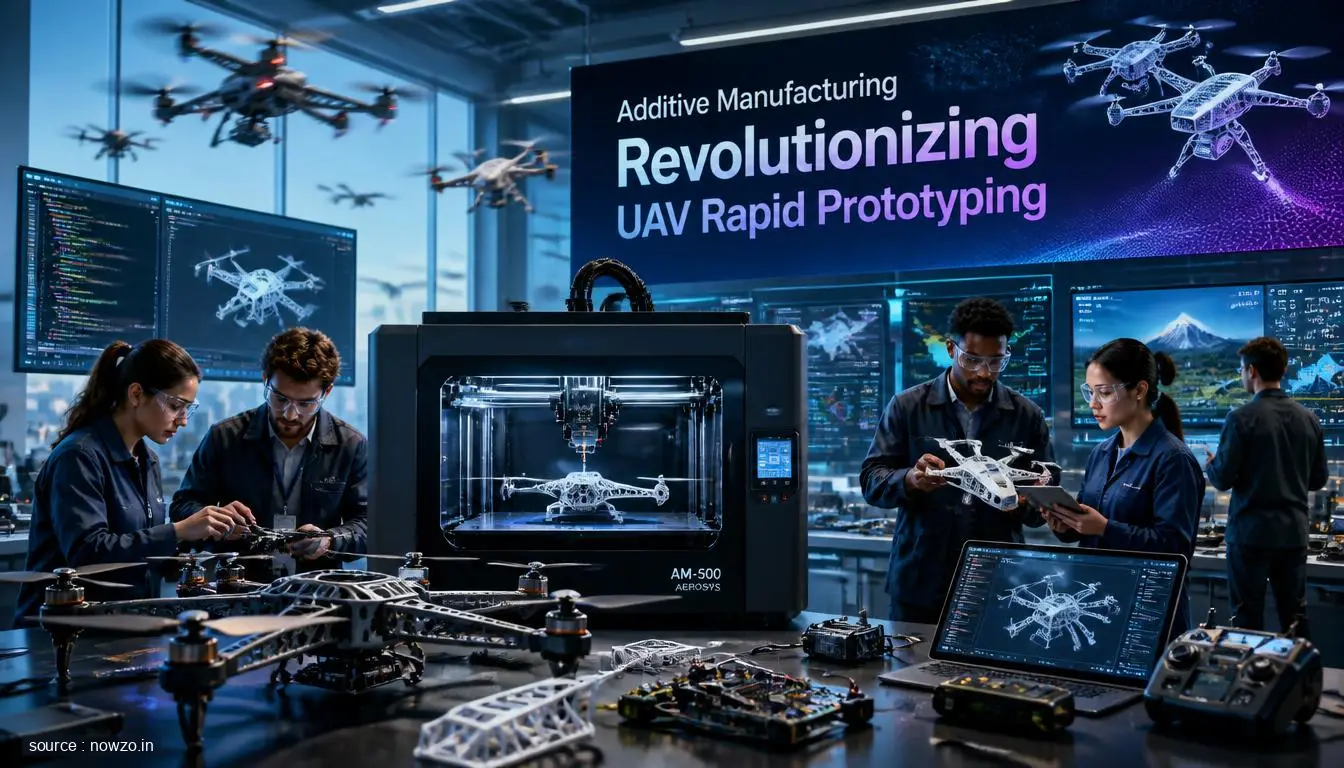
The intersection of additive manufacturing and unmanned aerial vehicle development is opening new possibilities for engineers and designers working in the rapidly evolving drone industry. As demand for more sophisticated unmanned systems continues to grow, rapid prototyping has become an essential component of the development process.
The Role of Additive Manufacturing in UAV Development
Additive manufacturing, commonly known as 3D printing, has emerged as a transformative technology in the field of unmanned systems. By allowing engineers to quickly produce physical prototypes from digital designs, this approach significantly reduces the time between concept and testing phases.
For UAV developers, the ability to rapidly iterate on designs is crucial. Traditional manufacturing methods often involve lengthy lead times and substantial costs for producing prototype components. Additive manufacturing addresses these challenges by enabling on-demand production of parts with complex geometries that would be difficult or impossible to achieve through conventional techniques.
Benefits for Unmanned Systems Technology
The application of additive manufacturing to UAV rapid prototyping offers several advantages for the unmanned systems sector. Engineers can test multiple design variations in shorter timeframes, allowing for more thorough optimization of aerodynamic performance, structural integrity, and overall functionality.
This approach also supports the development of customized solutions tailored to specific mission requirements. Whether for commercial, industrial, or research applications, the flexibility provided by additive manufacturing enables UAV designers to respond more effectively to diverse operational needs.
Looking Ahead
As additive manufacturing technology continues to advance, its integration into UAV development workflows is expected to deepen. The combination of rapid prototyping capabilities with innovative design approaches positions the unmanned systems industry for continued growth and technological advancement.
The ongoing evolution of both additive manufacturing and unmanned aerial vehicle technology suggests that this synergy will play an increasingly important role in shaping the future of drone development and deployment across various sectors.


Comments