
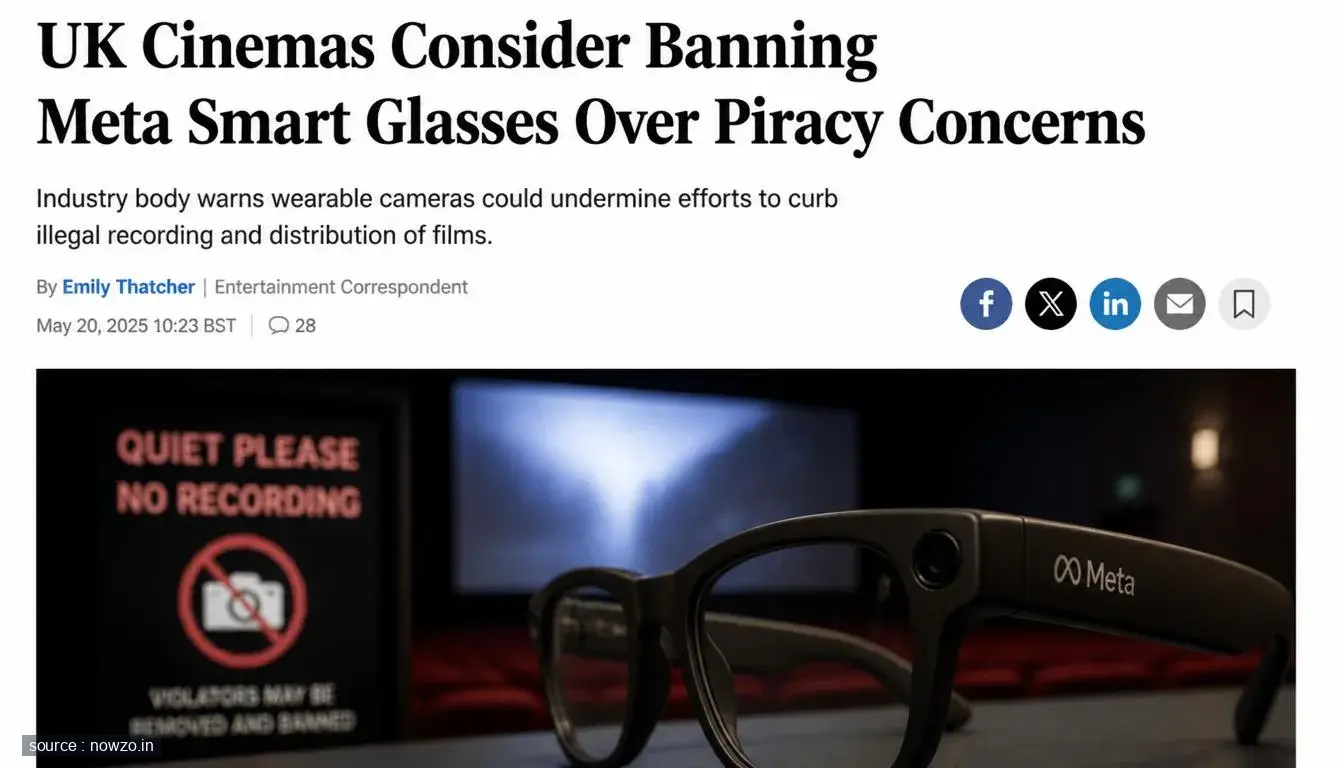
Cinema operators in the United Kingdom are reportedly considering a ban on Meta smart glasses due to rising concerns about film piracy. The wearable devices, which allow users to discreetly record video, have sparked fears that they could be used to illegally capture and distribute newly released films.
Why Cinemas Are Concerned
Meta's smart glasses, developed in partnership with Ray-Ban, feature built-in cameras capable of recording high-quality video. While the technology offers convenience for everyday users, it also presents a significant challenge for the film industry, which has long battled against piracy.
The ability to record content without drawing attention makes these devices particularly problematic in cinema settings, where illegal recordings can lead to substantial financial losses for studios and distributors.
Piracy and the Film Industry
Film piracy remains a major issue worldwide, with unauthorized recordings often appearing online shortly after a movie's release. The introduction of discreet recording devices like smart glasses adds a new layer of complexity to anti-piracy efforts.
UK cinemas are now exploring measures to address this emerging threat, including potential bans on the use of smart glasses within their venues.
What Comes Next
As wearable technology continues to evolve, cinemas and other entertainment venues may need to adapt their policies to protect intellectual property. The debate over Meta smart glasses highlights the broader tension between technological innovation and content protection.


Comments