
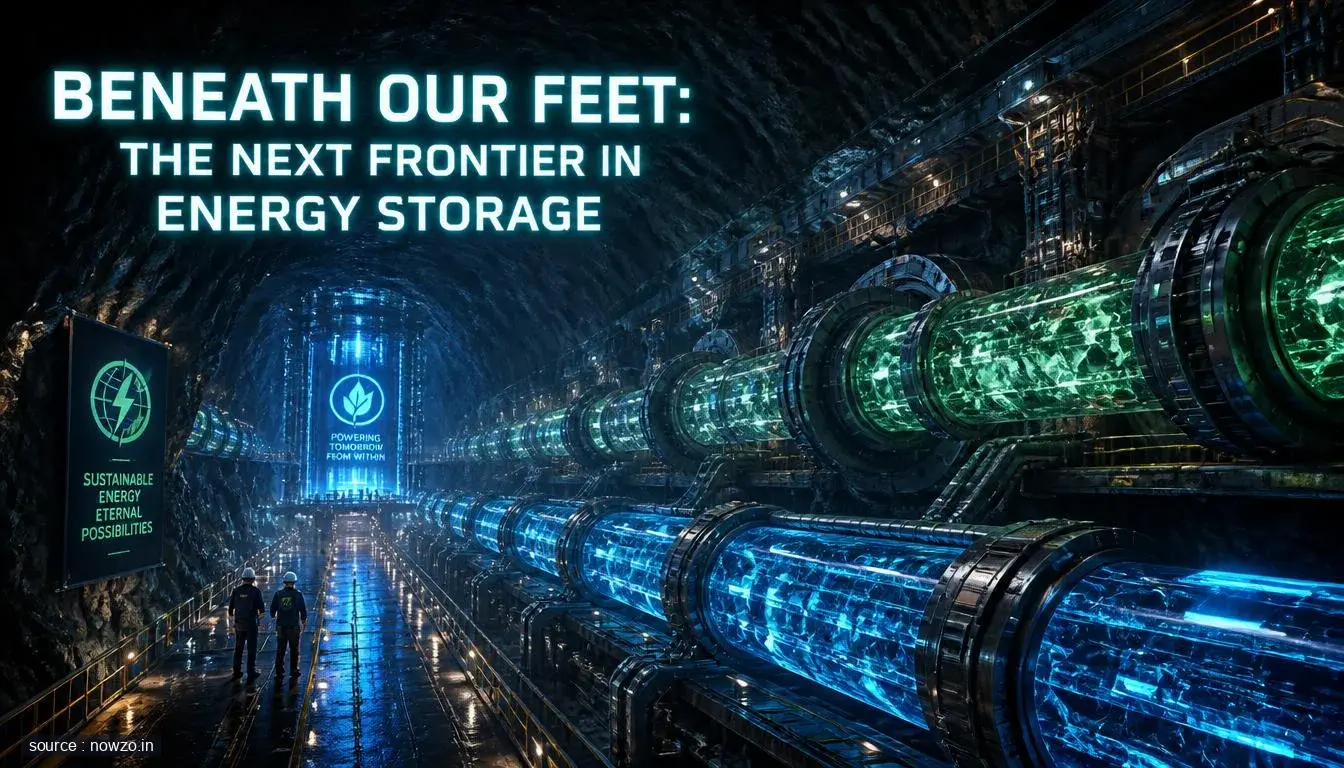
As the world races to harness renewable energy, a quiet revolution is unfolding beneath our feet. Underground energy storage technologies are stepping into the spotlight, promising to solve one of the biggest hurdles in the green transition: how to store power when the sun isn’t shining and the wind isn’t blowing.
Key facts
- Emerging technologies focus on using subterranean spaces for energy storage
- Includes compressed air energy storage (CAES) and thermal energy storage
- Aims to support grid stability and renewable energy integration
Why go underground?
Think about it: the earth provides massive, naturally insulated spaces that can hold enormous amounts of energy. It’s like having a giant battery buried right below us, waiting to be tapped. These systems aren’t just theoretical—they’re being developed and tested in real-world conditions, from abandoned mines to specially engineered caverns.
The technology taking shape
Compressed air energy storage works by pumping air into underground reservoirs when energy is plentiful, then releasing it to generate electricity during peak demand. Thermal storage takes a different approach, heating underground materials to preserve energy for later use. Both methods offer scalability that surface solutions struggle to match.
What this means for our energy future
If these technologies prove viable at scale, they could fundamentally change how we manage power grids. Suddenly, those intermittent renewable sources become far more reliable. The implications are huge—for consumers, for utilities, and for the planet.



Comments