
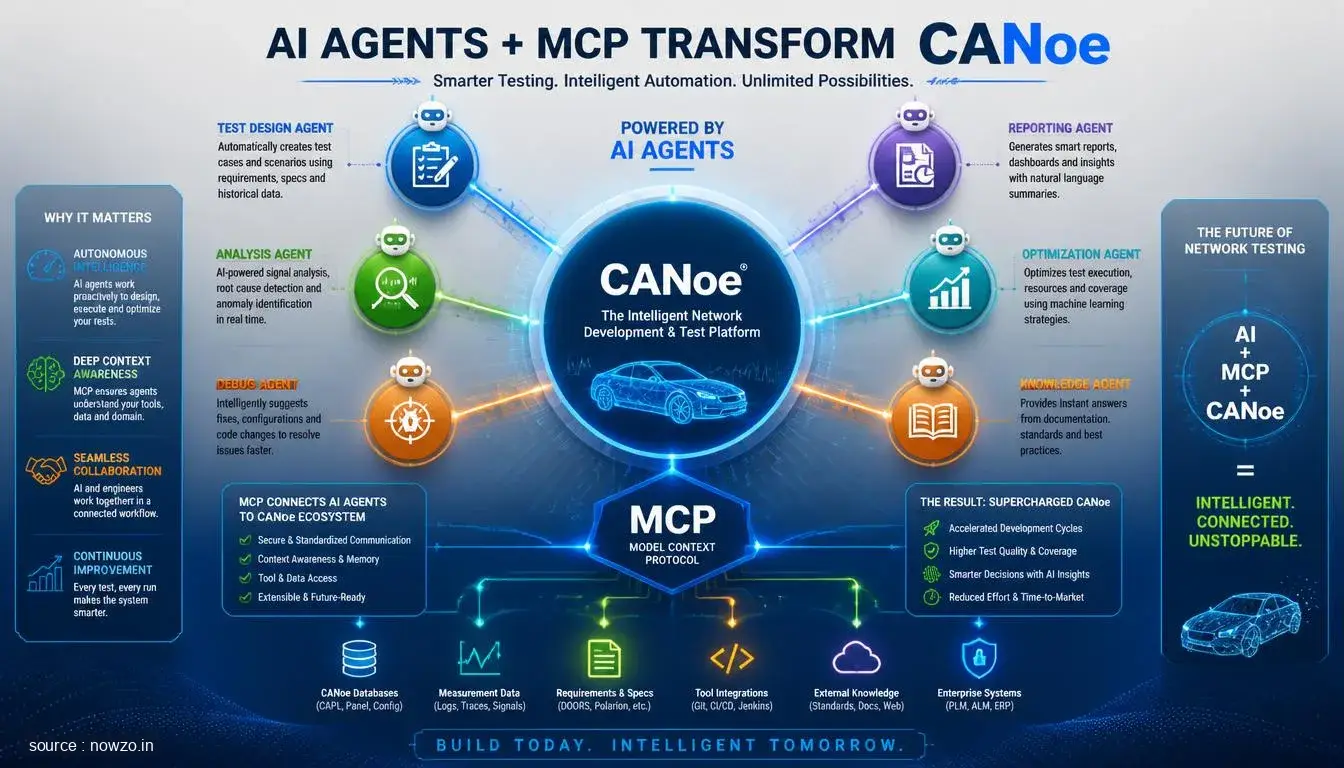
Vector just turbocharged its flagship CANoe software, weaving artificial intelligence agents and the Model Context Protocol (MCP) directly into the fabric of automotive testing. This isn't just an update—it's a fundamental shift in how developers can interact with and validate complex vehicle systems.
Key facts
- CANoe now integrates AI agents for enhanced testing automation
- Model Context Protocol (MCP) support added for better tool interoperability
- Update represents Vector's push toward intelligent development environments
Why this matters now
Automotive software keeps growing more complex, with teams scrambling to test everything from infotainment to advanced driver assistance systems. Vector's move injects intelligence directly into the testing process, potentially saving engineers countless hours while catching more edge cases.
The AI advantage
These new AI agents don't just follow scripts—they learn, adapt, and potentially uncover issues human testers might miss. Imagine having an extra pair of eyes that never tires, constantly refining test strategies based on what it discovers in real-time.
Broader ecosystem impact
With MCP integration, CANoe now speaks more languages within the development toolchain. This protocol acts like a universal translator between different software tools, breaking down silos that often slow down automotive projects.
For teams deep in vehicle validation, this could mean fewer context switches and smoother workflows—the kind of efficiency gains that add up dramatically across months of development cycles.


Comments