
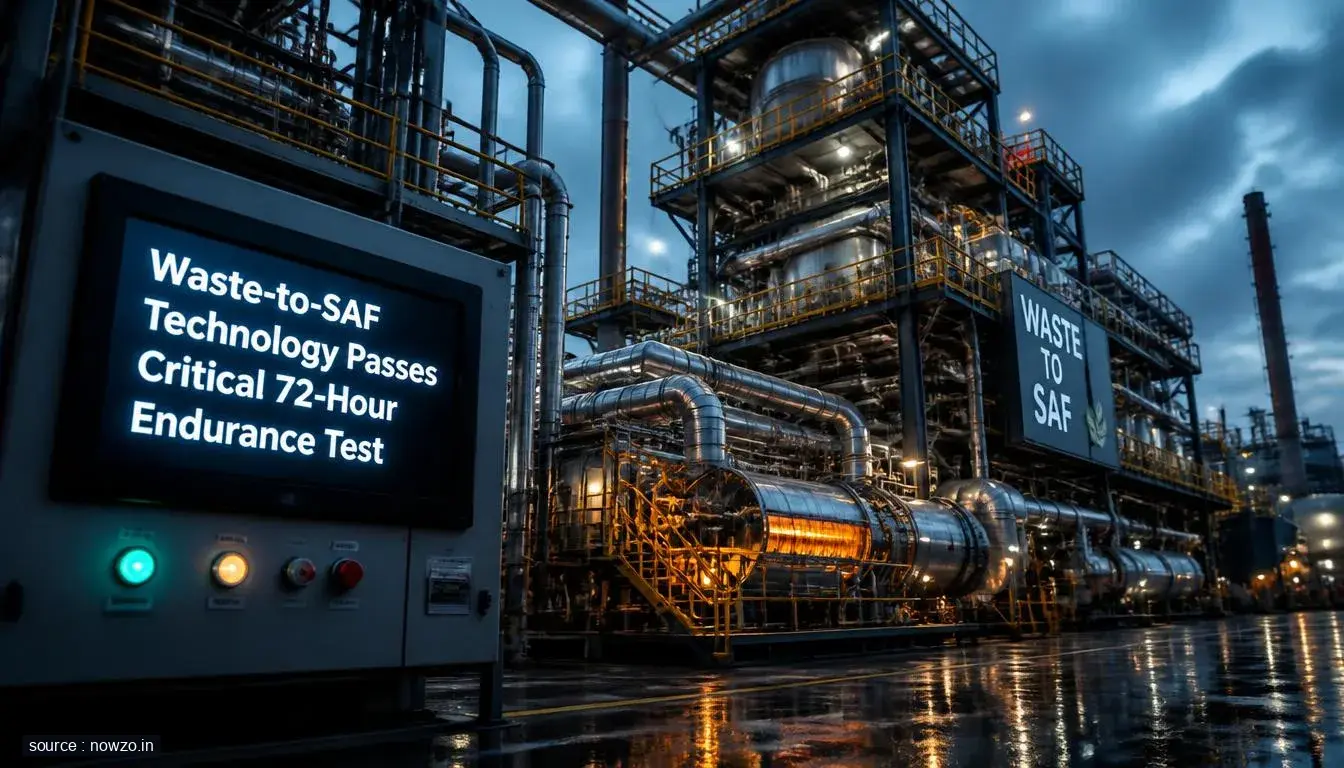
In a significant step toward cleaner skies, a new waste-to-sustainable aviation fuel (SAF) technology has successfully weathered a grueling 72-hour endurance test. This milestone signals that the process can run continuously under real-world conditions—a crucial validation for scaling up production.
Key facts
- Technology type: Waste-to-SAF conversion
- Test completed: 72-hour endurance trial
- Status: Successfully passed continuous operation benchmark
Why endurance matters
For any industrial technology, proving it can run non-stop isn’t just a box-ticking exercise—it’s everything. Intermittent operation might work in a lab, but out in the real world, refineries need reliability. This 72-hour trial demonstrates stability, bringing waste-derived SAF closer to commercial reality.
The bigger picture
Aviation’s carbon footprint is enormous, and SAF offers one of the most promising paths to decarbonization. Turning waste into jet fuel isn’t just clever; it’s necessary. Technologies like this could eventually help airlines meet emissions targets without sacrificing range or performance.
What comes next
Passing an endurance trial is a strong signal, but it’s not the finish line. Next steps likely include longer runs, integration tests, and eventually pilot projects with industry partners. The road to full-scale adoption is long, but this is a meaningful leap forward.


Comments