
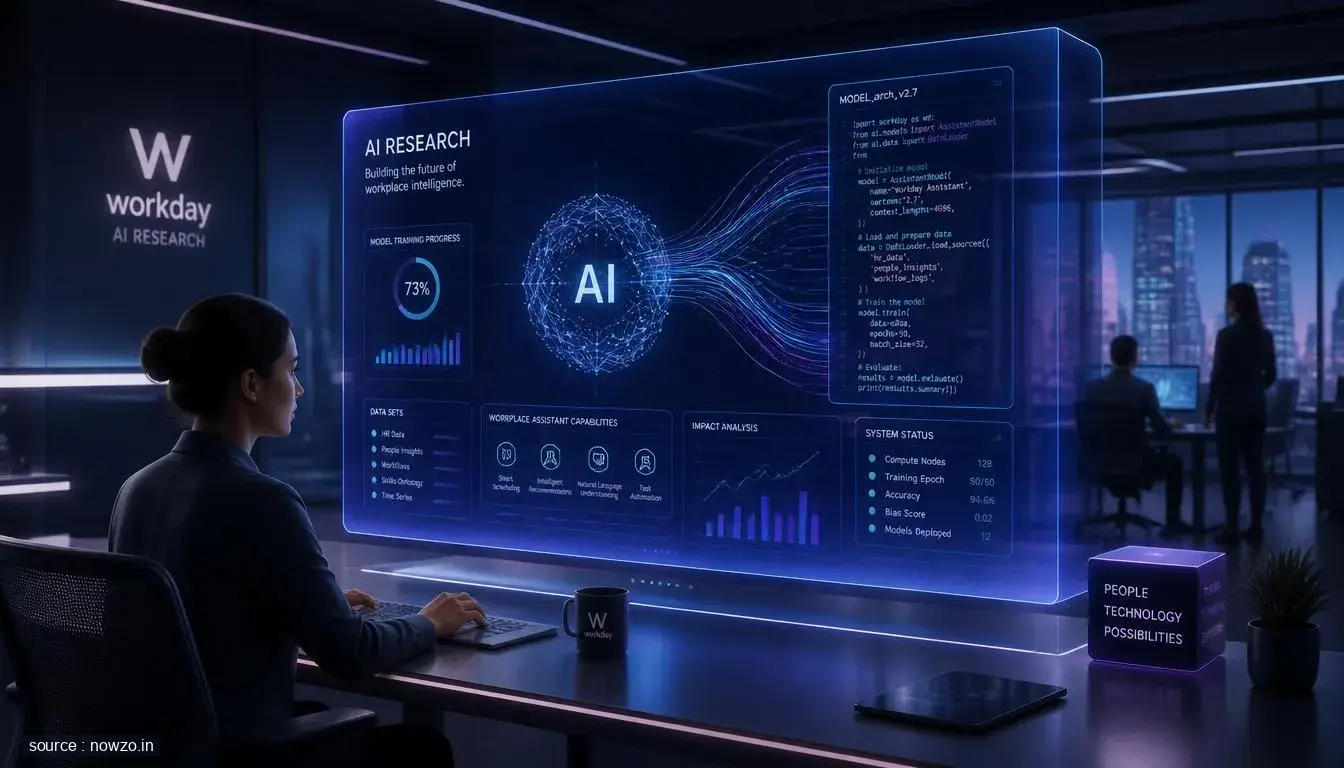
Workday’s AI research division is quietly engineering a new generation of workplace agents—intelligent systems designed to think, assist, and even anticipate needs within complex business environments. It’s not about flashy demos or sci-fi fantasies; this is practical, grounded work aimed at making daily operations smoother, smarter, and more human-centered.
Key facts
- Workday AI Research is developing advanced workplace agents.
- Focus includes improving AI’s contextual understanding and decision-making.
- Agents are designed to assist with tasks like scheduling, data analysis, and workflow automation.
Why workplace agents matter
In an era where businesses drown in data but thirst for insight, effective AI assistance isn’t a luxury—it’s essential. Workday’s researchers are tackling one of the toughest challenges in AI: building systems that don’t just execute commands, but understand context, nuance, and intent. Imagine an agent that helps schedule meetings while respecting participants’ time zones, workloads, and even preferences—without being explicitly told each detail.
How Workday is approaching the challenge
The team is blending machine learning, natural language processing, and behavioral analytics to create agents that learn and adapt. Rather than building monolithic tools, they’re focusing on modular, scalable AI that can be customized for different industries and roles. The goal isn’t to replace human workers, but to empower them—freeing up time for creative and strategic work while handling repetitive or data-heavy tasks.
The road ahead
Workday hasn’t announced a timeline for rolling out these advanced agents, but the research signals a clear direction. As AI continues to evolve, so too will its role in the workplace—shifting from simple automation to genuine partnership.



Comments