
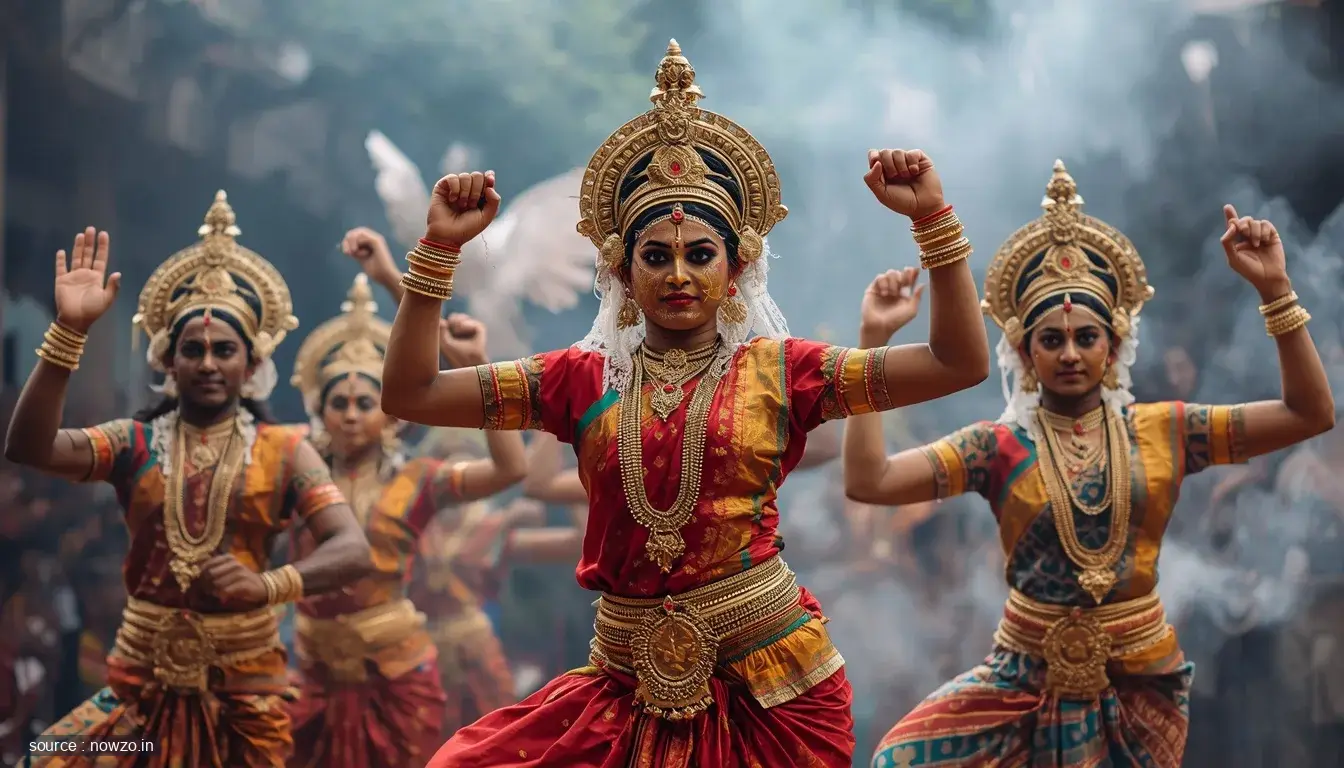
In the heart of Kerala's Onam celebrations, something remarkable unfolded in Kurampala this year. Children took center stage, their small bodies transformed into vibrant, prowling tigers through the ancient art of Pulikali. This traditional folk dance, typically performed by adults, found new life in the enthusiastic movements of the young.
Key facts
- Pulikali performance revived by children in Kurampala, Kerala
- Event occurred during Onam festival celebrations
- Traditional tiger dance art form preserved through youth participation
A Living Tradition
Pulikali, which translates to 'play of the tigers,' involves dancers painting their bodies as tigers and hunters, moving to the rhythm of traditional drums. The art form had been fading from public celebrations in recent years, making this children-led revival particularly significant. Their participation signals not just preservation, but evolution—a passing of cultural torch to the next generation.
The Rhythm of Renewal
Watching these young performers, one could feel the pulse of something ancient meeting something new. Their small frames moved with surprising grace and power, each step honoring traditions that stretch back generations. The air filled with drumbeats that seemed to quicken hearts as much as feet, creating a bridge between Kerala's rich past and its dynamic future.
Cultural Continuity
This spontaneous revival speaks volumes about how communities maintain their heritage. Without formal programs or institutional push, the children of Kurampala chose to embody their cultural legacy. Their painted faces and coordinated movements became living testimony to Kerala's enduring artistic spirit—proof that tradition doesn't just survive in museums, but thrives in the joyful expressions of the young.






Comments