
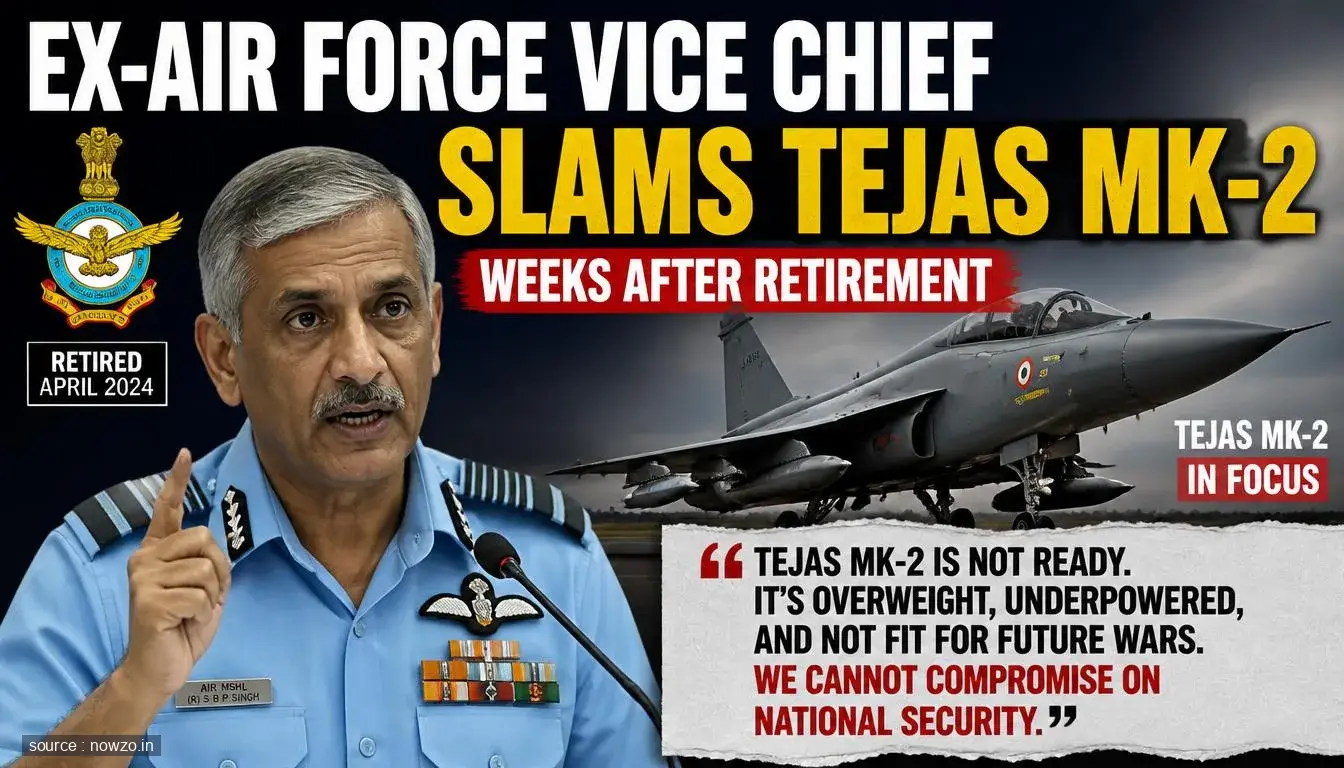
Just weeks after hanging up his uniform, India's former Air Force Vice Chief has delivered a stunning blow to the Tejas Mk-2 fighter program. His verdict? "Operationally, definitely no"—a phrase that echoes through defense circles with unusual bluntness from someone so recently in command.
Key facts
- Former Air Force Vice Chief criticized Tejas Mk-2 weeks after retirement
- Program involves significant capability and size increase over Mk1A
- Reports suggest only 23% cost increase despite major upgrades
- Program includes stronger engine, sharper radar capabilities
A surprising critique
The timing raises eyebrows. Military officials typically maintain diplomatic silence immediately after retirement, making this public assessment particularly notable. The Tejas Mk-2 represents India's ambitious step toward self-reliant air power, yet here stands a top recently retired leader questioning its operational readiness.
The program's promise and problems
Hindustan Aeronautics Limited continues development quietly, betting on a fighter that promises substantial upgrades—stronger engines, sharper radar systems, and increased lethality. Defense analysts note the Mk-2's remarkable cost efficiency, projecting only a 23% price increase over the Mk1A despite significant capability jumps. Yet the former vice chief's doubts hang in the air like unanswered questions.
What this means for India's defense
This isn't just about one aircraft program. It touches India's broader aspirations for defense indigenization and air superiority. The comments arrive as international observers watch India's defense manufacturing capabilities mature. They also come amid discussions about whether the aircraft should even keep its Tejas name given its substantially changed category and capabilities.



Comments