
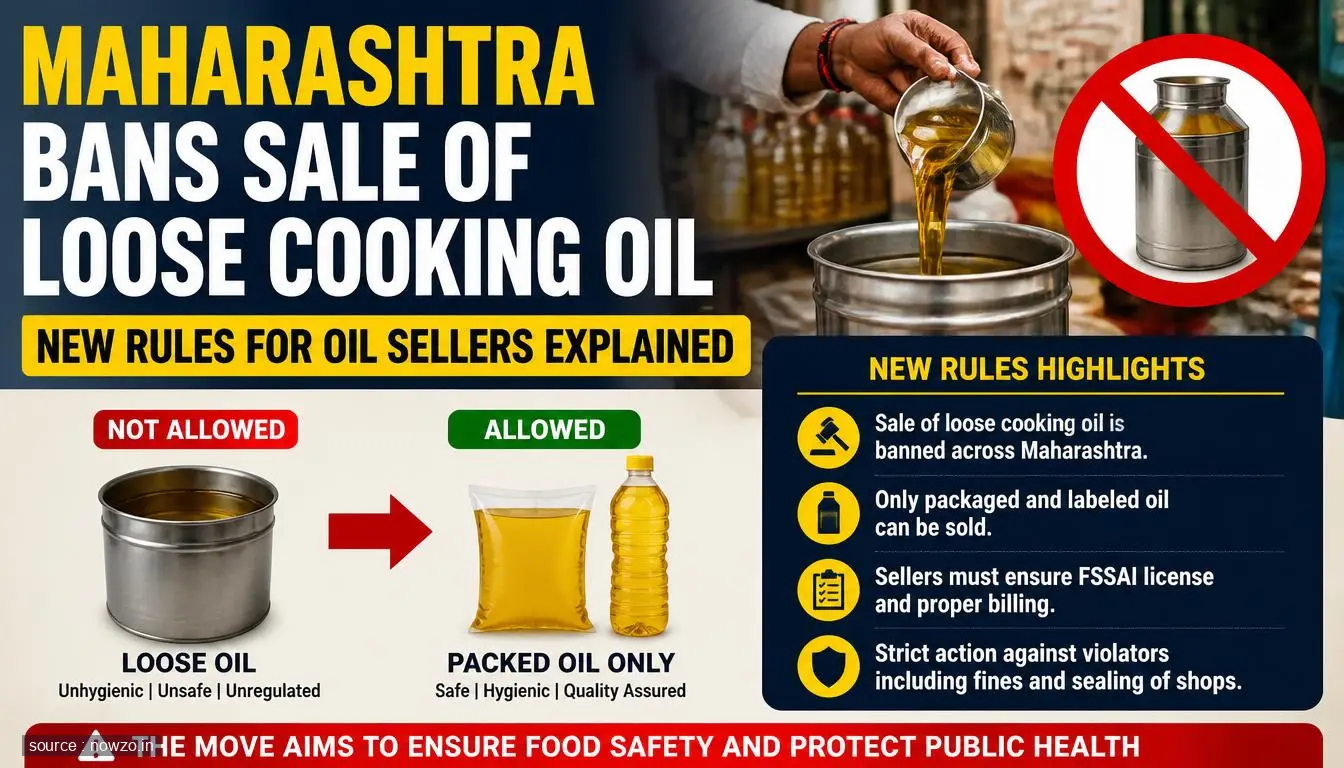
In simple terms: The Maharashtra loose cooking oil ban means edible oil can no longer be sold openly from drums, tins, or unsealed containers. Under the new Maharashtra FDA cooking oil rules, all cooking oil sold in the state must be pre-packaged, sealed, and properly labelled with details such as the manufacturer, batch number, and expiry date.
The Maharashtra government has moved to end the decades-old practice of selling loose edible oil, a step aimed squarely at food safety and consumer protection. For years, loose oil sold from open containers has been a staple in local markets and small grocery shops, often cheaper than branded packaged oil. But food safety officials have long warned that open edible oil sale carries serious risks — from adulteration with cheaper or harmful oils to contamination from unhygienic storage and handling.
The Maharashtra edible oil ban brings the state in line with broader national food safety standards enforced under the Food Safety and Standards Authority of India (FSSAI), which require edible oils to be sold in sealed packaging with proper labelling. Here is a complete breakdown of what the ban on loose cooking oil in Maharashtra means, why it was introduced, and how it affects everyone in the supply chain.
Why Maharashtra Banned Loose Edible Oil
The decision to impose a loose edible oil ban in Maharashtra is rooted in public health concerns. Loose oil is difficult to trace, easy to adulterate, and often stored in conditions that degrade its quality. Common problems associated with open cooking oil include:
- Adulteration: Loose oil can be mixed with cheaper oils, mineral oil, or other substances that are unfit for consumption.
- No traceability: Without batch numbers or manufacturer details, contaminated oil cannot be traced back to its source during food safety investigations.
- Hygiene risks: Open drums and containers expose oil to dust, moisture, pests, and repeated handling.
- Rancidity: Oil stored improperly in open containers oxidises faster, reducing nutritional value and potentially forming harmful compounds.
By requiring packaged cooking oil in Maharashtra, regulators can hold manufacturers accountable, enable product recalls when needed, and give consumers clear information about what they are buying.
What the New Maharashtra FDA Cooking Oil Rules Require
Under the Maharashtra FDA new rules, oil sellers, wholesalers, and retailers must comply with packaging and labelling standards. The key requirements under the Maharashtra edible oil packaging rules include:
| Requirement | What It Means for Sellers |
|---|---|
| Sealed packaging | Oil must be sold in factory-sealed pouches, bottles, or tins — not dispensed from open containers |
| Proper labelling | Packages must display the brand, manufacturer, FSSAI licence number, batch number, and expiry date |
| FSSAI compliance | Only oil from licensed manufacturers meeting food safety standards can be sold |
| No loose dispensing | Retailers cannot refill customer containers from drums or bulk tins |
| Enforcement | Violations can attract penalties, seizure of stock, and licence action under food safety law |
How the Loose Oil Selling Ban Affects Sellers and Retailers
The ban on loose edible oil in Maharashtra has direct consequences for thousands of small traders, kirana stores, and wholesale oil dealers who built their businesses around bulk oil sales. For these sellers, the transition involves several practical changes:
- Shift to packaged stock: Retailers must now source sealed, branded oil from licensed distributors instead of buying in bulk and dispensing loose.
- Inventory changes: Open drums and dispensing equipment used for loose oil sales are no longer permitted for retail sale.
- Price adjustments: Packaged oil typically costs more than loose oil, which may affect price-sensitive customers and margins.
- Compliance checks: Maharashtra FDA officials can inspect shops and seize non-compliant stock, so sellers must ensure their inventory meets the new standards.
Key takeaway: The Maharashtra loose oil rules do not ban any specific type of cooking oil — they ban the method of sale. Any edible oil, whether sunflower, soybean, groundnut, mustard, or palm, can still be sold as long as it is properly packaged, sealed, and labelled.
What the Cooking Oil Ban Means for Consumers
For consumers, the Maharashtra cooking oil ban 2026 brings both benefits and adjustments. The most immediate impact is on households that relied on loose oil as a budget-friendly option. Here is what shoppers should know:
- Better safety assurance: Sealed packaging reduces the risk of adulteration and contamination.
- Clear information: Labels tell you the oil type, manufacturer, and expiry date — information never available with loose oil.
- Recourse if something goes wrong: With batch numbers and FSSAI licence details, consumers can file complaints and authorities can trace problems.
- Possible price difference: Packaged oil may cost slightly more than loose oil did, though competitive pricing among brands keeps options available across budgets.
Consumer rights groups have largely welcomed the Maharashtra food safety rules, noting that the poorest consumers — who most often bought loose oil — were also the most vulnerable to adulterated products.
How the Ban Will Be Enforced
The Maharashtra FDA action on loose oil involves inspections, sampling, and penalties. Food safety officers have the authority to visit retail outlets, wholesale markets, and storage facilities to check compliance. Enforcement measures under the Maharashtra government cooking oil rules typically include:
Penalties for non-compliance: Selling loose edible oil after the ban can result in seizure of stock, monetary fines, and in serious or repeated cases, suspension or cancellation of the seller's food licence. Adulteration offences carry even stricter punishment under the Food Safety and Standards Act.
Authorities are also expected to run awareness drives so that small traders understand the new edible oil selling rules in Maharashtra and have time to transition their stock and sourcing practices.
Practical Tips for Oil Sellers and Buyers
Whether you run a grocery shop or simply buy cooking oil for your home, these practical steps will help you navigate the Maharashtra cooking oil new rules:
- Sellers: Verify that your suppliers hold valid FSSAI licences and that every unit you stock is sealed and labelled.
- Sellers: Keep purchase invoices — they establish traceability and protect you during inspections.
- Buyers: Check the seal, label, FSSAI logo, and expiry date before purchasing any cooking oil.
- Buyers: Report any shop still selling loose oil to the local FDA office or through the FSSAI complaint portal.
- Both: Store oil away from heat and sunlight at home or in the shop to preserve quality after purchase.
The Maharashtra loose cooking oil ban is a food safety measure, not a restriction on any particular oil. Sellers must switch to sealed, labelled, FSSAI-compliant packaged oil, and consumers gain safer, traceable products. Compliance protects public health — and non-compliance carries real penalties.
This article is for general informational purposes. Rules and enforcement timelines may be updated by the Maharashtra FDA or state government. Sellers and consumers should verify current requirements with official sources.






Comments