
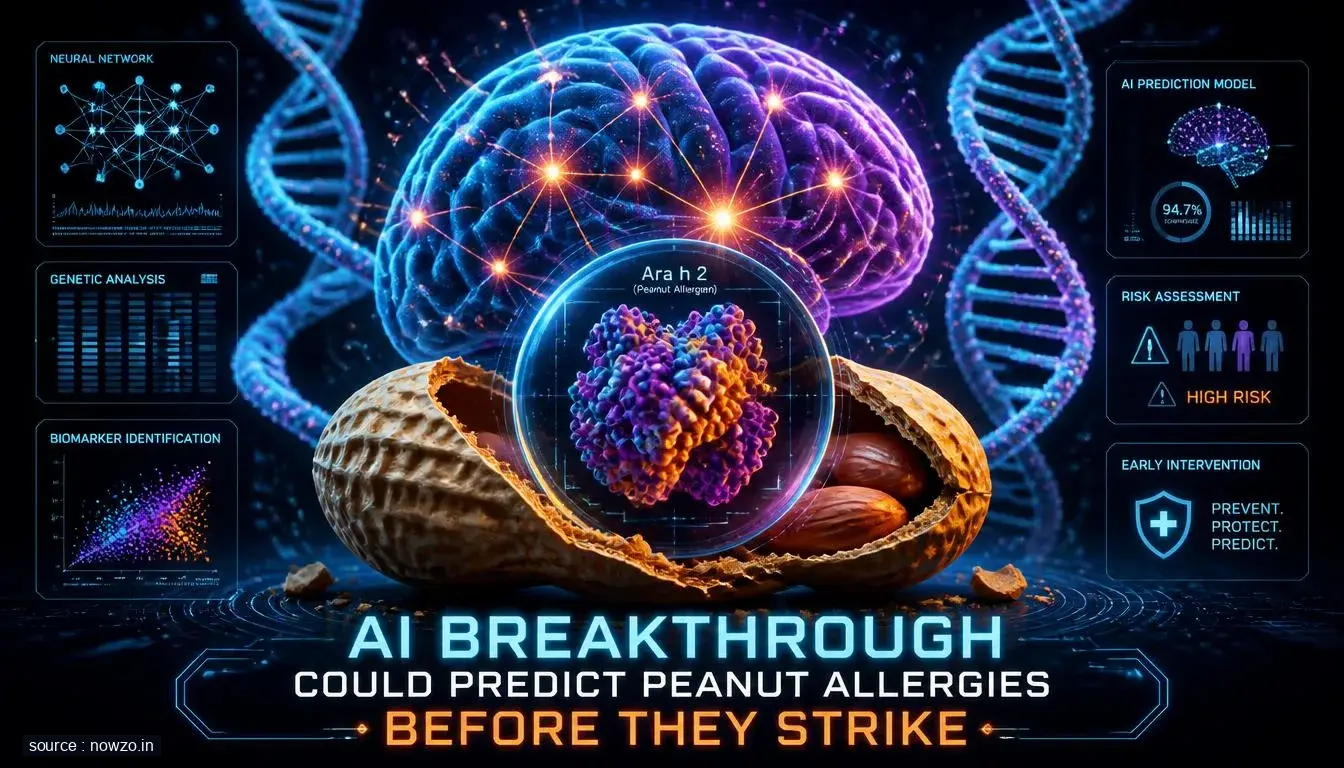
Imagine knowing whether a child is allergic to peanuts before they ever take a bite. That future may be closer than we think, thanks to an artificial intelligence breakthrough that’s turning heads in allergy research.
Key facts
- AI model designed to predict peanut allergy risk
- Shows high accuracy in early testing phases
- Potential to reduce need for invasive diagnostic procedures
How it works
The AI analyzes patterns in medical data that human doctors might miss—subtle biomarkers, genetic hints, environmental factors. It doesn’t replace clinicians, but gives them a powerful new tool. Think of it as a second opinion, backed by data.
Why it matters
Peanut allergies affect millions worldwide, and reactions can be severe—even fatal. Right now, diagnosis often involves skin prick tests or oral food challenges, which are uncomfortable, time-consuming, and carry risks. This model could change that.
What’s next
Researchers are cautious but optimistic. More validation is needed across diverse populations, but the early results are compelling. If it holds up, this could be a game-changer for families and allergists alike.



Comments