
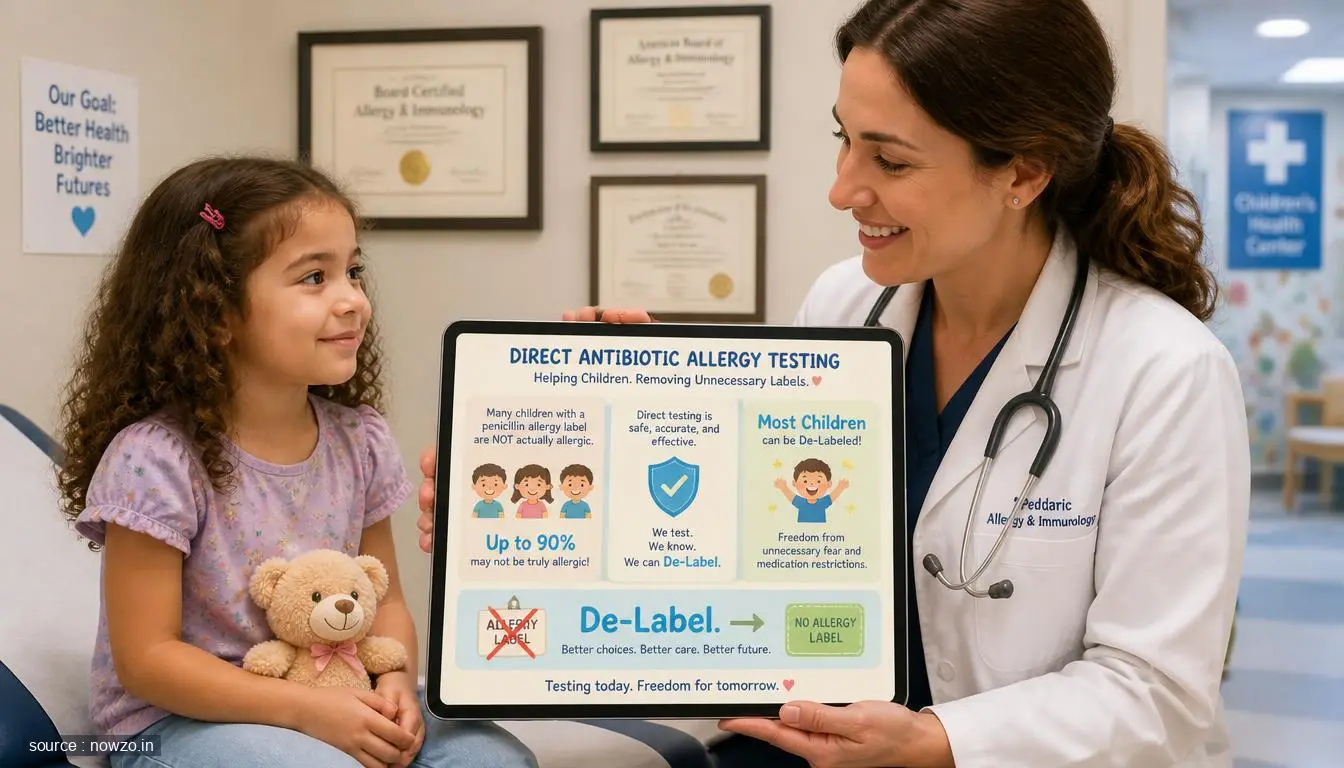
Many children carry antibiotic allergy labels that may be inaccurate, limiting their treatment options and potentially leading to the use of broader-spectrum medications. New findings indicate that direct antibiotic allergy testing can safely remove these labels in the majority of pediatric cases.
How Direct Testing Works
The testing process involves administering controlled doses of antibiotics under medical supervision to determine whether a true allergy exists. This method allows healthcare providers to confirm or rule out allergies without relying solely on patient history, which can often be misleading or incomplete.
Impact on Pediatric Care
Removing incorrect allergy labels has significant implications for children's healthcare. It enables doctors to prescribe first-line antibiotics when appropriate, reducing the need for alternative medications that may be less effective or carry greater risks of side effects and antibiotic resistance.
Broader Implications
Accurate allergy labeling is crucial for both individual patient care and public health. By ensuring children receive the most appropriate antibiotics, direct testing contributes to better treatment outcomes and helps combat the growing threat of antimicrobial resistance.
These findings support the wider adoption of direct antibiotic allergy testing in pediatric populations, offering a practical solution to a common clinical challenge.


Comments