
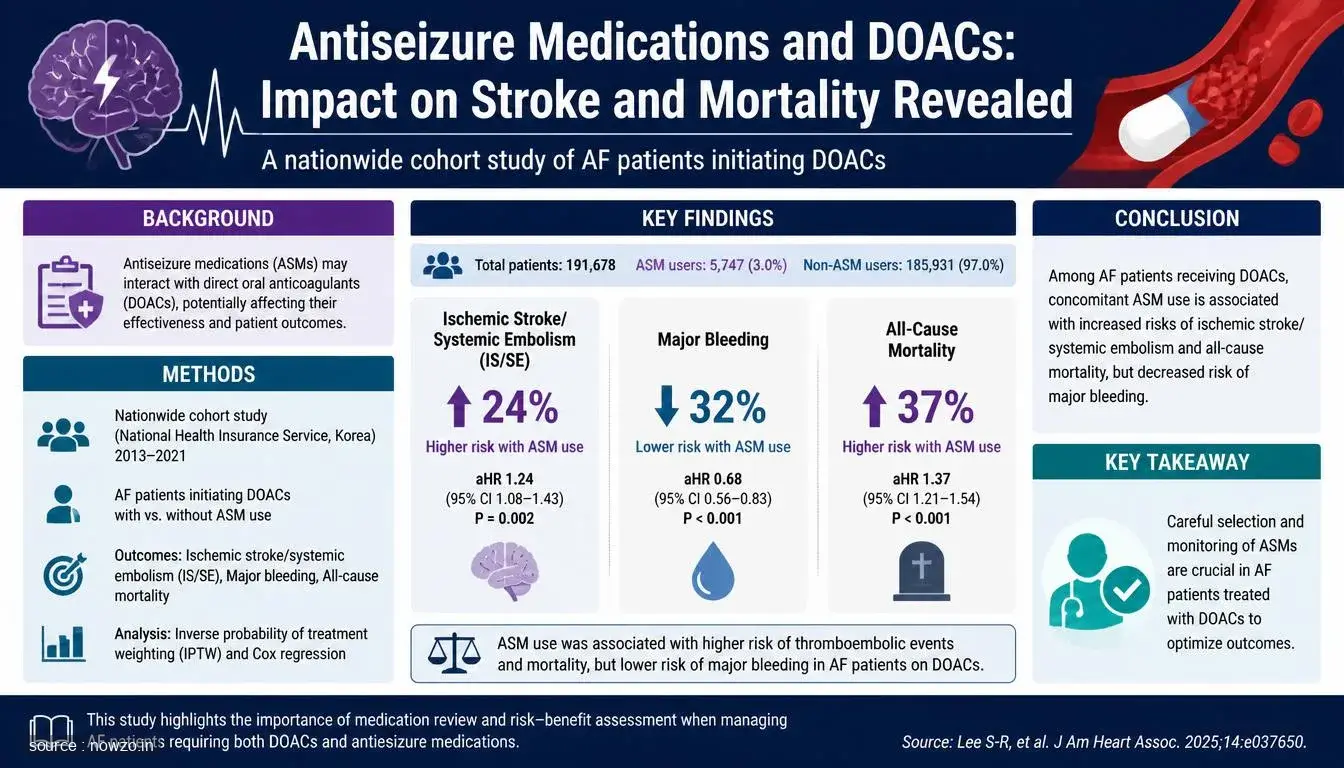
Recent findings have brought attention to the complex relationship between antiseizure medications and direct oral anticoagulants (DOACs), revealing significant implications for stroke risk and patient mortality. This interaction represents a critical consideration for clinicians managing patients who require both anticoagulation and seizure control.
Key Facts
- Antiseizure medications can interact with DOACs, affecting their efficacy
- The interaction impacts both stroke prevention and mortality outcomes
- Careful medication management is essential for patients on both therapies
- Healthcare providers must weigh risks when prescribing these drug combinations
Understanding the Drug Interaction
The concurrent use of antiseizure medications and DOACs presents a clinical challenge that requires careful monitoring. Certain antiseizure drugs are known to affect the metabolism of anticoagulants, potentially reducing their effectiveness in preventing stroke or increasing bleeding risks.
This pharmacological interaction is particularly concerning for patients with atrial fibrillation who also have epilepsy or other seizure disorders, as both conditions require consistent, effective treatment to prevent serious complications.
Clinical Implications for Stroke Prevention
Stroke prevention remains the primary goal of anticoagulation therapy in atrial fibrillation patients. When antiseizure medications interfere with DOAC effectiveness, patients may face an elevated risk of thromboembolic events, including ischemic stroke.
Healthcare providers must carefully assess the risk-benefit ratio when prescribing these medications together, considering alternative antiseizure drugs with lower interaction potential or adjusting anticoagulation strategies accordingly.
Impact on Patient Mortality
Beyond stroke risk, the interaction between these medication classes has implications for overall patient mortality. Inadequate anticoagulation due to drug interactions can lead to fatal thromboembolic events, while excessive anticoagulation increases the risk of life-threatening bleeding complications.
The findings underscore the importance of individualized treatment approaches and close monitoring when these medications must be used concurrently.
Moving Forward with Treatment Decisions
Clinicians are encouraged to stay informed about potential drug interactions and consider therapeutic drug monitoring when available. Patient education about the signs of stroke and bleeding complications remains crucial for those on combination therapy.
Further research into the specific mechanisms and clinical outcomes associated with these drug interactions will help refine treatment guidelines and improve patient safety in this vulnerable population.



Comments