
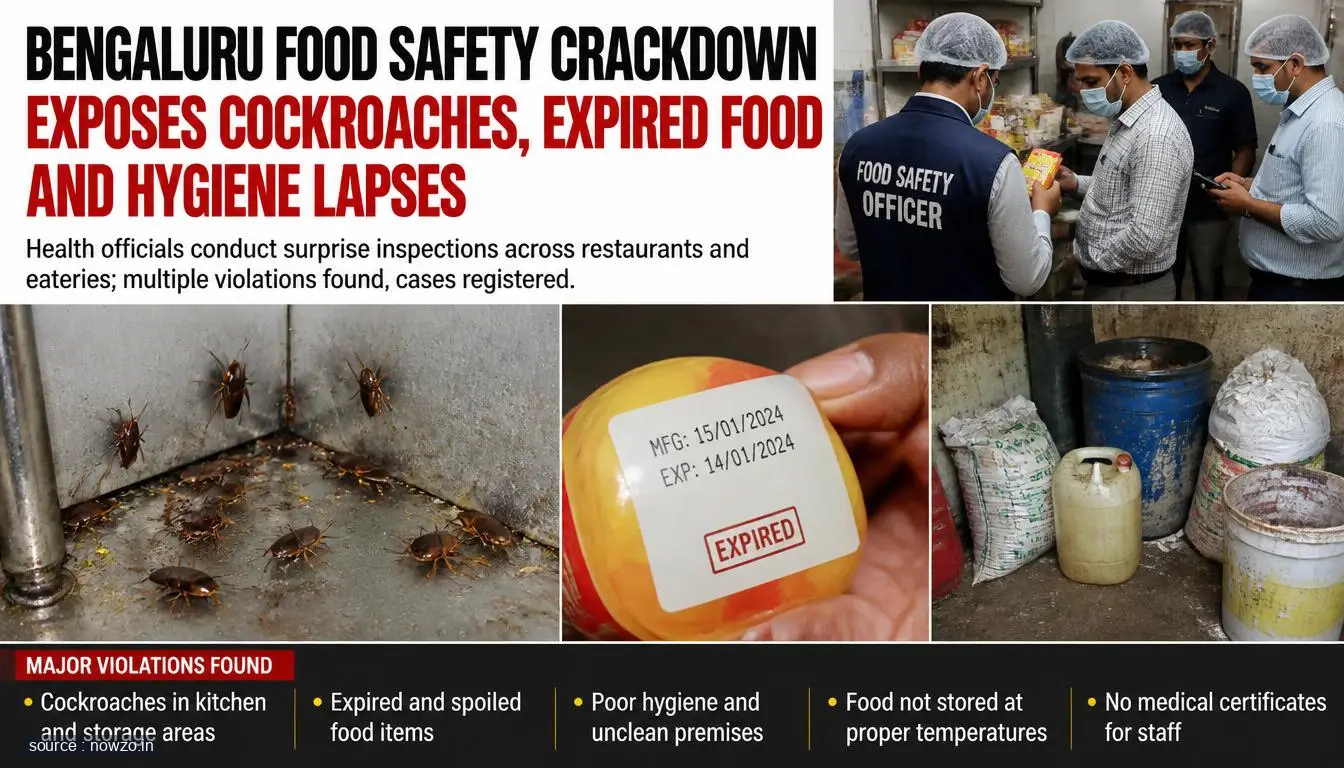
A recent food safety crackdown in Bengaluru has brought to light a series of alarming hygiene violations across eateries in the city, including the presence of cockroaches, expired food items, and broader lapses in cleanliness. The findings have intensified scrutiny of food business operators and renewed concerns about whether basic safety standards are being followed in kitchens that serve the public every day.
The inspections, reported by Business Today, point to a troubling pattern of non-compliance at food establishments in Bengaluru. While the city is known for its vibrant dining culture and fast-growing food scene, the latest revelations suggest that some outlets are falling short of even fundamental hygiene requirements. For consumers, the findings serve as a stark reminder that food safety remains a pressing public health issue, especially in high-density urban markets where eating out is routine.
Inspections Reveal Serious Hygiene Violations
According to the source report, officials carrying out food safety checks in Bengaluru uncovered multiple violations that raise questions about day-to-day kitchen practices. Among the most serious issues identified were cockroaches in food preparation areas, expired food products, and general hygiene lapses that could put consumers at risk.
Such discoveries are significant because they point to failures not just in cleanliness, but also in storage, inventory management, and staff supervision. The presence of cockroaches in or around food handling zones is a major red flag for contamination, while expired food items suggest weak stock rotation and poor compliance with safety norms. Together, these violations indicate gaps that can directly affect the quality and safety of meals served to customers.
Food safety inspections are intended to ensure that restaurants and other food businesses maintain sanitary conditions, use safe ingredients, and follow established handling procedures. When inspectors find expired products or pest infestations, it often reflects deeper operational problems rather than isolated mistakes. In a city like Bengaluru, where thousands of people depend on restaurants, cloud kitchens, bakeries, and quick-service outlets, even limited lapses can have wide public health implications.
Why the Findings Matter for Public Health
The issues highlighted in the Bengaluru crackdown are not merely cosmetic concerns. Cockroaches are known carriers of harmful pathogens, and their presence in food preparation spaces can increase the risk of contamination. Expired food, meanwhile, may no longer be safe for consumption and can lead to foodborne illness if used in meals or sold to customers.
Hygiene lapses in commercial kitchens can also create conditions where bacteria multiply quickly, especially when food is stored improperly or surfaces are not cleaned and sanitized as required. In such settings, the risk extends beyond a single meal or a single customer. A contaminated ingredient or an unsanitary preparation area can affect multiple orders in a short period of time.
That is why food safety enforcement remains a critical function in urban centers. Regular inspections are meant to identify violations before they result in illness outbreaks or broader public health incidents. The Bengaluru findings underscore the importance of continued monitoring, strict enforcement, and accountability for food business operators who fail to meet required standards.
Pressure Grows on Food Businesses to Improve Standards
The latest crackdown is likely to increase pressure on restaurants and other food outlets across Bengaluru to tighten internal controls. Food businesses are expected to maintain clean preparation areas, monitor ingredient shelf life, prevent pest infestations, and train staff in safe food handling practices. When those systems break down, the consequences can include regulatory action, reputational damage, and loss of consumer trust.
For operators, the findings are a warning that compliance cannot be treated as a one-time exercise. Food safety requires constant attention, from checking expiration dates and maintaining cold storage to cleaning equipment and ensuring that kitchens remain free of pests. Businesses that neglect these basics risk not only penalties but also long-term harm to their brand in a highly competitive market.
Consumers, too, are becoming more aware of hygiene standards and are often quick to respond to reports of unsafe conditions. In the age of online reviews and food delivery platforms, news of cockroaches, expired ingredients, or dirty kitchens can spread rapidly and influence public perception. That makes food safety not just a regulatory issue, but also a business imperative.
Crackdown Highlights Need for Continued Vigilance
The Bengaluru case reflects a broader challenge facing food regulators in fast-growing cities: keeping pace with a large and diverse food service sector. From small eateries to larger restaurant chains, every operator is expected to meet safety standards designed to protect public health. Inspections play a central role in that effort, but their effectiveness depends on consistent follow-up and enforcement.
While the source report does not provide additional details on penalties, closures, or the number of establishments affected, the violations themselves are enough to raise concern. The discovery of cockroaches, expired food, and hygiene lapses suggests that some businesses may need stronger oversight and more rigorous internal checks to prevent repeat violations.
For now, the crackdown sends a clear message: food safety compliance in Bengaluru remains under the microscope. As inspections continue, both regulators and food business operators will be expected to act decisively to ensure that basic standards are upheld. For consumers, the episode is another reminder that behind the convenience of dining out lies an ongoing need for transparency, cleanliness, and strict adherence to food safety rules.



Comments