
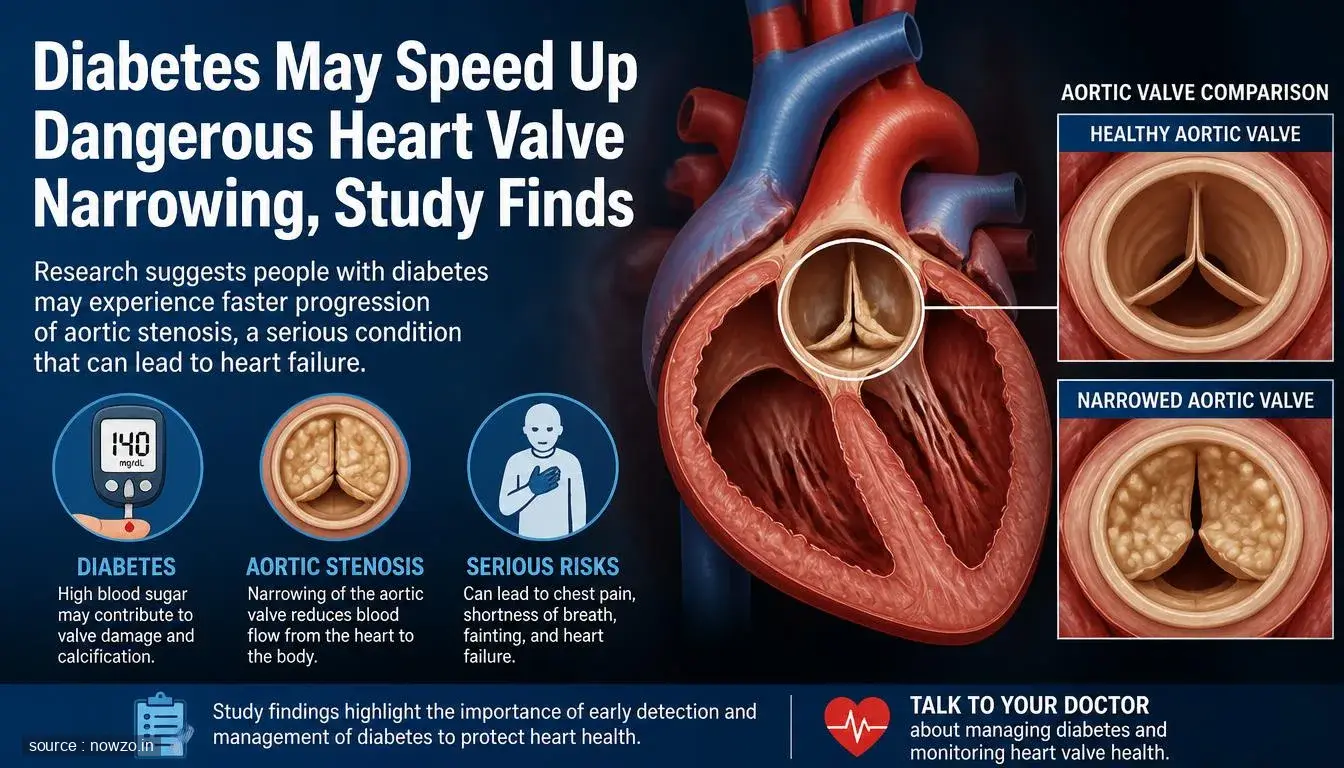
For cardiologists tracking the slow but steady march of aortic stenosis, a new factor has emerged that appears to press fast-forward on the disease's progression: type 2 diabetes. The finding adds another layer of complexity to managing heart health in diabetic patients, who already face elevated cardiovascular risks.
Key facts
- Type 2 diabetes accelerates clinical aortic stenosis progression
- Diabetic patients may require more frequent cardiac monitoring
- Aortic stenosis involves narrowing of the heart's aortic valve
The silent progression
Aortic stenosis often develops quietly, with many patients unaware of the gradual narrowing of their heart's aortic valve. But when diabetes enters the picture, that progression appears to pick up speed. Researchers observed this accelerated timeline across multiple patient cases, noting that diabetic patients reached critical stages of the condition sooner than their non-diabetic counterparts.
Clinical implications
This acceleration matters because aortic stenosis, when left unchecked, can lead to heart failure, fainting, and even sudden cardiac death. The faster progression suggests that diabetic patients might need more vigilant monitoring—perhaps earlier echocardiograms or closer follow-up with cardiologists. It's a reminder that diabetes doesn't just affect blood sugar; it reshapes cardiovascular trajectories in ways we're still discovering.
Looking ahead
The findings open questions about whether tighter glucose control might moderate this accelerated progression. For now, they underscore the importance of comprehensive heart health strategies for the millions living with type 2 diabetes. As one researcher noted, 'We're seeing patterns that suggest we need to be more aggressive with cardiac surveillance in this population.'






Comments