
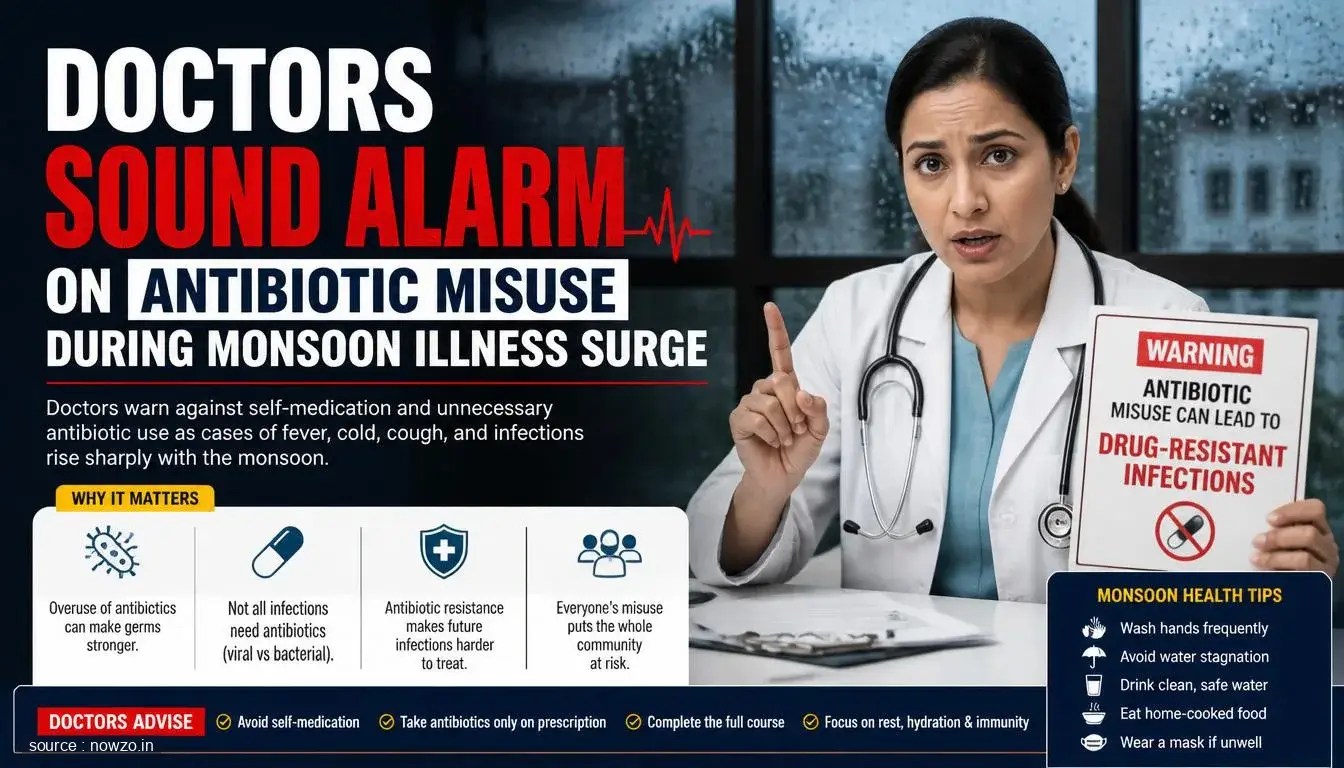
As monsoon rains drench cities and towns, doctors are watching a familiar pattern unfold—a spike in infections, and with it, a dangerous rush toward antibiotics. This year, though, the medical community is raising its voice louder, urging both practitioners and patients to think twice before reaching for these powerful drugs.
Key facts
- Indiscriminate antibiotic use is rising during the monsoon illness season.
- Overprescription and self-medication contribute to antimicrobial resistance.
- Doctors emphasize the need for accurate diagnosis and targeted treatment.
Why This Matters Now
Monsoon brings more than relief from heat; it often ushers in waterborne diseases, respiratory infections, and vector-borne threats. In clinics and hospitals, physicians note an uptick in prescriptions written hastily—sometimes for conditions antibiotics can’t even treat. It’s a worrying trend, one that could make future outbreaks harder to control.
The Resistance Problem
Every misused antibiotic chips away at their long-term effectiveness. Bacteria adapt. They learn to survive. And when real infections strike, the drugs we rely on may simply fail. Doctors stress that resistance isn’t some distant threat—it’s happening now, in communities where antibiotics are used like candy.
A Call for Caution
Health experts aren’t saying to avoid antibiotics entirely. They’re calling for smarter use: accurate diagnosis, following prescription guidelines, and never self-medicating. "The goal," one clinician noted, "is to preserve these tools for when they’re truly needed." It’s a message that resonates beyond the monsoon—a reminder that some medical resources are finite, and worth protecting.


Comments