
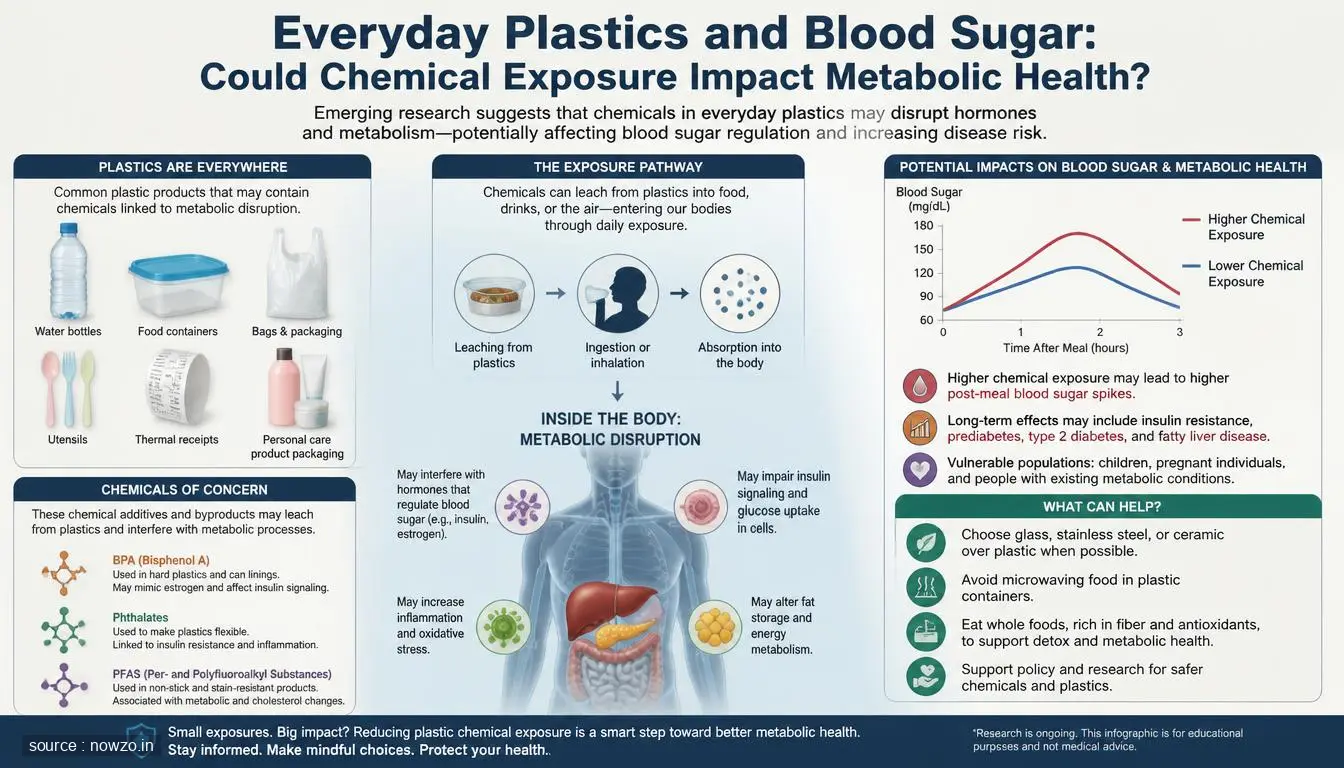
As plastic products remain deeply integrated into modern daily life, health experts and researchers are increasingly focused on the biological effects of everyday chemical exposure. Recent reporting by The Indian Express brings attention to endocrine-disrupting chemicals (EDCs) found in common plastic materials and explores whether these compounds can influence blood sugar regulation in the body.
Understanding Endocrine-Disrupting Chemicals
Endocrine-disrupting chemicals are synthetic compounds capable of interfering with the natural endocrine system. Present in numerous consumer goods—including beverage bottles, food storage containers, and packaging—these chemicals can leach into consumables under certain conditions. Because the endocrine system governs hormone production and signaling, any chemical interference has the potential to alter key bodily functions.
How Plastics May Influence Metabolic Functions
Proper blood sugar management depends on hormone pathways, most notably the action of insulin, which allows cells to absorb glucose from the bloodstream. Exposure to endocrine disruptors can potentially alter hormone receptor interactions, raising concerns about metabolic health, insulin resistance, and blood glucose balance.
Broader Public Health Implications
With widespread global reliance on plastic packaging for food and beverages, discussions around limiting exposure to chemical additives are growing. As highlighted by The Indian Express, understanding the relationship between everyday plastic contact and blood sugar health is an evolving topic of interest for public health and metabolic wellness.





Comments