
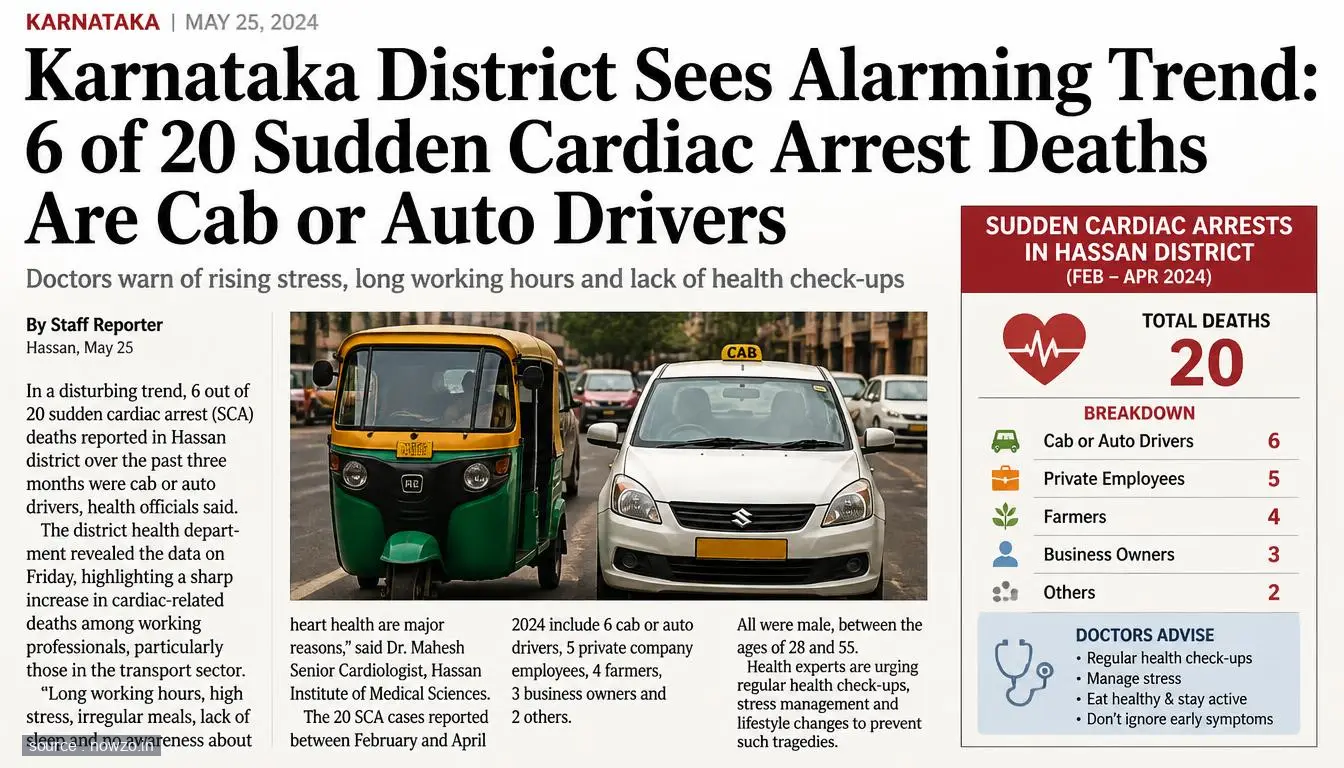
A concerning health pattern has emerged in a Karnataka district, where six out of 20 sudden cardiac arrest deaths have been identified as cab or auto drivers. This disproportionate representation of professional drivers among cardiac arrest victims has raised serious questions about the occupational health risks faced by those who spend long hours behind the wheel.
Understanding the Alarming Statistics
The data from the Karnataka district reveals a troubling trend that demands immediate attention. When professional drivers account for nearly one-third of sudden cardiac arrest deaths in a region, it signals a potential occupational health crisis that extends beyond individual lifestyle choices.
Cab and auto drivers form a significant portion of the workforce in urban and semi-urban areas across Karnataka. These professionals often work extended hours, navigate stressful traffic conditions, and face unique health challenges that may contribute to cardiovascular problems.
Five Key Factors Behind the Trend
Health experts have identified five primary reasons that may explain why cab and auto drivers are experiencing higher rates of sudden cardiac arrest:
- Prolonged Sitting and Sedentary Lifestyle: Professional drivers spend the majority of their working hours seated, which can lead to poor circulation, weight gain, and increased cardiovascular strain over time.
- Irregular Eating Patterns: The nature of their work often forces drivers to skip meals or consume food at irregular intervals, frequently relying on unhealthy fast food options that contribute to heart disease risk factors.
- Chronic Stress: Navigating heavy traffic, meeting passenger expectations, dealing with road rage, and financial pressures create sustained stress levels that can damage cardiovascular health.
- Lack of Regular Health Screenings: Many drivers work long hours without taking time for preventive health checkups, allowing conditions like hypertension and diabetes to go undetected and untreated.
- Poor Sleep Quality: Irregular work schedules, especially for those working night shifts or long hours, disrupt sleep patterns and contribute to cardiovascular problems.
The Broader Public Health Implications
This pattern in Karnataka reflects a larger occupational health issue affecting professional drivers across India. The combination of physical inactivity, poor dietary habits, chronic stress, and inadequate healthcare access creates a perfect storm for cardiovascular disease.
Sudden cardiac arrest occurs when the heart suddenly stops beating, often without warning. While it can affect anyone, certain occupational groups face elevated risks due to their working conditions and lifestyle constraints.
What Can Be Done
Addressing this health crisis requires a multi-faceted approach. Regular health screenings specifically targeted at professional drivers could help identify risk factors early. Creating awareness about the importance of physical activity, even in short bursts during breaks, can make a significant difference.
Employers and ride-sharing platforms could play a role by encouraging regular health checkups and providing access to healthcare resources. Simple interventions like promoting healthier food options at driver rest stops and educating drivers about cardiovascular health could save lives.
The Karnataka district data serves as a wake-up call for policymakers, healthcare providers, and the transportation industry to prioritize the cardiovascular health of professional drivers who keep our cities moving.



Comments