
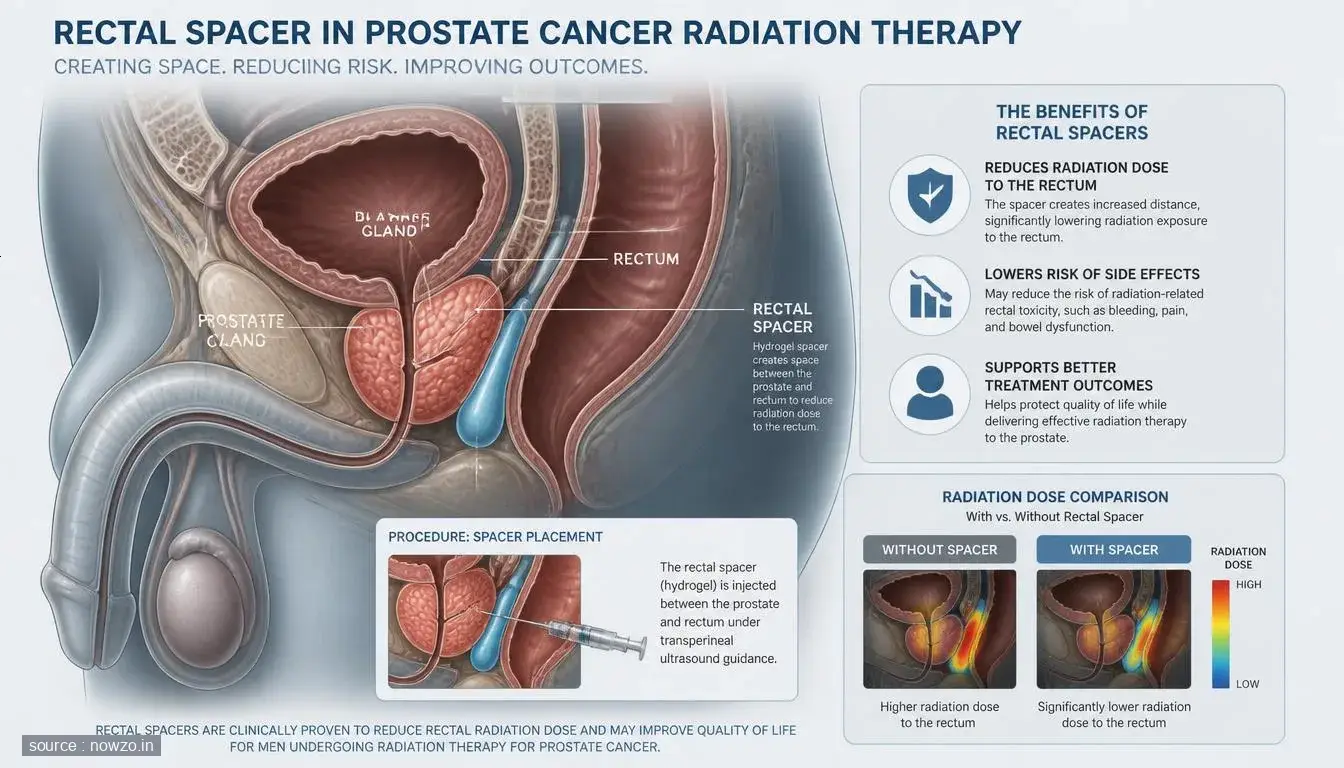
For men battling advanced prostate cancer, a new piece of medical technology is showing promising signs of safety and potential comfort. Rectal spacers, designed to protect healthy tissue during intense radiation treatment, have cleared a significant hurdle in clinical evaluation.
Key facts
- Rectal spacers are used during radiation therapy for prostate cancer
- New research confirms their safety profile in advanced cases
- The technology aims to reduce damage to healthy rectal tissue
Why This Matters
Radiation therapy remains a cornerstone treatment for prostate cancer, but it's not without risks. The proximity of the prostate to the rectum means healthy tissue often gets caught in the crossfire, leading to uncomfortable and sometimes severe side effects. That's where these spacers come in—creating a physical barrier that gives radiation oncologists more precision and patients more peace of mind.
The Safety Profile
What researchers are finding particularly encouraging is that these devices don't appear to introduce new risks. For patients already facing the anxiety of advanced cancer treatment, that's no small thing. The spacers seem to do their job without adding complications to an already complex medical journey.
Looking Ahead
While safety is the first hurdle, the real test will be how much these spacers actually improve patients' quality of life during and after treatment. Early indications suggest we might be looking at a meaningful step forward in cancer care—one that makes powerful treatments slightly less daunting for those who need them most.






Comments