
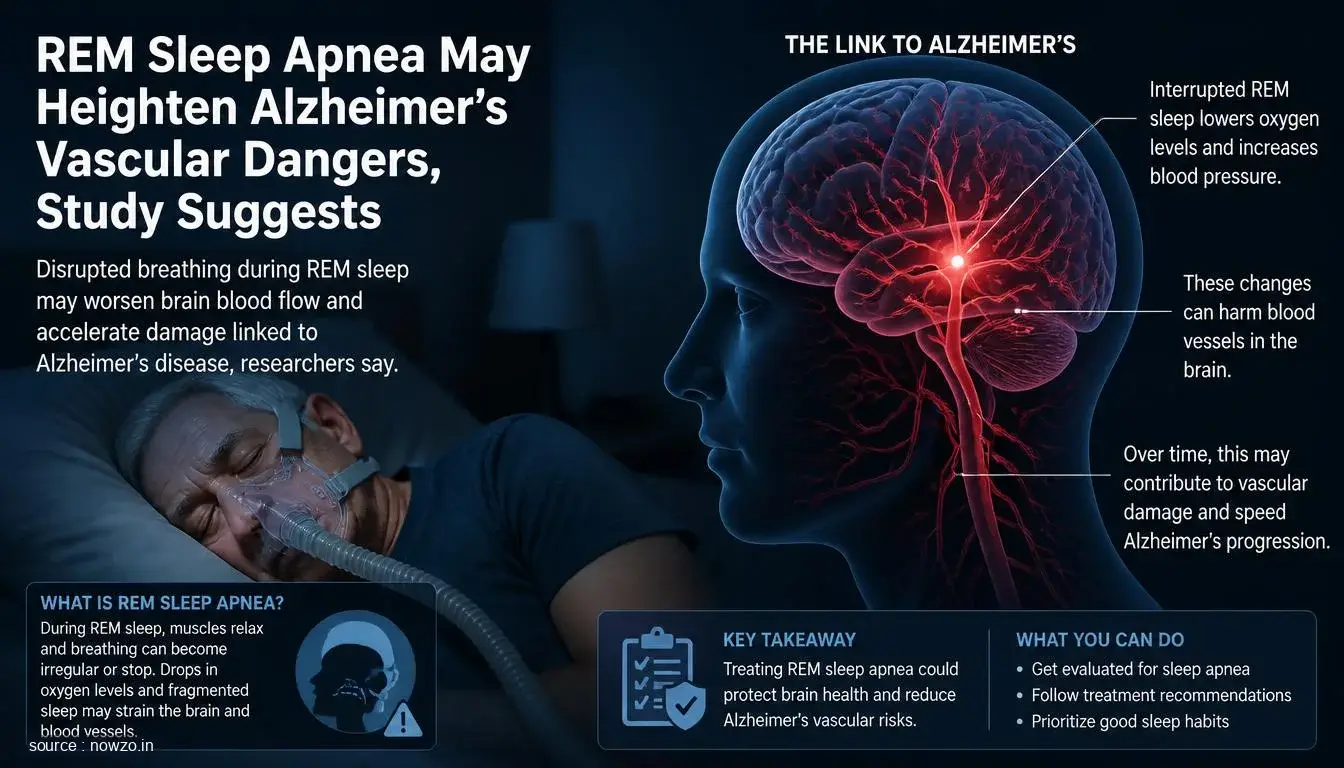
Scientists are sounding a cautious alarm: disrupted breathing during REM sleep may worsen vascular risks for those with Alzheimer’s disease. It’s a finding that stitches together two critical threads of neurology—sleep health and neurodegenerative decline—in a way clinicians can’t ignore.
Key Facts
- REM sleep apnea is linked to heightened vascular risk in Alzheimer’s patients
- Findings emphasize the role of sleep quality in neurodegenerative disease progression
- Research aggregated from global sources via Google News
Why This Matters
For years, sleep apnea has been known to strain the cardiovascular system. But tying it specifically to the vascular complications of Alzheimer’s adds a new layer of urgency. It suggests that treating sleep disorders isn’t just about improving rest—it might also slow the march of dementia.
The Bigger Picture
Alzheimer’s isn’t just a disease of plaques and tangles. Vascular health plays a crucial role in how the illness unfolds. When blood flow to the brain suffers, cognitive decline can accelerate. This research hints that sleep apnea during REM—a phase critical for memory consolidation—might be making a bad situation worse.
What’s Next
While the findings are compelling, they’re also a call for more research. Understanding the mechanics behind this link could open doors to new treatments—ones that protect both sleep and brain vessels. For now, it’s a reminder that a good night’s rest is more than a luxury; it might be a shield.






Comments