
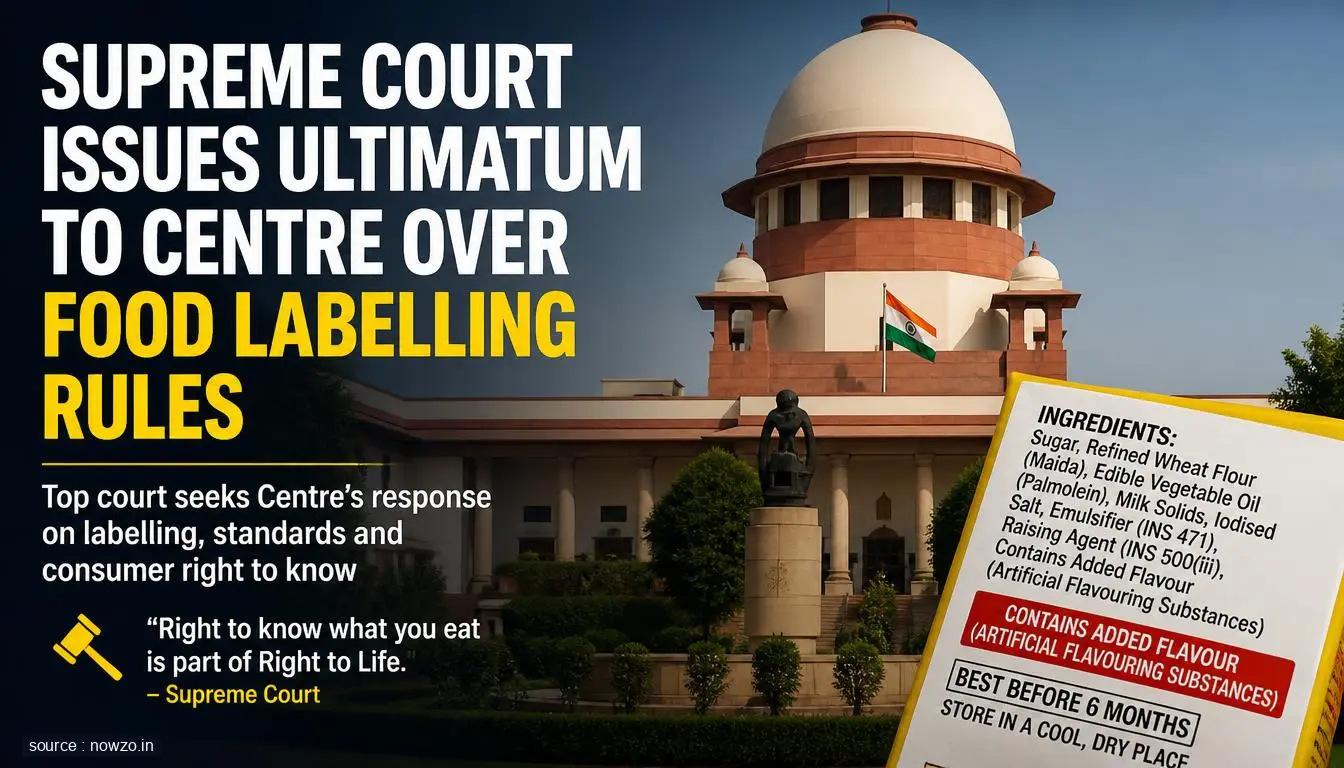
The Supreme Court of India has issued a stern ultimatum to the Centre over the prolonged delay in implementing front-of-pack food labelling regulations, warning that judicial intervention will follow if the government fails to act. The apex court's sharp remarks came during hearings on the Food Safety and Standards Authority of India's (FSSAI) continued opposition to mandatory warning labels on packaged foods high in fat, sugar, and salt.
Court Questions Government's Commitment to Public Health
In a strongly-worded rebuke, the Supreme Court questioned the FSSAI's intentions, asking pointedly whether the food safety regulator truly wants people to remain healthy. The court's frustration stems from the authority's apparent reluctance to implement clear warning labels that would help consumers make informed dietary choices.
The judicial intervention comes after repeated delays and what the court perceives as obstruction from the FSSAI in establishing transparent nutritional labelling standards. The court made it clear that if the Centre and its agencies cannot fulfil their responsibility to protect public health, the judiciary will step in to ensure action is taken.
FSSAI's Alternative Proposal Faces Scrutiny
Instead of implementing warning labels as directed, the FSSAI has proposed using nutritional tables on food packaging. However, this alternative approach has drawn criticism from the Supreme Court, which views it as an inadequate substitute for clear, front-of-pack warnings that can quickly alert consumers to potentially harmful ingredients.
The debate centres on how best to communicate nutritional information to consumers, particularly regarding products containing high levels of fat, sugar, and salt. Public health advocates have long argued that warning labels are more effective than detailed nutritional tables in helping people make quick, informed decisions about their food purchases.
Implications for Food Industry and Consumers
The Supreme Court's intervention signals a potential turning point in India's food labelling regulations. The court's ultimatum puts pressure on the Centre to either implement the proposed warning label system or face judicial mandates that could reshape how packaged foods are marketed and sold across the country.
The outcome of this legal battle will have significant implications for both the food industry and public health policy in India. Clear front-of-pack warning labels could fundamentally change consumer behaviour and force manufacturers to reformulate products to avoid carrying negative health warnings.
The case highlights the ongoing tension between regulatory agencies, industry interests, and public health objectives. As the Supreme Court continues to push for stronger consumer protections, the Centre and FSSAI face mounting pressure to prioritize citizens' health over other considerations.





Comments