
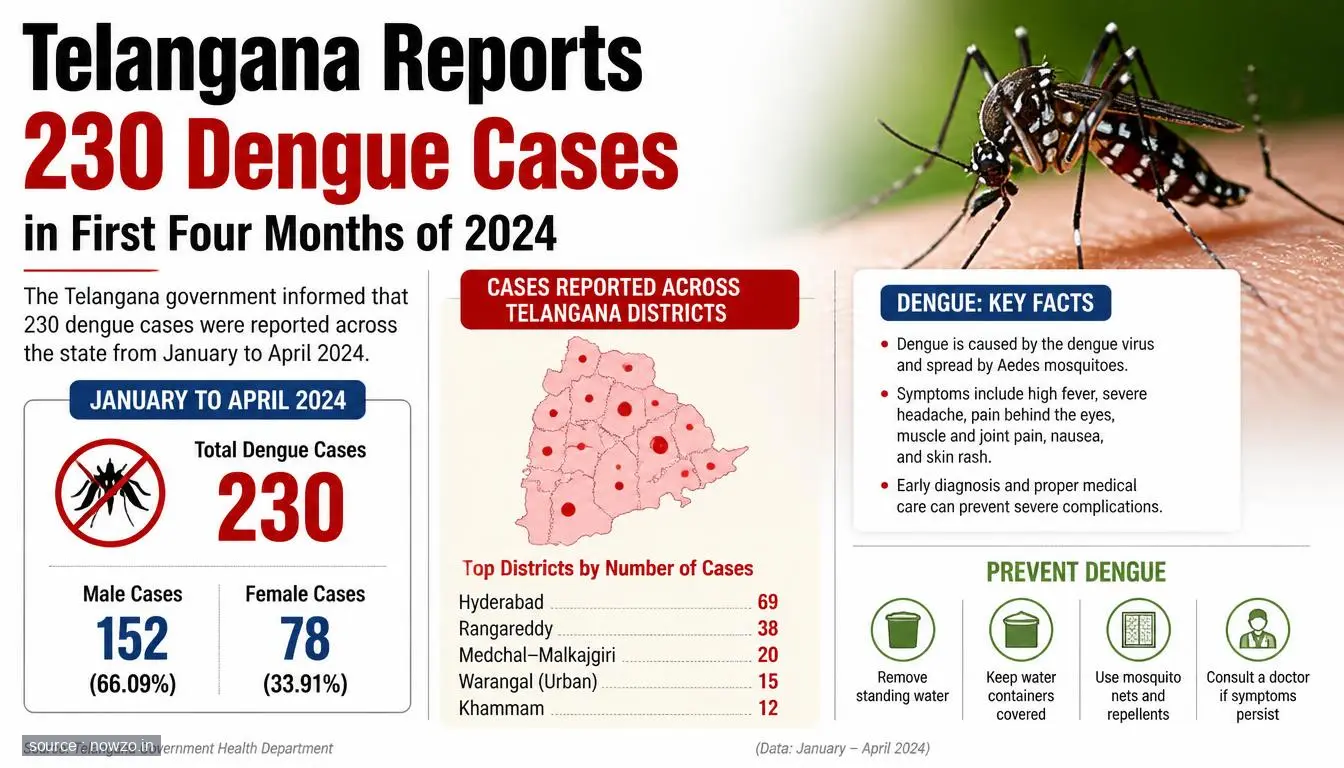
Telangana has documented 230 confirmed dengue cases during the first four months of 2024, according to data released by the state health department. The figures, covering January through April, highlight ongoing public health concerns as the state prepares for the monsoon season, when mosquito-borne illnesses typically surge.
Health officials are monitoring the situation closely, emphasizing early detection and preventive measures to curb transmission. The current caseload represents a significant health challenge for the state, prompting renewed calls for community participation in vector control activities.
Current Case Distribution and Monitoring
The 230 cases reported across Telangana reflect infections identified through the state's surveillance network between January and April. Health authorities have noted that while the numbers are concerning, proactive measures can help contain the spread before peak transmission periods begin.
State health departments typically increase monitoring efforts during the pre-monsoon months, as stagnant water accumulation creates ideal breeding conditions for the Aedes aegypti mosquito, the primary vector responsible for dengue transmission. Officials are analyzing case patterns to identify potential hotspots and allocate resources effectively.
Understanding Dengue Symptoms and Risks
Dengue fever presents with high-grade fever, severe headache, pain behind the eyes, joint and muscle pain, rash, and mild bleeding manifestations such as nose or gum bleeding. The illness can progress to severe dengue, characterized by plasma leakage, fluid accumulation, respiratory distress, severe bleeding, or organ impairment.
Medical experts stress that early diagnosis and proper clinical management significantly reduce mortality rates. Residents experiencing symptoms consistent with dengue are advised to seek immediate medical attention rather than self-medicating, particularly avoiding aspirin and non-steroidal anti-inflammatory drugs that can increase bleeding risks.
Prevention and Vector Control Measures
Health authorities are intensifying efforts to eliminate mosquito breeding sites across urban and rural areas. The Aedes mosquito breeds primarily in clean, stagnant water found in containers, tires, flower pots, and water storage vessels. Community participation in source reduction remains critical to controlling dengue transmission.
Recommended preventive measures include:
- Regularly emptying and cleaning water storage containers
- Using mosquito nets and repellents, especially during daytime hours when Aedes mosquitoes are most active
- Wearing long-sleeved clothing to minimize skin exposure
- Ensuring proper disposal of solid waste and discarded containers that can collect rainwater
- Maintaining overhead tanks and sumps with tight-fitting covers
As Telangana moves toward the monsoon season, health officials emphasize that sustained community cooperation and individual preventive actions will determine the trajectory of dengue cases in the coming months. The state continues to strengthen its diagnostic capabilities and treatment protocols to manage the current caseload effectively.




Comments