
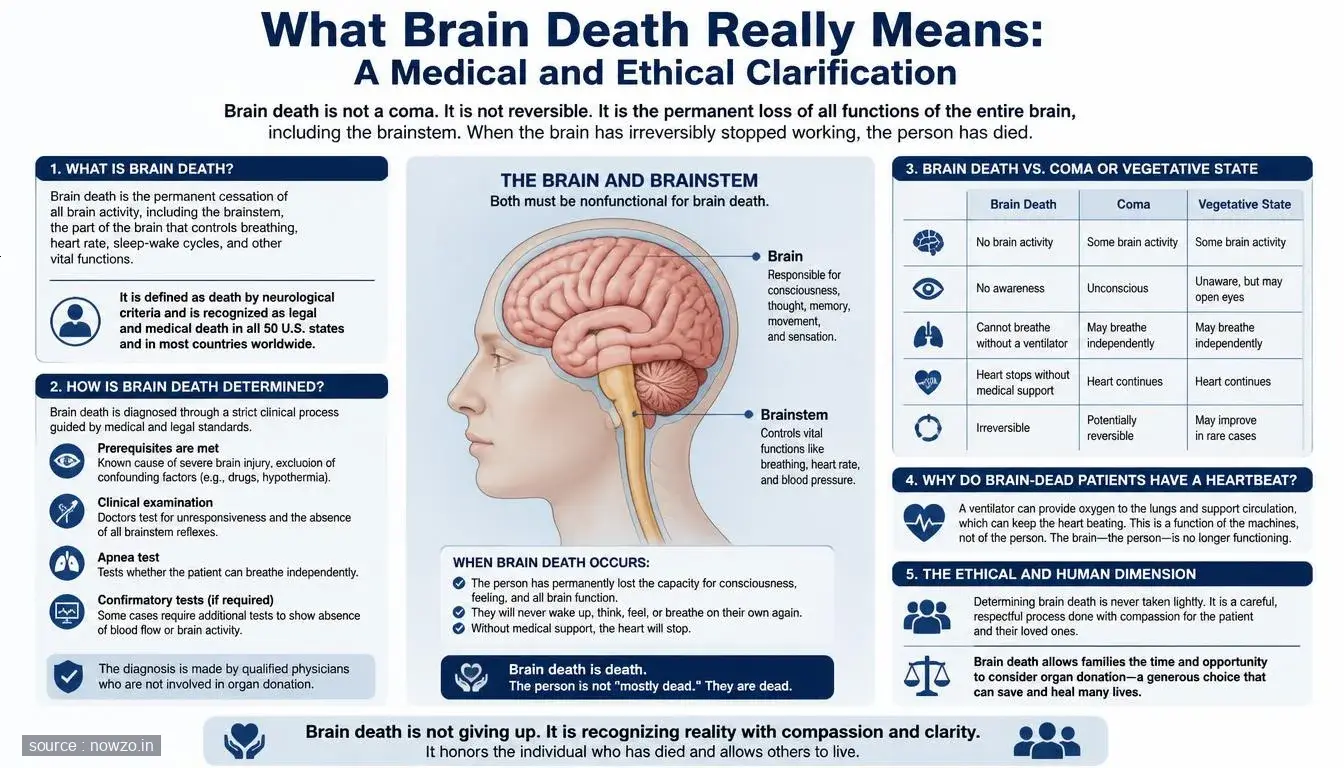
The term "brain death" often surfaces in fraught medical discussions, wrapped in confusion and emotional weight. But what does it actually mean? Medically and legally, it signifies the complete and irreversible loss of all brain function, a state equated with death itself in numerous countries.
Key Facts
- Brain death is the irreversible cessation of all functions of the entire brain, including the brainstem.
- It is a legal definition of death in many jurisdictions worldwide.
- The diagnosis is crucial for decisions regarding organ donation.
The Precise Medical Definition
Clinicians don't arrive at this conclusion lightly. A diagnosis of brain death requires a series of rigorous, standardized neurological exams. These tests confirm the absence of brainstem reflexes, such as the pupillary response to light and the gag reflex. The patient must also show no evidence of breathing independently when taken off a ventilator. It's a definitive end, with no chance of recovery.
Why the Clarification Matters
Public misunderstanding can create immense ethical dilemmas and prolong family suffering. Distinguishing brain death from a coma or a persistent vegetative state is critical. The latter conditions involve some level of brain activity and potential, however slim, for change. Brain death offers no such hope. This clarity is the foundation for compassionate end-of-life care and informed consent for organ donation, a process that can save other lives.
A Framework for Compassionate Decisions
By establishing a clear, universal standard, the medical community provides families and society with a firm footing during unimaginably difficult times. Understanding that brain death is death allows for closure and the potential to honor a loved one's wishes to be an organ donor, transforming tragedy into a legacy of life for others.






Comments