
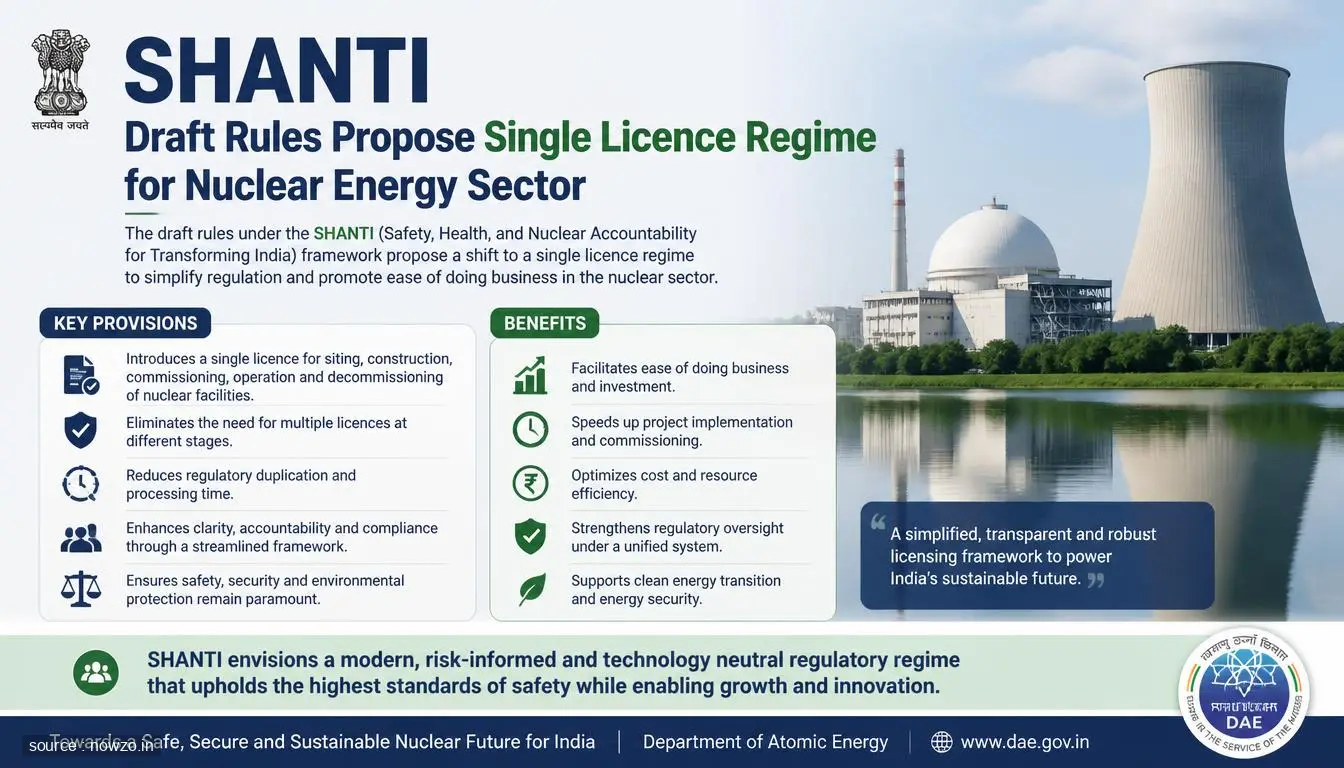
The Indian government has released draft rules and regulations under the SHANTI framework, proposing a significant overhaul of the country's nuclear energy licensing system. The draft introduces a single licence regime for nuclear facilities, a move aimed at streamlining regulatory processes and accelerating project development in the sector.
Single Licence Regime to Simplify Approvals
The proposed single licence regime represents a departure from the current multi-stage approval process that nuclear energy projects must navigate. Under the new framework, operators would be able to obtain a consolidated licence covering various aspects of nuclear facility development and operation.
This regulatory simplification is expected to reduce bureaucratic delays and provide greater clarity for both domestic and international stakeholders interested in participating in India's nuclear energy program. The move aligns with broader government efforts to expand nuclear power capacity as part of the country's clean energy transition.
Emphasis on Technology from Self-Reliant Countries
A notable provision in the draft rules is the emphasis on sourcing nuclear technology from self-reliant countries. This provision reflects India's strategic approach to energy security and technological sovereignty in critical infrastructure sectors.
The focus on self-reliant nations as technology partners suggests a careful balancing of international cooperation with domestic capability development. This approach is consistent with India's longstanding policy of maintaining strategic autonomy in sensitive sectors while engaging with global partners.
Implications for India's Nuclear Energy Sector
The draft rules come at a time when India is looking to significantly expand its nuclear power generation capacity. Nuclear energy is seen as a crucial component of the country's strategy to meet growing electricity demand while reducing carbon emissions.
Industry observers note that regulatory clarity and streamlined licensing processes are essential for attracting investment in the nuclear sector. The proposed changes under the SHANTI framework could potentially open new avenues for both public and private sector participation in nuclear energy projects.
The draft regulations are expected to undergo stakeholder consultations before being finalized. The government has invited feedback from industry participants, experts, and other stakeholders as part of the rulemaking process.
Context and Background
India's nuclear energy program has historically been characterized by strong government oversight and a focus on indigenous technology development. The country operates a fleet of nuclear power plants and has ambitious plans for capacity expansion in the coming decades.
The SHANTI framework represents the latest effort to modernize the regulatory architecture governing the nuclear sector. By proposing a single licence regime and prioritizing technology partnerships with self-reliant countries, the draft rules signal a strategic recalibration of India's approach to nuclear energy development.
As the draft rules move through the consultation and finalization process, stakeholders across the energy sector will be closely watching how these proposed changes shape the future of nuclear power in India.



Comments