
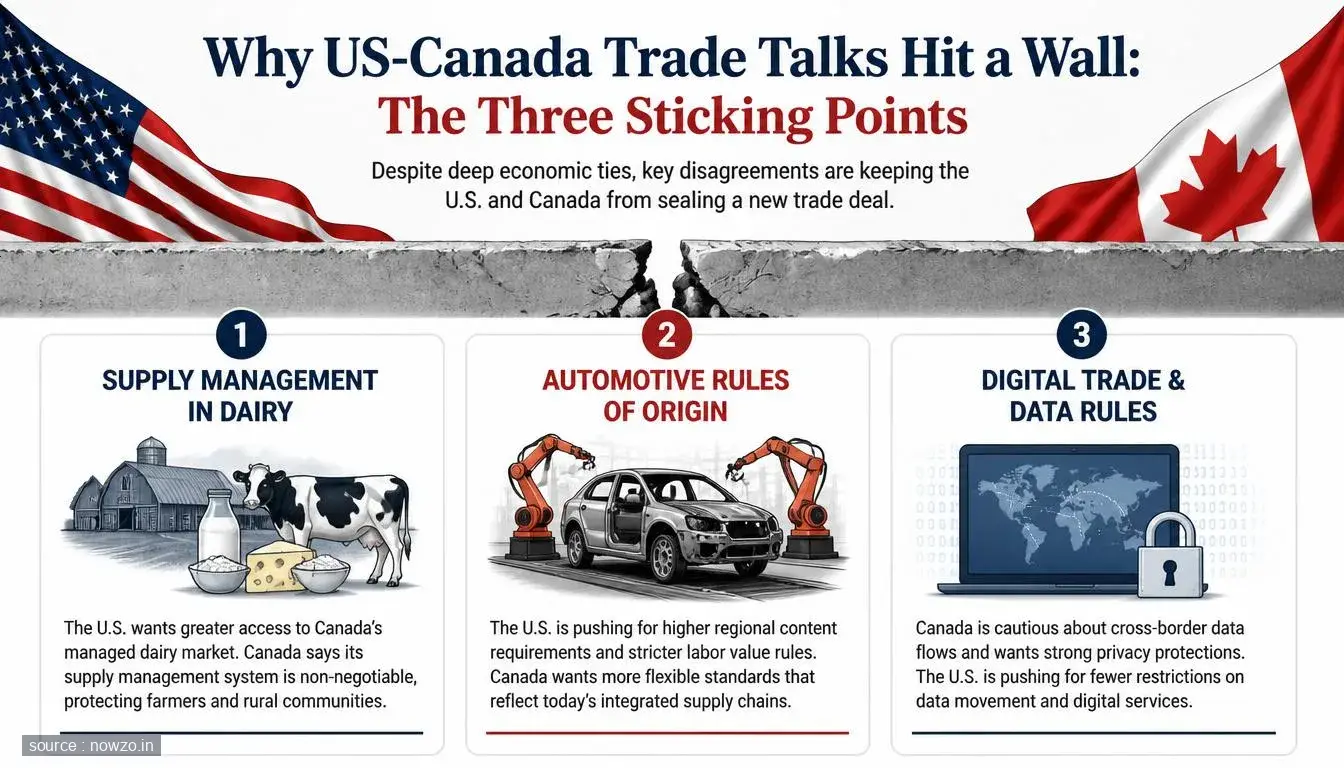
A proposed US-Canada Free Trade Agreement has reached an impasse over three specific American demands that Canadian officials consider non-starters. These demands touch on sensitive economic and cultural sectors that have long been protected in Canadian policy.
Why These Demands Matter
Trade negotiations between neighboring countries often involve delicate balancing acts, but these three US requests strike at the heart of Canada's established trade and cultural policies. Each demand represents a fundamental shift from previous agreements and could significantly impact Canadian industries and sovereignty.
The Three Deal-Breakers
First, the US is pushing for substantially greater access to Canada's protected dairy market. American negotiators want to dismantle the supply management system that Canadian farmers have relied on for decades. This isn't just about tariffs—it's about upending an entire agricultural framework.
Second, Washington is demanding changes to how trade disputes are resolved. The US wants to move away from the Chapter 19 mechanism that both countries have used under NAFTA. This system allows binational panels to review anti-dumping and countervailing duty cases, providing a check on domestic trade remedies.
Third, American negotiators are challenging Canada's cultural exceptions. These protections allow Canada to support domestic content in media and arts—everything from Canadian television programming to book publishing. The US sees these as trade barriers; Canada views them as essential to maintaining national identity.
These aren't minor negotiating points—they represent fundamental differences in how each country approaches trade, sovereignty, and cultural preservation.
What Happens Next
With both sides dug in on these core issues, the negotiations have effectively stalled. Canada appears unwilling to sacrifice its supply management system, independent dispute resolution, or cultural protections for a new agreement. The ball is now in Washington's court to either modify its demands or accept that these talks may not move forward.

Comments