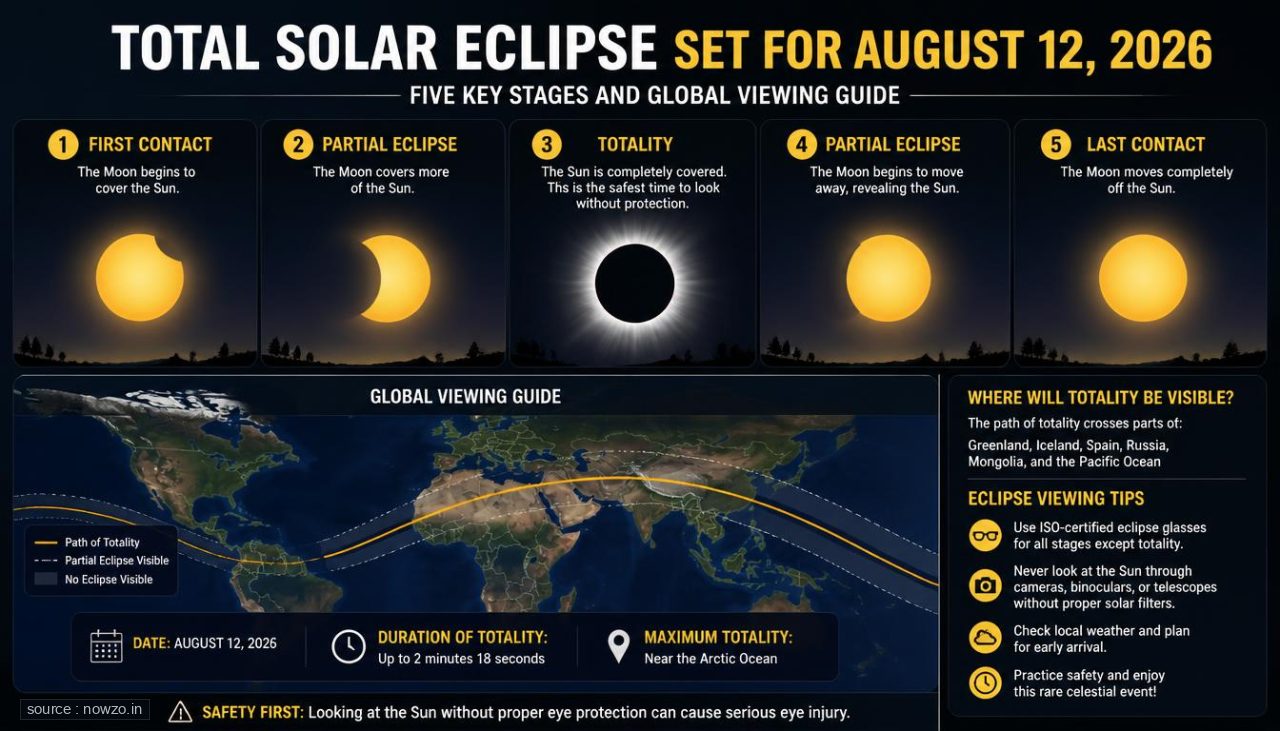
Astronomers, eclipse chasers, and casual stargazers worldwide are looking ahead to August 12, 2026, as anticipation builds for an upcoming total solar eclipse. The celestial event is attracting global focus across science and news outlets, highlighting the key phases of the phenomenon, top geographic vantage points, and digital streaming options for remote viewers.
Understanding the Five Stages of the Eclipse
A solar eclipse transitions through five primary stages during its progression across the sky. The phenomenon begins with the first partial phase, as the Moon's shadow initially intersects with the Sun. As the Moon moves further across the solar disk, it approaches totality—the central highlight where the Sun is completely obscured. Following the period of totality, the event progresses into a secondary partial phase before concluding as the Moon fully exits the Sun's disk.
Viewing Opportunities: Local Vantage Points and Online Coverage
Finding an ideal vantage point is a major priority for eclipse enthusiasts. Media outlets, including The Guardian, are analyzing regional locations across areas like the United Kingdom to determine where observers will get the clearest views of the sky during the event.
For skywatchers unable to witness the alignment in person, online broadcasting will provide comprehensive access. Platforms such as Sky & Telescope are detailing where global audiences can stream live feeds of the total solar eclipse on August 12, 2026, ensuring international viewers do not miss the spectacle.
The Global Pursuit of Totality
The upcoming event underscores the enduring appeal of international eclipse chasing. As highlighted by media organizations like the BBC, dedicated observers travel extensively around the globe to stand within the path of totality, tracking real-time updates and countdowns as the rare astronomical alignment approaches.
Whether viewed directly from prime locations on Earth or followed virtually through live broadcasts, the August 12, 2026 total solar eclipse stands out as one of the most anticipated skywatching events of the decade.


Comments