
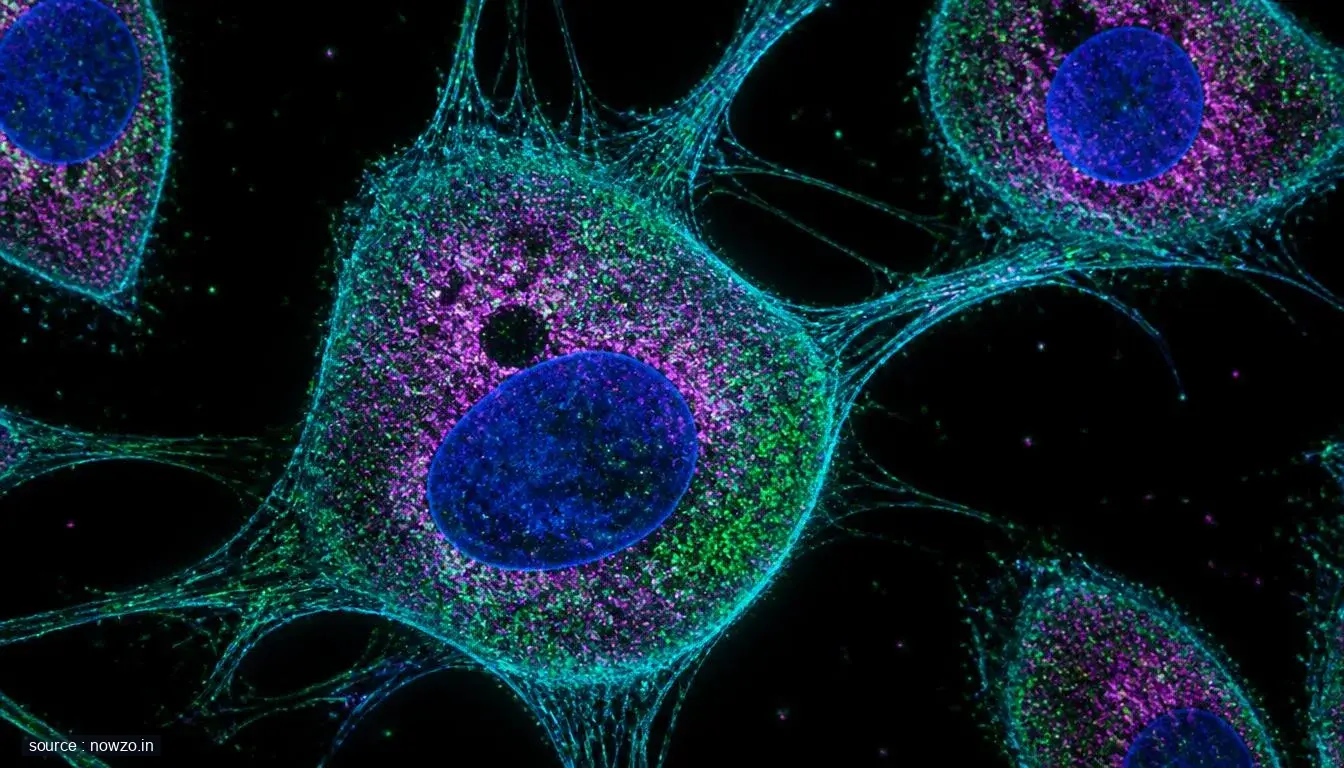
Imagine watching the intricate dance of life within a living cell—not as a blurry approximation, but in stunning, crystalline detail. That vision just moved dramatically closer to reality, thanks to a clever new imaging technique that makes cellular components literally twinkle into focus.
Key facts
- Non-invasive imaging technique for living cells
- Uses specially designed "blinking" fluorescent probes
- Produces significantly clearer images than previous methods
- Preserves cell viability during observation
The Blinking Breakthrough
Traditional cell imaging often forces scientists to choose between clarity and cell survival. Harsh lighting and invasive methods can damage delicate cellular structures, while gentler approaches leave researchers squinting at fuzzy, indistinct images. This new approach elegantly sidesteps that compromise.
The secret lies in specially engineered probes that flash on and off in a controlled pattern. This blinking behavior isn't random—it's precisely timed to help sophisticated cameras separate true signal from visual noise. The result? Images so sharp they reveal cellular details previously lost in the haze.
Why It Matters
For biologists and medical researchers, this isn't just about prettier pictures. The ability to observe living cells in such detail without harming them opens new windows into fundamental life processes. We might watch how viruses invade cells in real time, or witness how neurons form connections as learning occurs.
The technique preserves cell viability throughout observation, meaning scientists can study extended processes rather than just taking snapshots of cellular demise. It's the difference between watching a full ballet performance and seeing only a single frozen pose.
The Road Ahead
While the technology shows immense promise, researchers caution that widespread adoption will take time. The specialized probes and imaging equipment need refinement before becoming standard lab equipment. But the foundation is laid—a brighter, clearer future for cellular imaging that could accelerate discoveries across medicine and biology.





Comments