
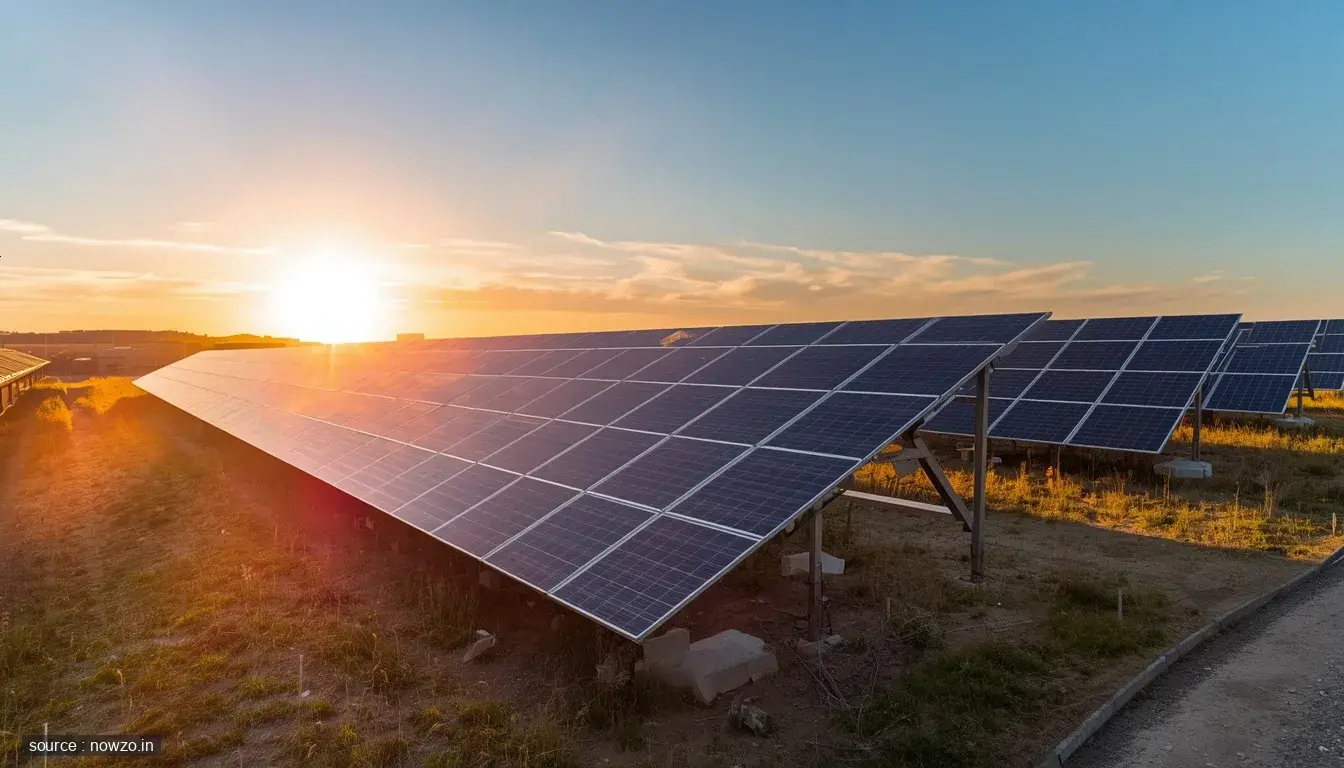
In a breakthrough that could accelerate our transition to clean energy, researchers at the Korea Institute of Energy Research (KIER) have set a new world record for solar cell efficiency. Their perovskite/CIGS tandem solar cells have achieved an impressive 26.7% efficiency—a milestone that promises more powerful and cost-effective renewable energy generation.
Key facts
- Record efficiency: 26.7%
- Technology: Perovskite/CIGS tandem solar cells
- Institution: Korea Institute of Energy Research (KIER)
Why this matters
Solar efficiency isn't just a number—it's the key to unlocking cheaper, more accessible clean energy. Higher efficiency means more electricity from the same amount of sunlight, reducing the cost and space needed for solar installations. For years, researchers have been racing to push efficiency boundaries, and KIER's achievement brings us closer to a future where solar power can compete even more aggressively with fossil fuels.
The technology behind the leap
Tandem solar cells, which layer different materials to capture more of the solar spectrum, have emerged as the frontrunner in the efficiency race. By combining perovskite with CIGS (copper indium gallium selenide), KIER's team has optimized light absorption and minimized energy loss. This delicate balancing act between materials is what delivered their record-breaking performance.
What comes next?
While lab results are thrilling, the real test lies in scaling this technology for commercial use. Researchers will now focus on improving durability and manufacturing processes to bring these high-efficiency cells to market. If successful, this could significantly lower the cost of solar energy and help nations meet their climate goals faster.



Comments