
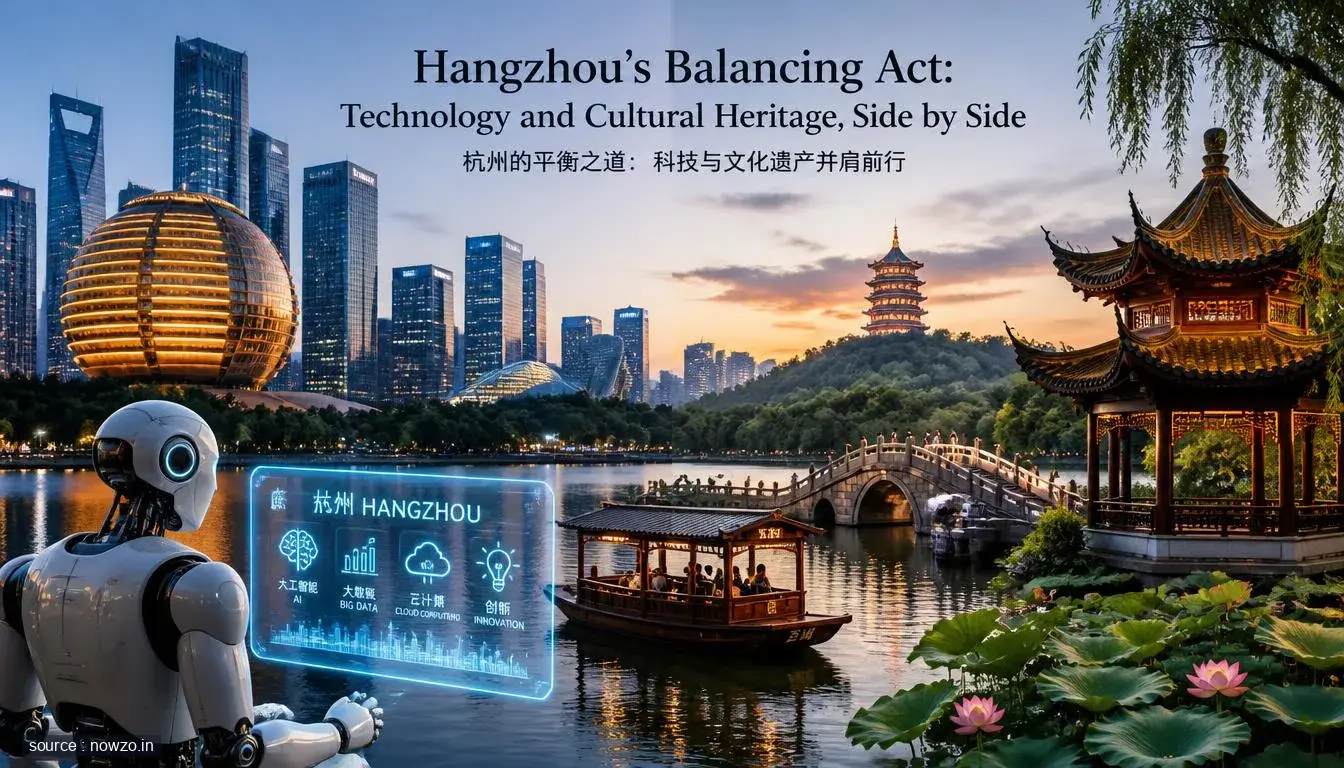
Some cities choose between the future and the past. Hangzhou, according to a new feature from the Jerusalem Post, is making a name for itself by refusing that choice. The Chinese city has been spotlighted for the way it combines a modern technology sector with a deep well of cultural heritage — a pairing the report treats not as a contradiction, but as the city's defining strength.
Key facts
- City: Hangzhou, China
- Focus: The combination of technology and cultural heritage
- Original report: The Jerusalem Post
- Distribution: Aggregated by UA.NEWS through Google News
What the Report Highlights
The Jerusalem Post's feature zeroes in on a balance many fast-growing cities struggle to strike. On one side stands Hangzhou's technology sector, a marker of modern ambition. On the other stands a cultural heritage that remains part of the city's fabric rather than a relic pushed to its edges. The report's point is simple but striking: in Hangzhou, the two are not competing. They are woven together.
Why the Combination Matters
The tension between modernization and preservation is one of the defining urban stories of this century. Cities that lean too hard into growth risk sanding away the very character that made them worth visiting. Cities that freeze themselves in amber risk irrelevance. Hangzhou's example, as presented in the report, suggests a third path — one where innovation and inheritance share the same streets, and where progress does not demand erasure.
What We Know — and What We're Watching
Because the story currently circulates as an aggregated headline, the specific details from the Jerusalem Post's reporting — the places, people, and projects it names — are not yet available in this version. What is clear is the framing: Hangzhou is being held up as a case study in how a city can embrace technology without surrendering its heritage. Readers seeking the full picture can find it in the original Jerusalem Post feature.
This brief is based on an aggregated headline distributed via Google News. All facts above are drawn from the source material; no additional claims have been added.





Comments