
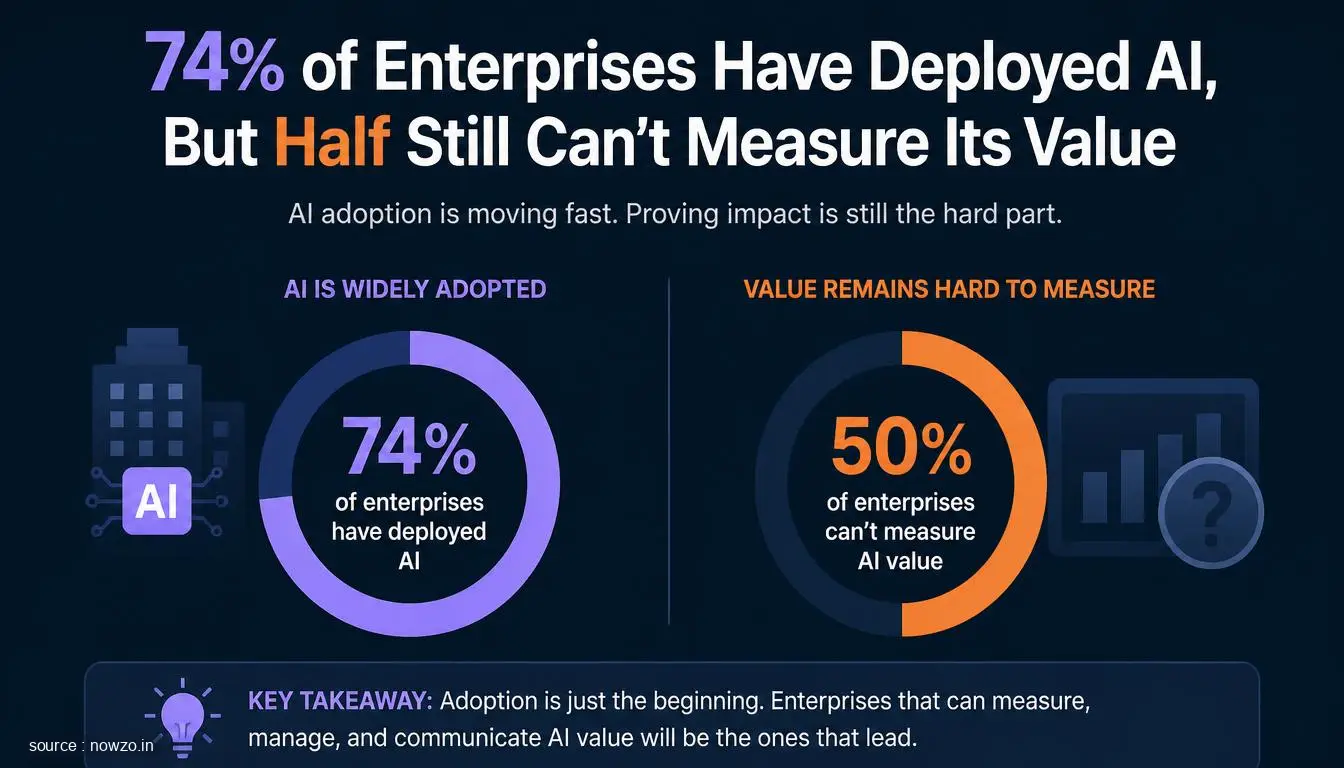
Artificial intelligence has firmly established itself in the corporate world, with nearly three-quarters of enterprises now running AI systems in some capacity. Yet despite this widespread adoption, a troubling measurement gap persists — roughly half of these organizations still lack the ability to quantify the return on their AI investments.
AI Adoption Reaches Critical Mass
The enterprise landscape has shifted dramatically in recent years, with AI moving from experimental pilot programs to core business operations. According to recent findings, 74% of enterprises have now deployed AI technologies, marking a significant milestone in the technology's mainstream acceptance.
This rapid uptake reflects growing confidence in AI's potential to transform business processes, from customer service automation to supply chain optimization. Companies across industries are investing heavily in machine learning models, natural language processing tools, and predictive analytics platforms.
The Measurement Problem
However, the rush to adopt AI has outpaced many organizations' ability to evaluate its impact. Half of enterprises that have deployed AI report they still cannot accurately measure what the technology is worth to their business.
This measurement challenge stems from several factors. AI benefits often manifest in indirect ways — improved decision-making speed, enhanced customer experiences, or reduced manual workloads — that don't translate neatly into traditional financial metrics. Additionally, many companies lack the frameworks and tools needed to track AI performance against business outcomes.
Why ROI Tracking Matters
The inability to measure AI's value creates significant risks for enterprises. Without clear metrics, organizations struggle to justify continued investment, optimize their AI deployments, or identify which use cases deliver the strongest returns.
Industry observers note that as AI spending continues to climb, pressure from boards and stakeholders to demonstrate tangible results will only intensify. Companies that fail to establish robust measurement practices may find themselves at a competitive disadvantage, unable to distinguish high-performing AI initiatives from underperforming ones.
Looking Ahead
The current state of enterprise AI reflects a technology in transition — widely embraced but not yet fully understood in terms of business impact. As the market matures, developing standardized approaches to AI valuation will likely become a priority for both technology vendors and enterprise leaders.
For now, the data paints a clear picture: AI has arrived in the enterprise, but the work of proving its worth is only beginning.





Comments