
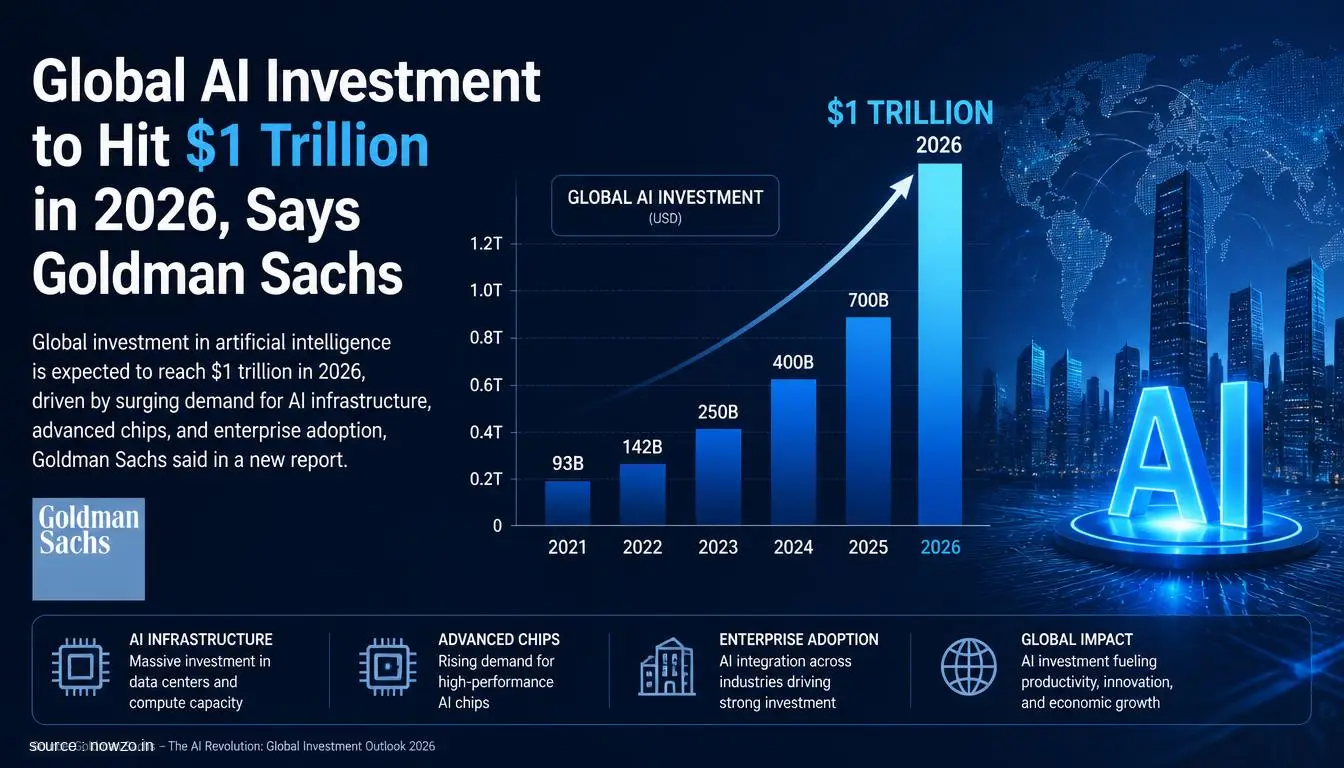
Global investment in artificial intelligence is on track to reach $1 trillion in 2026, according to a new projection from Goldman Sachs. The forecast underscores the unprecedented scale of capital flowing into AI technologies as businesses and governments race to adopt and develop these systems.
AI Spending to Reach Historic Levels
The $1 trillion figure for 2026 represents a significant milestone in the rapid expansion of the artificial intelligence sector. This level of investment reflects the growing recognition of AI's transformative potential across industries, from healthcare and finance to manufacturing and logistics.
Goldman Sachs' analysis suggests that the current wave of AI adoption is not a temporary trend but rather a fundamental shift in how organizations allocate capital. The investment encompasses spending on AI infrastructure, software development, research, and implementation across both private and public sectors.
Long-Term Economic Impact
Looking beyond 2026, Goldman Sachs projects that AI investment will continue its upward trajectory, reaching 1.4% of global GDP by 2028. This metric provides important context for understanding the scale of AI's economic footprint relative to overall worldwide economic output.
The projection that AI spending will account for 1.4% of global GDP within the next few years indicates that artificial intelligence is becoming a substantial component of the global economy. This level of investment concentration in a single technology category is notable and suggests sustained confidence in AI's long-term value proposition.
Investment Drivers and Market Dynamics
The massive capital allocation toward AI reflects several converging factors. Organizations are investing heavily in AI capabilities to maintain competitive advantages, improve operational efficiency, and develop new products and services. The technology's applications continue to expand, creating new opportunities for implementation across diverse sectors.
The Goldman Sachs forecast comes as major technology companies, startups, and established enterprises alike commit substantial resources to AI development. This investment spans hardware infrastructure needed to power AI systems, software platforms, talent acquisition, and research initiatives aimed at advancing AI capabilities.
Implications for the Global Economy
The projected investment levels carry significant implications for economic growth, labor markets, and technological development. As AI investment reaches $1 trillion annually and grows to represent a meaningful percentage of global GDP, the technology's influence on productivity, innovation, and economic structure will likely intensify.
The Goldman Sachs projections provide a quantitative framework for understanding AI's economic trajectory. As investment continues to scale, stakeholders across industries will be watching closely to see how these capital commitments translate into practical applications, productivity gains, and broader economic transformation.




Comments