
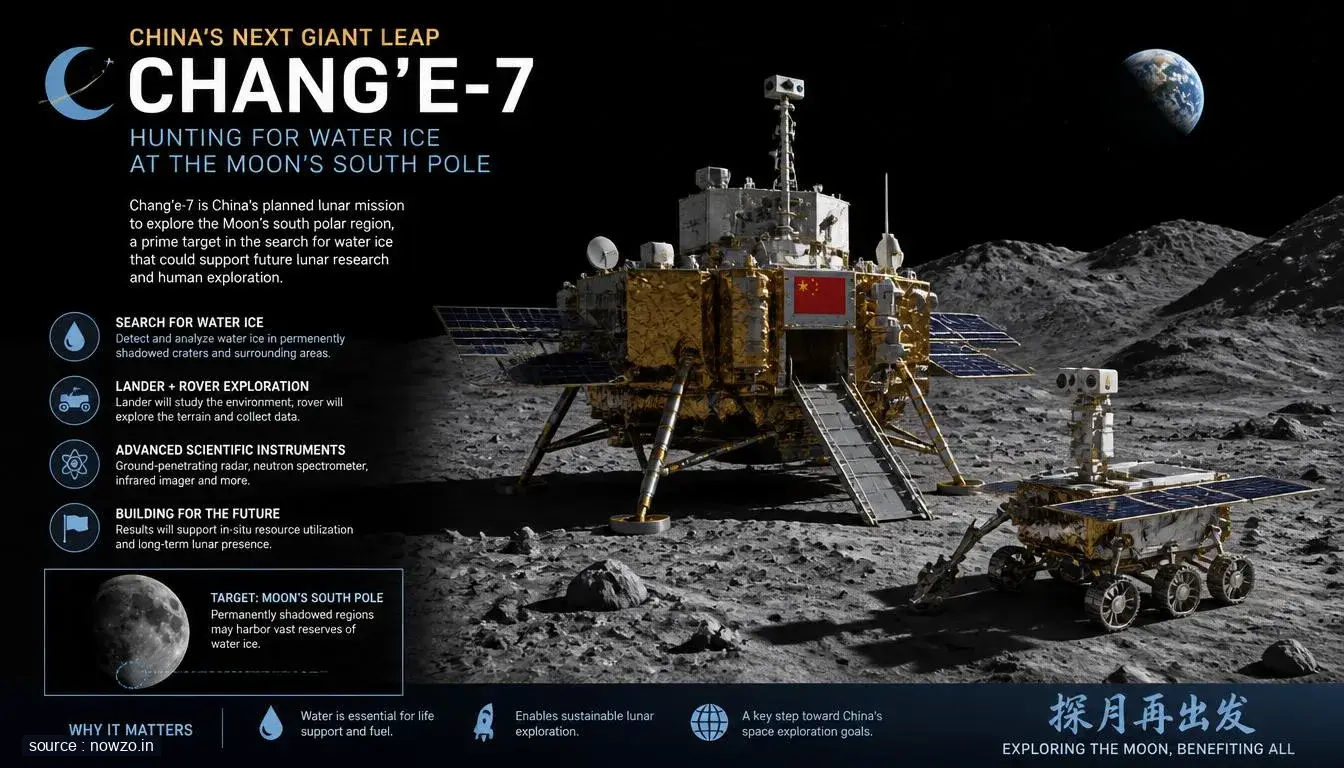
China is preparing to launch its Chang'e-7 mission to the Moon, a landmark endeavor aimed at hunting for water ice at the lunar south pole. The mission, described as one of the most ambitious in history, could unlock critical secrets about the Moon's resources and pave the way for future human exploration.
Key Facts
- The Chang'e-7 probe will target the Moon's south pole, one of the coldest regions in the solar system.
- The primary objective is to search for and analyze water ice deposits.
- The mission is considered a crucial step for China's long-term lunar ambitions.
- Success could provide vital resources for future crewed missions and a potential lunar base.
The Quest for Lunar Ice
The Chang'e-7 mission is specifically designed to explore the permanently shadowed craters of the lunar south pole. Scientists believe these extremely cold regions could hold significant deposits of water ice, preserved for billions of years. Confirming the presence and accessibility of this ice is the mission's central goal.
Why Water on the Moon Matters
Finding water on the Moon would be a transformative discovery for space exploration. Water is not only essential for human survival but can also be broken down into hydrogen and oxygen, the key components of rocket fuel. This would allow the Moon to serve as a refueling station for missions deeper into space, drastically reducing the cost and complexity of launching everything from Earth.
China's Ambitious Lunar Program
The Chang'e-7 mission is a cornerstone of China's rapidly advancing space program. It follows a series of successful robotic missions, including sample returns from the lunar surface. By targeting the south pole, China is positioning itself at the forefront of the new era of lunar exploration, with an eye toward establishing a long-term presence on the Moon.





Comments