
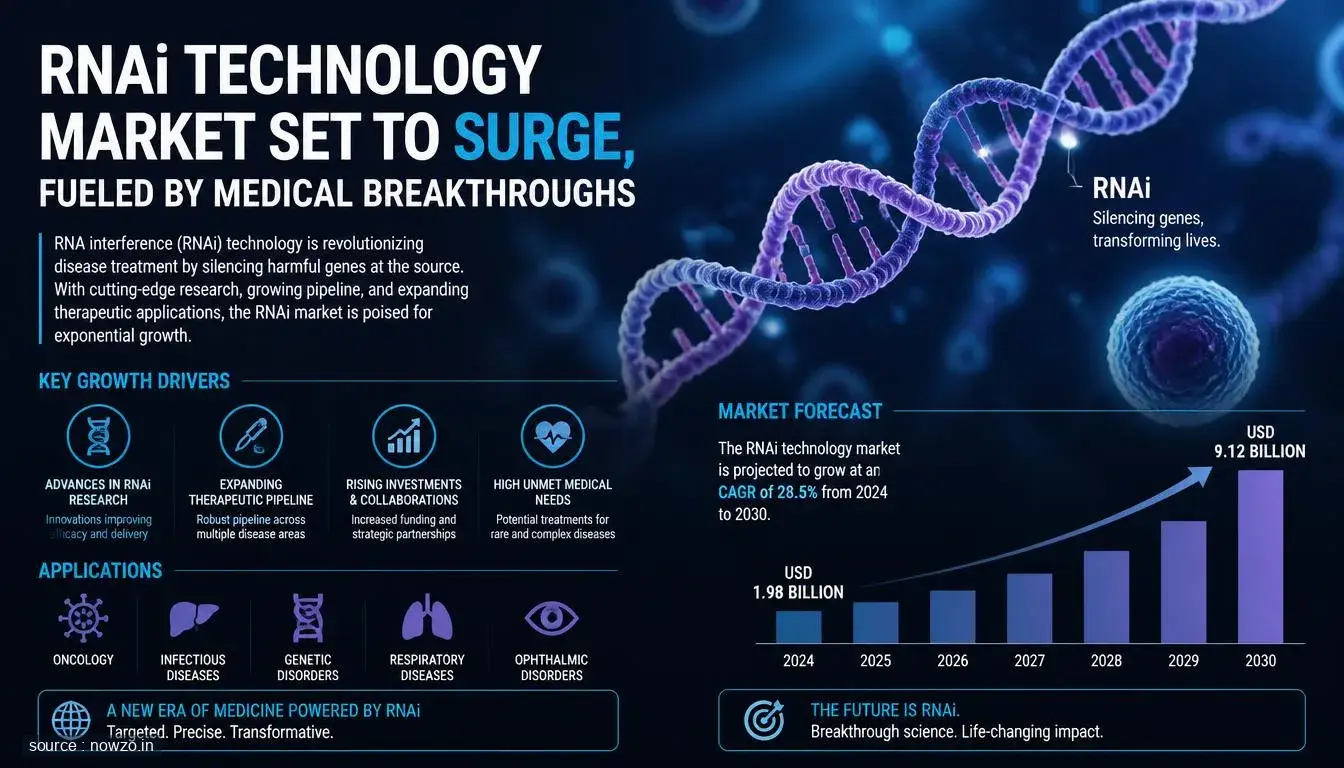
The global RNA interference (RNAi) technology market is charging toward a remarkable decade of growth, with new analysis pointing to a compound annual growth rate of roughly 14% through 2034. This isn't just another statistic—it's a signal of how genetic medicine is steadily rewriting the rules of treatment for some of the world's most stubborn diseases.
Key facts
- Projected CAGR of ~14% through 2034
- Growth driven by therapeutic advances and investment
- RNAi technology enables targeted gene silencing
What's driving the momentum?
RNAi isn't new, but its potential is finally being unlocked. The technology, which allows scientists to precisely "silence" specific genes linked to disease, has moved from laboratory curiosity to clinical reality. More drug candidates are entering late-stage trials, and regulatory approvals are picking up pace—a clear sign that confidence is building.
Why the optimism?
Investors and biotech firms are paying attention. The promise of treatments that can target conditions at their genetic root—like certain rare diseases and cancers—is fueling both R&D spending and strategic partnerships. It’s not just hope; it’s backed by a growing body of clinical evidence.
The road ahead
While the forecast is bright, the path isn’t without challenges. Delivery mechanisms, manufacturing scalability, and long-term efficacy remain active areas of research. But with a double-digit growth rate on the horizon, the industry appears poised to tackle these hurdles head-on.






Comments