
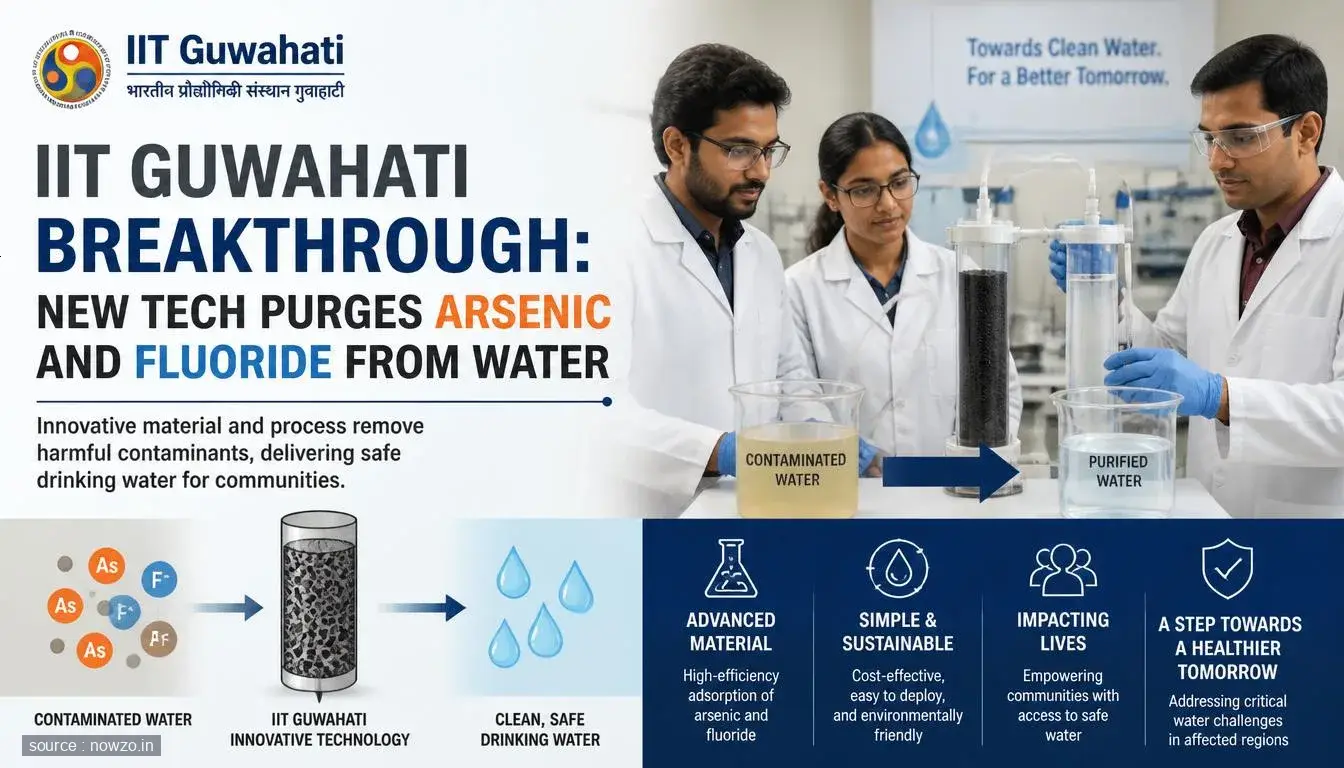
In a significant stride for public health, the Indian Institute of Technology Guwahati has unveiled a new technology designed to tackle one of India's most persistent water quality issues: the presence of arsenic and fluoride. For millions relying on groundwater, this innovation could mean access to safer drinking water—a basic right long compromised by contamination.
Key Facts
- Developed by researchers at IIT Guwahati
- Targets removal of arsenic and fluoride from water
- Addresses critical public health concerns in affected regions
The Scale of the Problem
Arsenic and fluoride contamination in groundwater isn't just a technical challenge—it's a human crisis. Prolonged consumption leads to severe health issues, including arsenicosis and fluorosis, which affect bones, teeth, and overall well-being. Many communities, particularly in rural areas, have had no affordable or practical solution until now.
How the Technology Works
While specific technical details remain under wraps, the core achievement lies in the system's efficiency and scalability. Early indications suggest it effectively reduces contaminant levels to within safe drinking standards, potentially offering a sustainable option for both household and community-level implementation.
What This Means On the Ground
This isn't just lab success; it's real-world hope. If deployed widely, the technology could drastically reduce health risks in endemic areas, lessening the burden on healthcare systems and improving quality of life. The development signals a proactive step toward solving water security issues through homegrown innovation.






Comments