
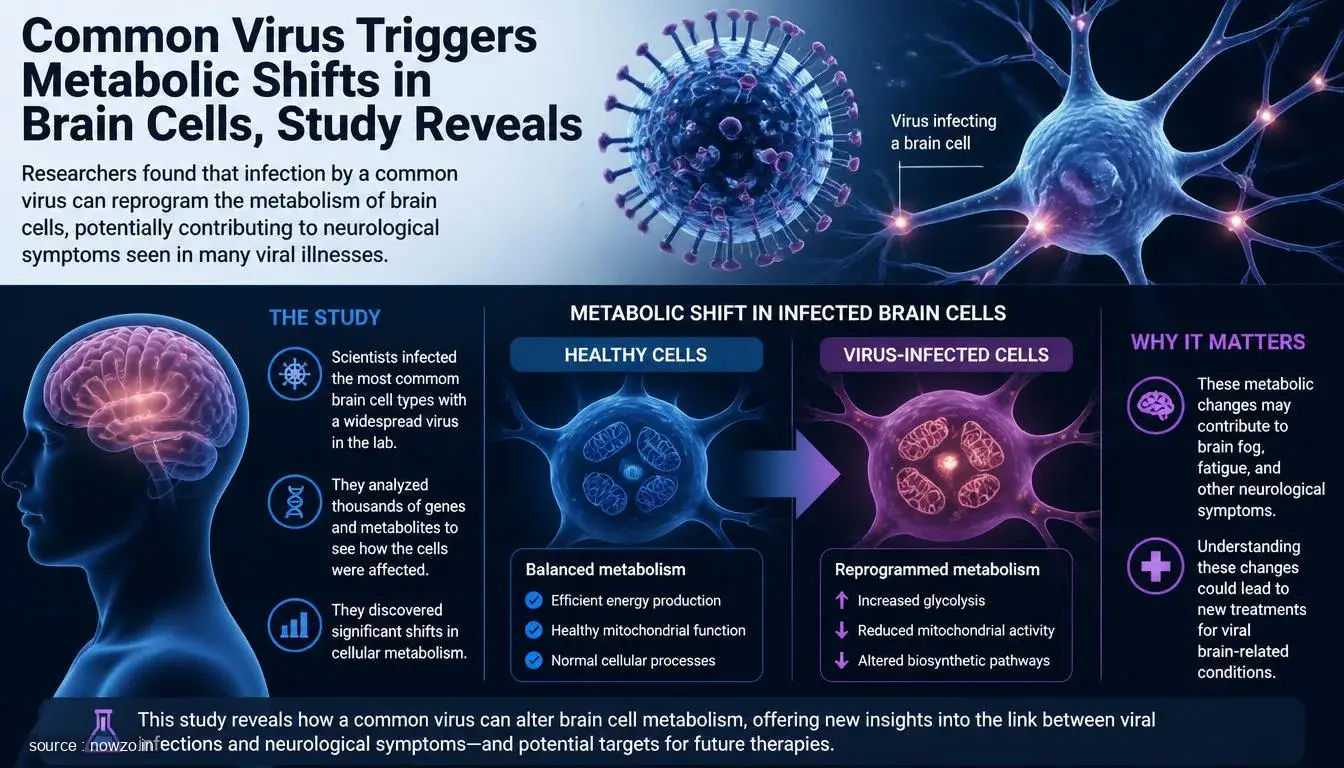
Scientists have uncovered a surprising link between a common viral infection and metabolic shifts within neurons, raising new questions about how everyday viruses might subtly alter brain function. The discovery points to potential long-term neurological impacts that researchers are only beginning to understand.
- A common virus is associated with observable metabolic changes in neurons.
- Findings were aggregated and reported by Technology Networks via Google News.
- Research contributes to growing evidence of viruses influencing neurological health.
What the Research Shows
Neurons, the workhorses of our nervous system, appear to undergo metabolic adjustments when exposed to this prevalent virus. While the exact mechanisms remain under investigation, the alterations suggest that the virus could be disrupting normal cellular processes in ways that weren’t previously recognized.
Broader Implications
This isn’t just about one virus—it’s about recognizing that infections we often dismiss as minor might have lingering, invisible effects on the brain. The metabolic changes observed could influence everything from cognitive function to how neurons communicate, though much more research is needed to understand the full scope.
A Step Toward Deeper Understanding
For now, this finding adds a new layer to our understanding of how viruses interact with the nervous system. It’s a reminder that the boundary between infection and long-term health is thinner, and more fascinating, than we often assume.






Comments