
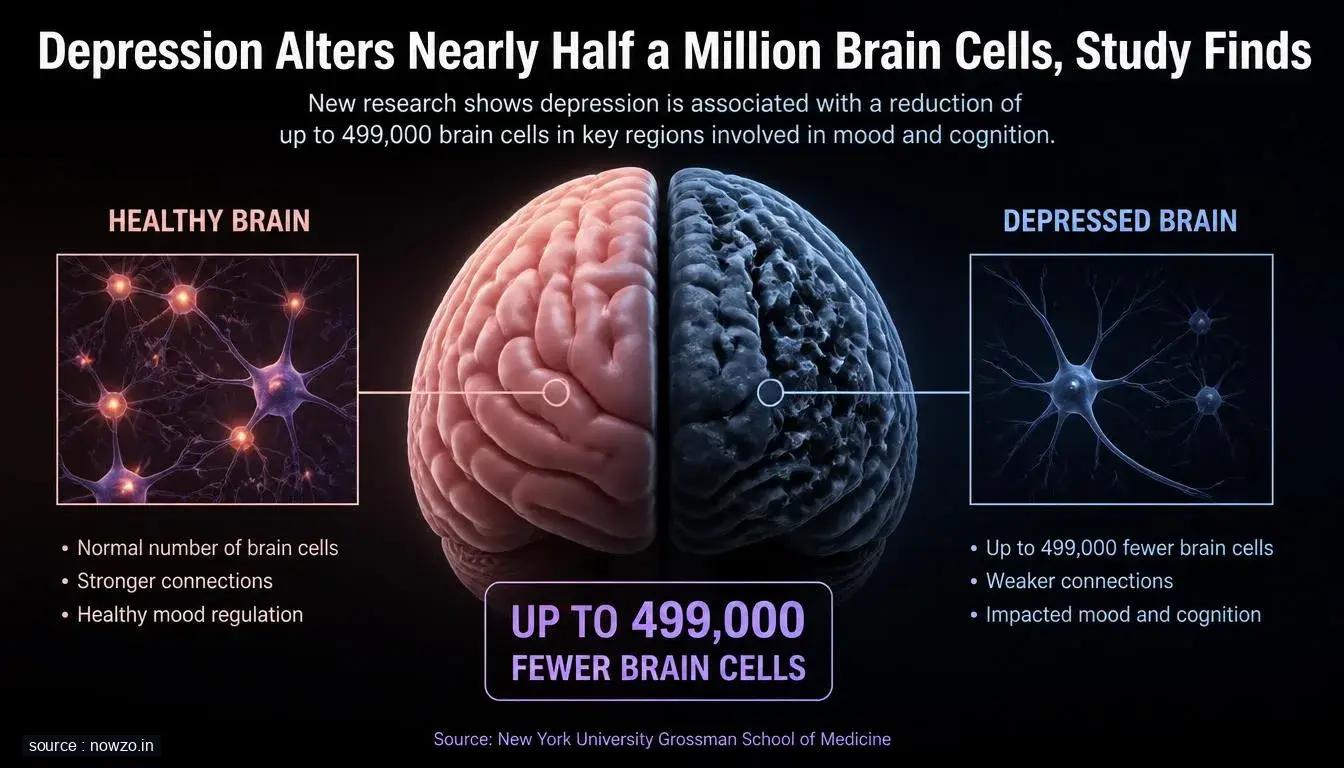
Depression isn't just a state of mind—it leaves a physical mark on the brain. New research reveals it alters nearly half a million brain cells, providing some of the clearest evidence yet of depression's deep biological footprint.
- Study shows depression changes approximately 500,000 brain cells
- Research offers new insights into depression's biological mechanisms
- Findings could influence future treatment approaches
The Cellular Signature of Depression
Scientists have long suspected depression creates measurable changes in brain structure and function. This latest research puts numbers to that suspicion, documenting alterations across nearly half a million cells. The scale is staggering—it suggests depression doesn't just affect mood, but rewires the brain itself.
Why This Matters
These findings move us beyond abstract discussions of mental health into concrete biological territory. When we can point to specific cellular changes, we gain crucial understanding of how depression operates—and how we might better treat it. The research opens doors to more targeted interventions that address these neurological shifts directly.
Looking Forward
While the study doesn't immediately translate to new treatments, it provides a roadmap for future research. Understanding which cells change and how they're affected could help develop therapies that literally help rebuild what depression alters. It's a significant step toward demystifying one of humanity's most common yet poorly understood conditions.






Comments