
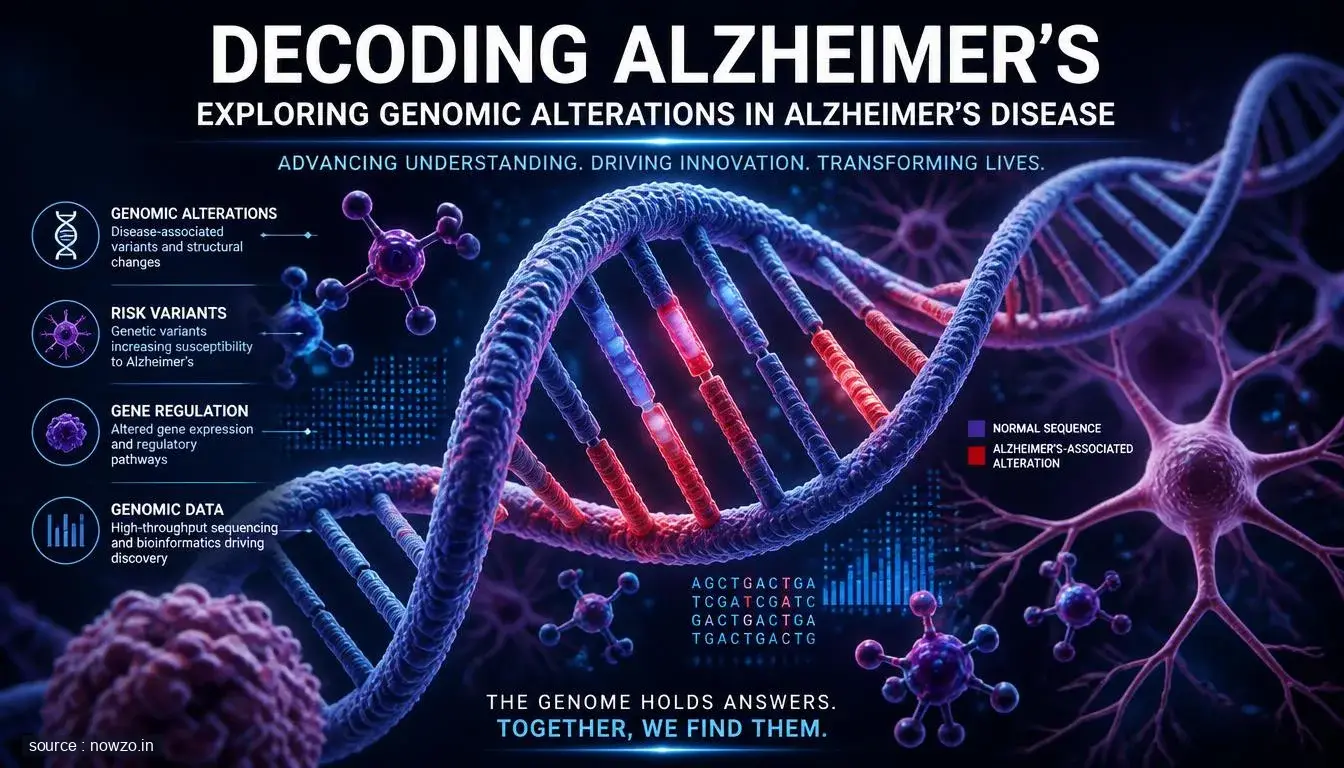
Alzheimer’s disease may do more than damage memory and cognition. According to new research highlighted by Technology Networks, the condition is also associated with changes in the genome’s three-dimensional structure.
A New Look at Alzheimer’s and the Genome
The study focuses on how DNA is organized inside cells. Rather than existing as a simple linear sequence, the genome folds into a complex 3D structure that helps regulate how genes function.
Researchers found that this structure changes in Alzheimer’s disease, suggesting that the disorder may disrupt gene regulation at a deeper architectural level.
Why the 3D Genome Matters
The genome’s 3D organization plays a key role in controlling which genes are active and how cells behave. When that structure is altered, it may affect normal cellular function in ways that contribute to disease.
In the context of Alzheimer’s, these changes could help scientists better understand the molecular processes linked to neurodegeneration.
What This Could Mean for Research
The findings point to genome architecture as an important area of study in Alzheimer’s research. By examining how the disease reshapes the genome’s structure, scientists may uncover new biological mechanisms involved in its progression.
While the source material is limited, the central finding is clear: Alzheimer’s disease is associated with changes in the genome’s 3D structure, opening another avenue for understanding the condition.






Comments