
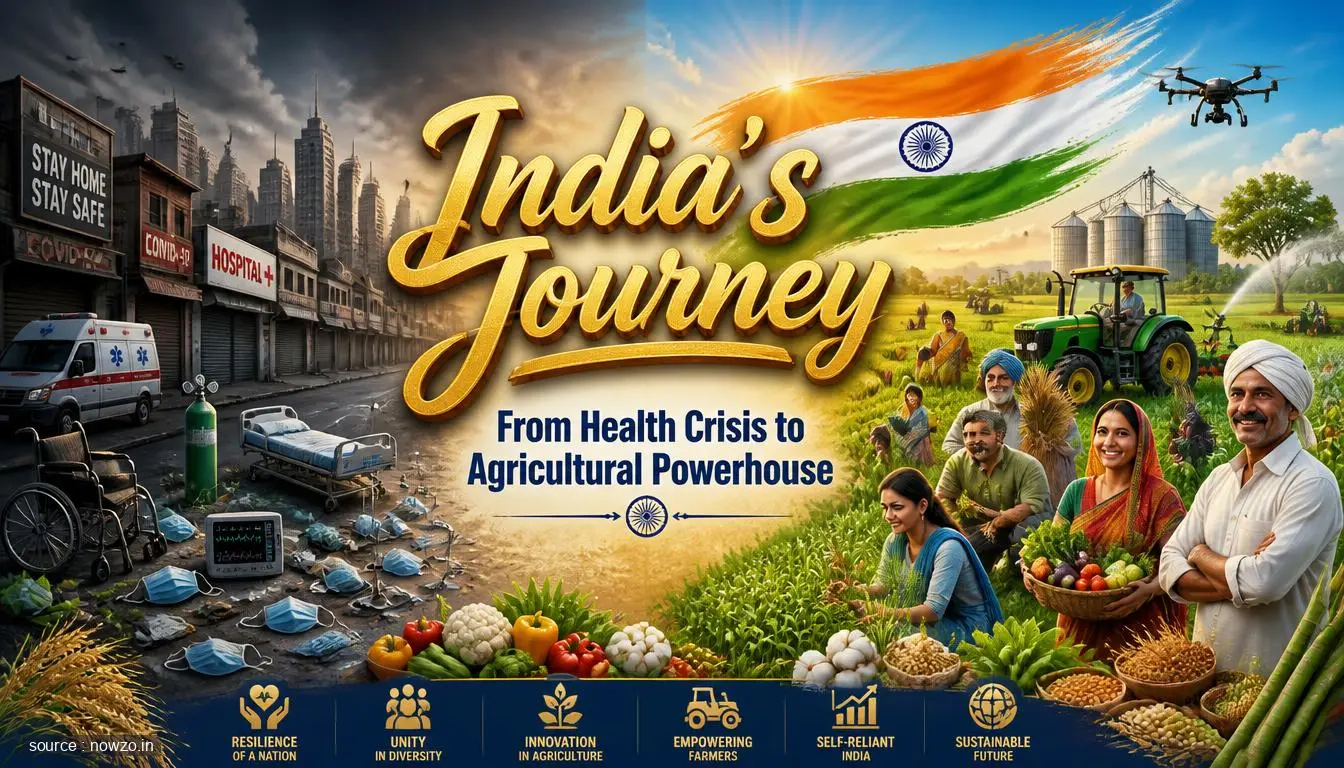
India's journey from a nation struggling with health crises and food scarcity to becoming a global agricultural powerhouse represents one of the most dramatic transformations in modern history. This remarkable change, achieved in just three generations, showcases the power of technology and scientific innovation in addressing fundamental human challenges.
The Green Revolution: Agricultural Transformation
The cornerstone of India's transformation was the Green Revolution, which introduced high-yielding varieties of wheat and rice, modern farming techniques, and improved irrigation systems. This agricultural revolution, which began in the 1960s, dramatically increased food production and helped India achieve self-sufficiency in food grains.
Key technological advancements included the development of dwarf wheat varieties, which were more resistant to disease and could produce higher yields. These innovations, combined with the expansion of irrigation infrastructure and the use of fertilizers, transformed India's agricultural landscape.
Healthcare Revolution: Doubling Life Expectancy
Parallel to the agricultural transformation, India experienced a healthcare revolution that more than doubled life expectancy. This improvement was driven by advancements in medical technology, the establishment of a robust public health infrastructure, and the implementation of nationwide immunization programs.
The introduction of vaccines for diseases like polio, measles, and tuberculosis played a crucial role in reducing infant and child mortality rates. Additionally, improvements in sanitation, access to clean water, and the establishment of primary healthcare centers in rural areas contributed significantly to the overall improvement in public health.
Technological Innovation: The Driving Force
Technology has been the common thread in India's transformation across both agriculture and healthcare. In agriculture, the adoption of modern farming techniques, improved seed varieties, and efficient irrigation systems revolutionized food production. In healthcare, advancements in medical technology, pharmaceuticals, and public health systems have been instrumental in improving health outcomes.
The integration of technology in these sectors has not only improved productivity and health outcomes but has also created new economic opportunities and improved the overall quality of life for millions of Indians.
Challenges and Future Prospects
Despite these remarkable achievements, India continues to face challenges in both agriculture and healthcare. Issues such as climate change, water scarcity, and the need for sustainable agricultural practices remain significant concerns. In healthcare, challenges include addressing the burden of non-communicable diseases and ensuring equitable access to quality healthcare services.
Looking ahead, India's continued investment in technology and innovation will be crucial in addressing these challenges and building on the progress made over the past three generations. The nation's journey from a health crisis to an agricultural powerhouse serves as an inspiring example of what can be achieved through technological innovation and scientific advancement.





Comments