
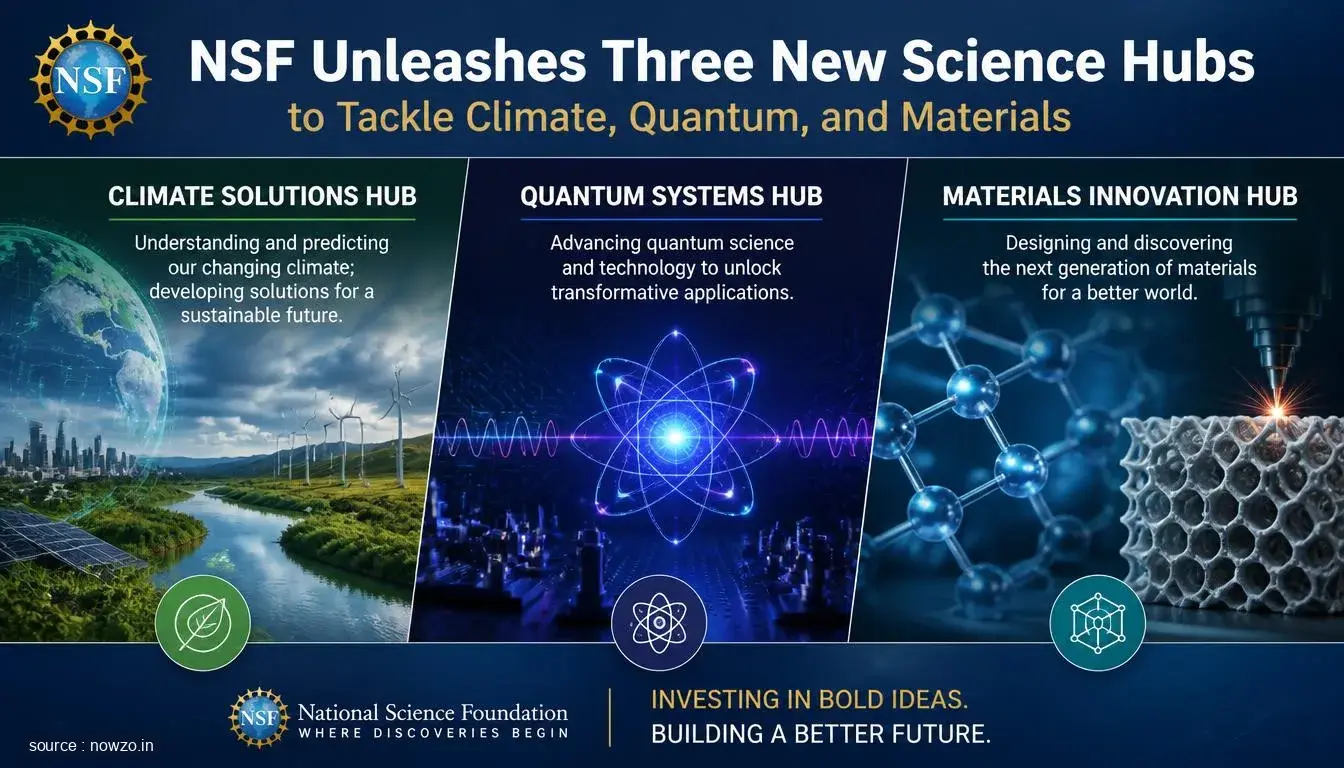
In a significant push to accelerate high-impact research, the National Science Foundation (NSF) has unveiled three new Science and Technology Centers, each designed to tackle some of society's most pressing challenges through interdisciplinary collaboration.
Key facts
- Three new centers launched by the NSF
- $90 million in total funding over five years
- Focus areas: climate change, quantum information science, and materials research
- Centers will foster collaboration across multiple institutions
A strategic investment in solutions
With a combined investment of $90 million spread over five years, these centers aren't just about isolated discovery—they're engineered for translation. The goal is clear: move groundbreaking science from the lab into real-world applications that can confront urgent global issues.
Where the science is headed
Each center zeroes in on a critical domain. One will confront the complexities of climate change, developing resilience strategies and mitigation technologies. Another dives into the rapidly evolving world of quantum information science, pushing the boundaries of computing and communication. The third focuses on advanced materials research, aiming to create smarter, more sustainable substances for future technologies.
Strength in collaboration
True to the NSF's model, these hubs will act as national conveners. They'll bring together researchers from universities, national labs, and industry—breaking down silos to accelerate innovation. It’s a bet that the toughest problems demand diverse teams and shared resources.

Comments