
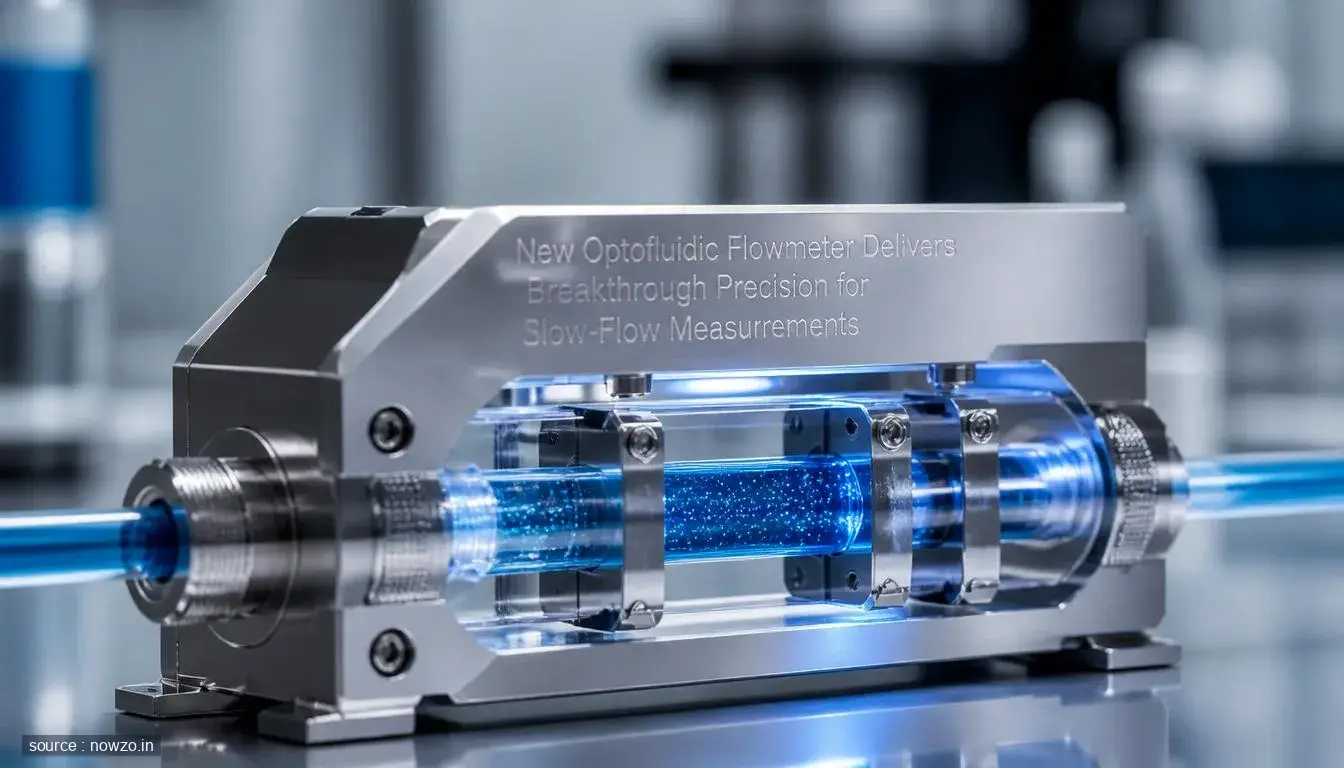
In a quiet lab, where every drop counts, researchers have cracked a persistent problem: how to measure painfully slow fluid flows with unshakable accuracy. The answer arrived in September 2026, wrapped in light and liquid—an optofluidic flowmeter designed to sense what older tools could barely detect.
- Technology type: Optofluidic flowmeter
- Key improvement: Enhanced slow-flow measurements
- Announcement date: September 2026
- Source: Photonics Spectra
Why Slow Flow Matters
When fluids creep along at a snail’s pace, traditional measurement methods often stumble. In medical devices, chemical sensors, and microfluidic research, that uncertainty isn’t just inconvenient—it can skew results, delay diagnoses, or hamper innovation. This new device merges optics and fluid dynamics, using light to track movement with a sensitivity that mechanical sensors can’t match.
A Leap in Precision
The technology doesn’t just incrementally improve on past designs; it rethinks the relationship between light and flow. By embedding optical elements directly into fluidic pathways, the system captures subtle variations without intrusion. That means researchers can trust the numbers they see—especially vital in low-flow scenarios where a microliter per minute feels like a flood.
What’s Next?
While the September 2026 announcement marks a milestone, the real work is just beginning. Labs and manufacturers are now exploring how to integrate this flowmeter into real-world applications—from precision drug delivery systems to environmental sensors. The hope is that this isn’t just a better tool, but a smarter one, built for the delicate tasks ahead.





Comments