
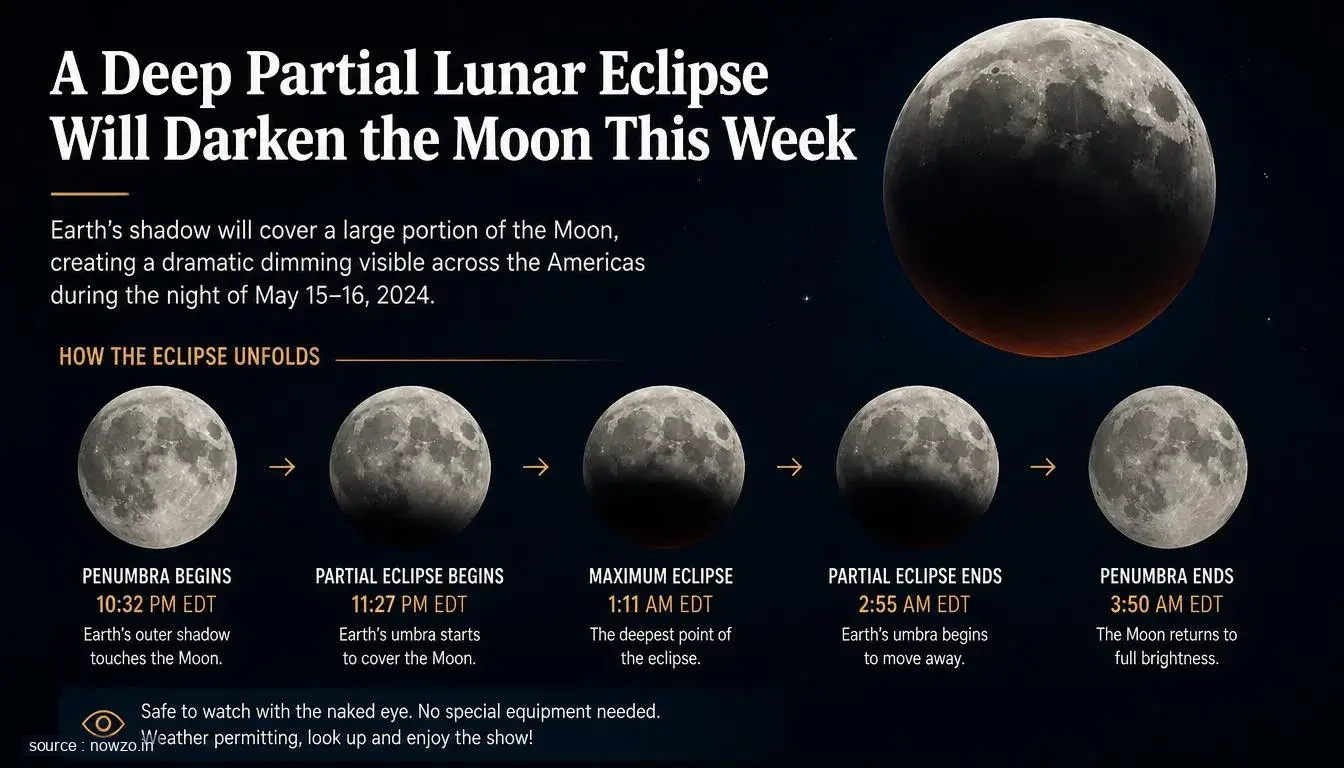
The moon will put on a dramatic show this week as a deep partial lunar eclipse sweeps across the night sky on August 27-28. This isn't just any celestial event—astronomers are calling it particularly striking because it will obscure a remarkable 93% of the lunar surface.
Key facts
- Occurs August 27-28, 2023
- 93% of Moon's surface will be darkened
- Visible from multiple regions including Netherlands and Spain
- Weather conditions may affect viewing in some areas
Where to Watch
Observers in the Netherlands are in for a treat next Friday as the eclipse will be prominently visible there. Meanwhile, Spanish skywatchers are also preparing for optimal viewing conditions. The event has generated excitement across Europe and beyond, with astronomy enthusiasts checking forecasts and preparing equipment.
Viewing Considerations
While the eclipse promises to be spectacular, weather could play spoiler for some viewers. Meteorologists are already analyzing cloud cover predictions, particularly for observers in the United States where visibility might be compromised. The Weather Channel has flagged potential viewing challenges, reminding us that even the most dramatic celestial events depend on terrestrial conditions.
What Makes This Special
This isn't your average lunar eclipse. At 93% coverage, it qualifies as a "deep partial" event—meaning viewers will see the Moon dramatically transformed without reaching total eclipse status. The depth of coverage creates a particularly striking visual effect that astronomy publications like Sky & Telescope are highlighting as worth staying up for.
For those who miss this one, mark your calendars: another lunar eclipse is already generating buzz for 2026, though weather concerns are already emerging for U.S.-based observers.





Comments